Pictures of Ancient Playthings
- Audio guide stop: 335
- Gallery: Room 95
- Culture: Qing dynasty; Yongzheng
- Made in: Beijing (city) (?)
- Date: 1728
- Object type: handscroll
- Materials: paper
- Museum number: PDF,X.01
- Museum: The British Museum
- Collection record: British Museum website
- Image © The Trustees of the British Museum, shared under a CC BY-NC-SA 4.0 licence.
Listen to the free audio guide
About this object
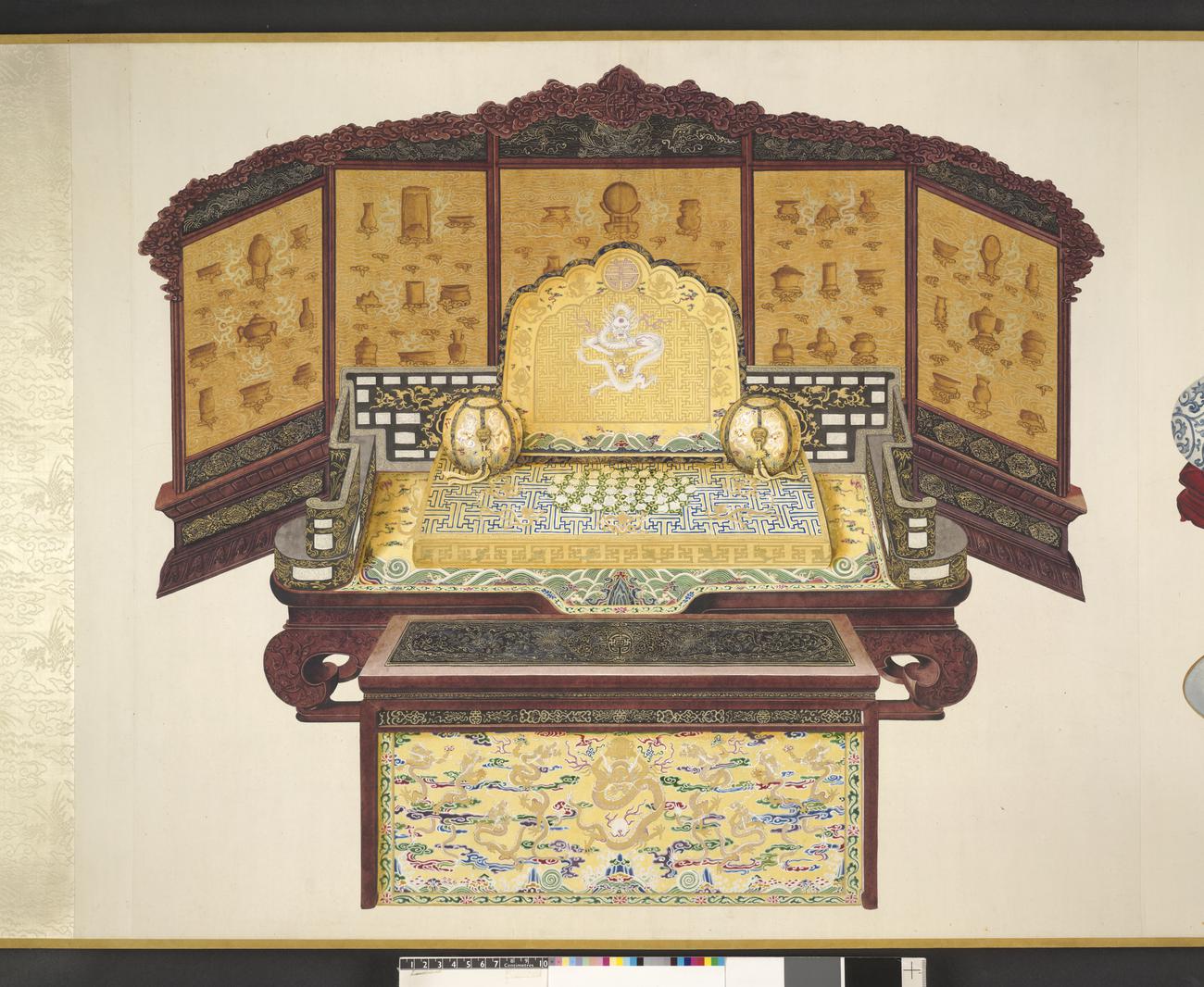
"Guwan tu", or "Pictures of Ancient Playthings", is a remarkable handscroll from the Qing dynasty, created around 1728. Measuring over 20 meters long, it functions like a visual inventory of rare antiques from the imperial collection. Nearly 250 artifacts—ceramics, jades, bronzes—are meticulously displayed on custom stands of zitan wood, silk, or stained ivory. Each object is carefully arranged to show a variety of periods and materials, spanning from the Neolithic era up to the Qing dynasty.
The scroll ends with an empty imperial throne, a subtle nod to Emperor Yongzheng’s presence and his appreciation for ancient objects. The artwork is an exceptional example of Qing court painting, blending European-style shading and perspective with traditional Chinese aesthetics. It’s one of only a few known scrolls from a possible series, revealing the vastness of courtly collections. Some items in the scroll even match those displayed nearby—like the matching Ru-ware bowl in Case 52.
See it in person
Pictures of Ancient Playthings is on display in Room 95 at the British Museum on Great Russell Street, Bloomsbury, London — free to enter. Choose British Museum on audioguide.london and type its audio guide stop number, 335, from the gallery label, or take a photo of it, to hear this free audio guide in six languages — no app download needed.
New, in beta. British Museum support has just launched and is still improving: over 1,000 objects so far, with more added all the time.