The Cells of Night
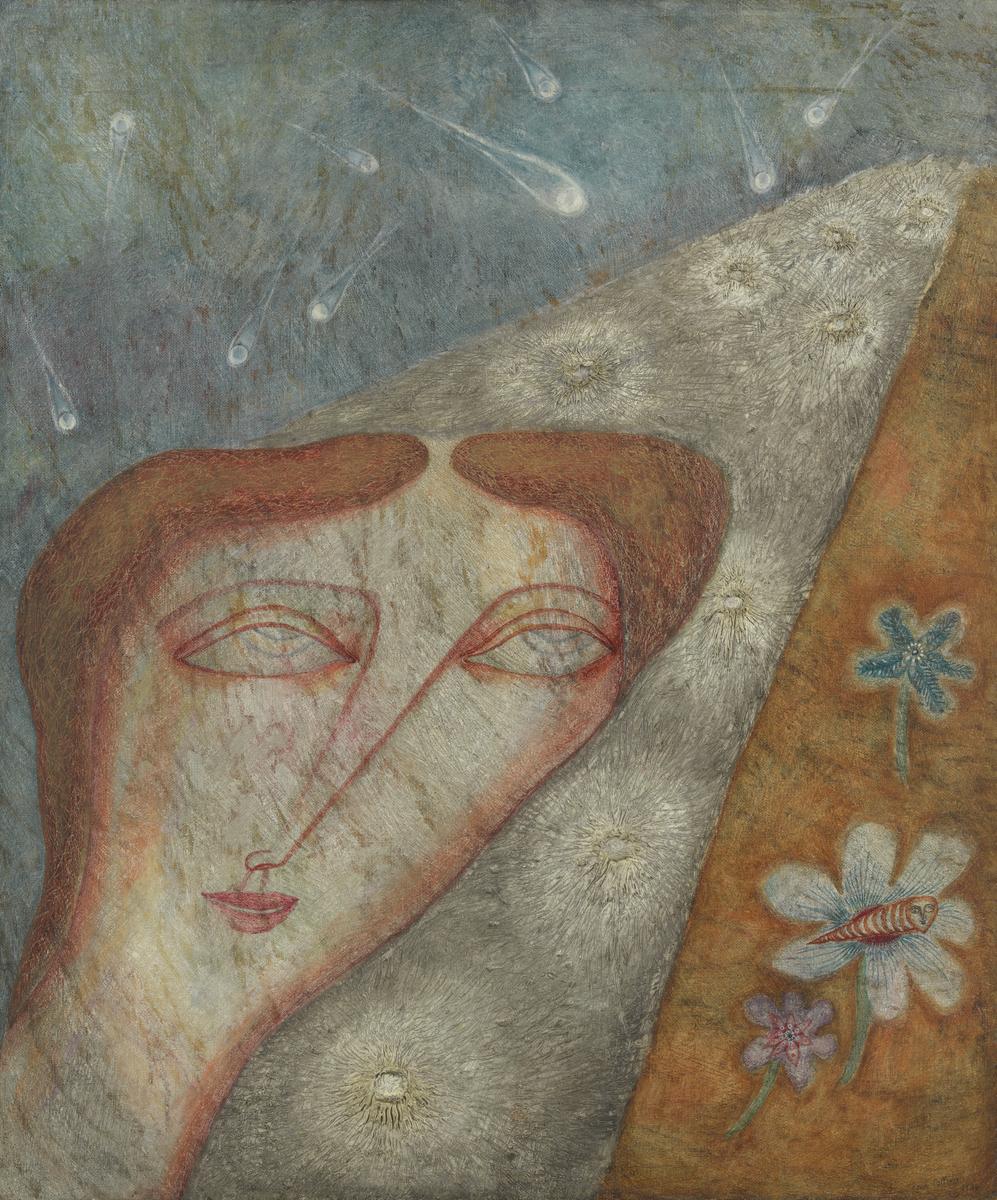
- Artist: Cecil Collins
- Date: 1934
- Medium: Oil paint on canvas
- Dimensions: support: 762 x 635 mm
- Museum: Tate Modern
- Collection record: Tate Modern website
Listen to the free audio guide
About this artwork
This is the "The Cells of Night" by Cecil Collins. Painted in 1934, it’s an oil on canvas that measures about 76 cm by 63 cm. Collins places a slightly distorted, triangular head in the foreground—his way of picturing the human psyche. Behind it, a dramatic recession of sky, moon and land stretches into infinity. The title’s “Cells” alludes to the tiny organisms that make up the universe, and the soft light at the horizon hints at dawn and the possibility of rebirth. The painting is full of texture; Collins used thick layers of lead‑white oil paint, scratching the surface with a needle to give the craters on the moon a tactile quality. Small details—a chrysalis‑like insect within a flower, the up‑turned eyes of the head—reinforce the themes of transformation and inner vision that run through his work. Overall, it’s a striking blend of surreal dreamscape and metaphysical inquiry.
See it in person
The Cells of Night is in the collection of Tate Modern on Bankside, London — free to enter. Point your phone at any artwork there and audioguide.london plays a free audio guide in six languages — no app download needed.