The Bride (Lawrence Alloway)
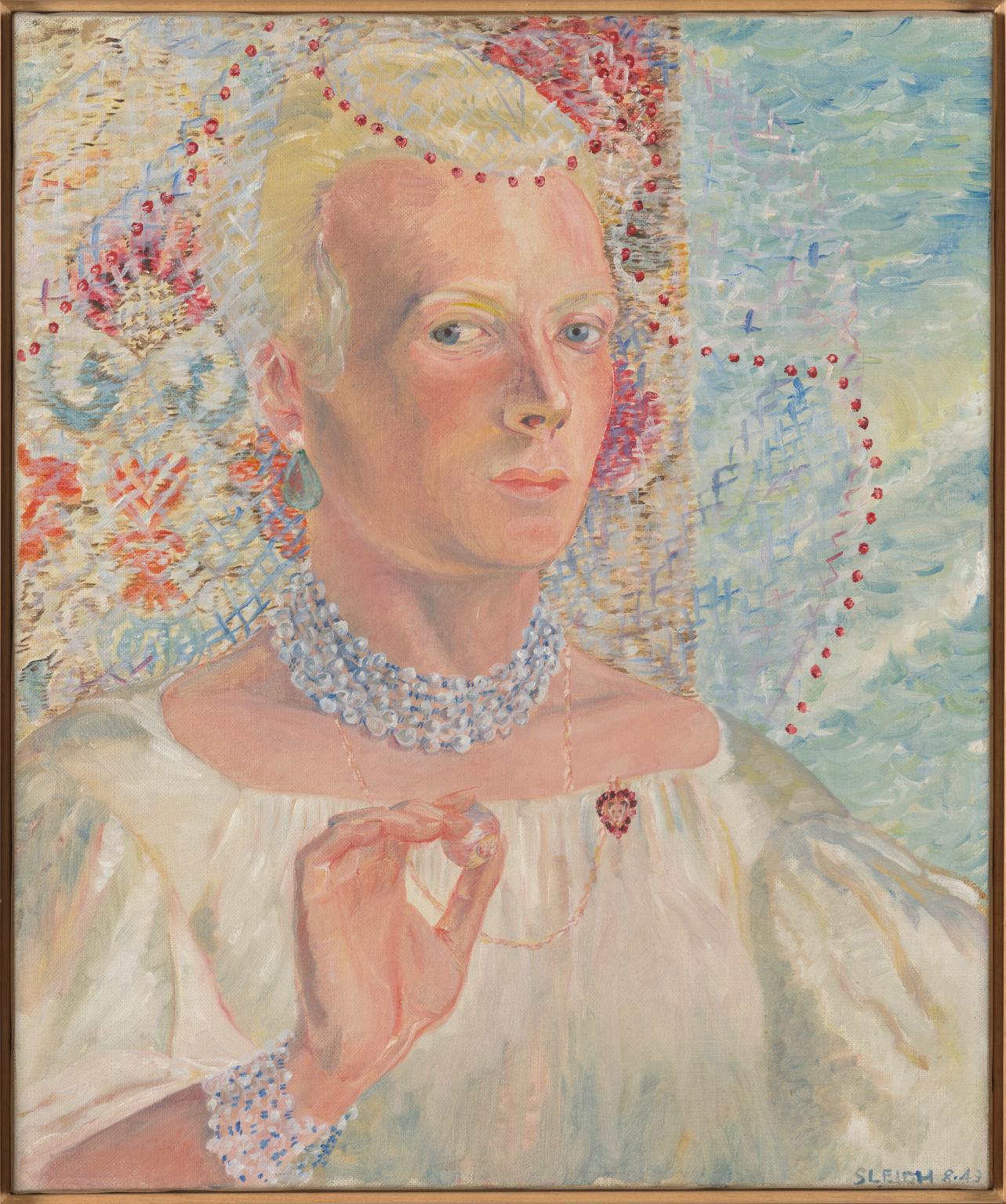
- Artist: Sylvia Sleigh
- Date: 1949
- Medium: Oil paint on canvas
- Dimensions: support: 610 × 508 mm
- Museum: Tate Modern
- Collection record: Tate Modern website
Listen to the free audio guide
About this artwork
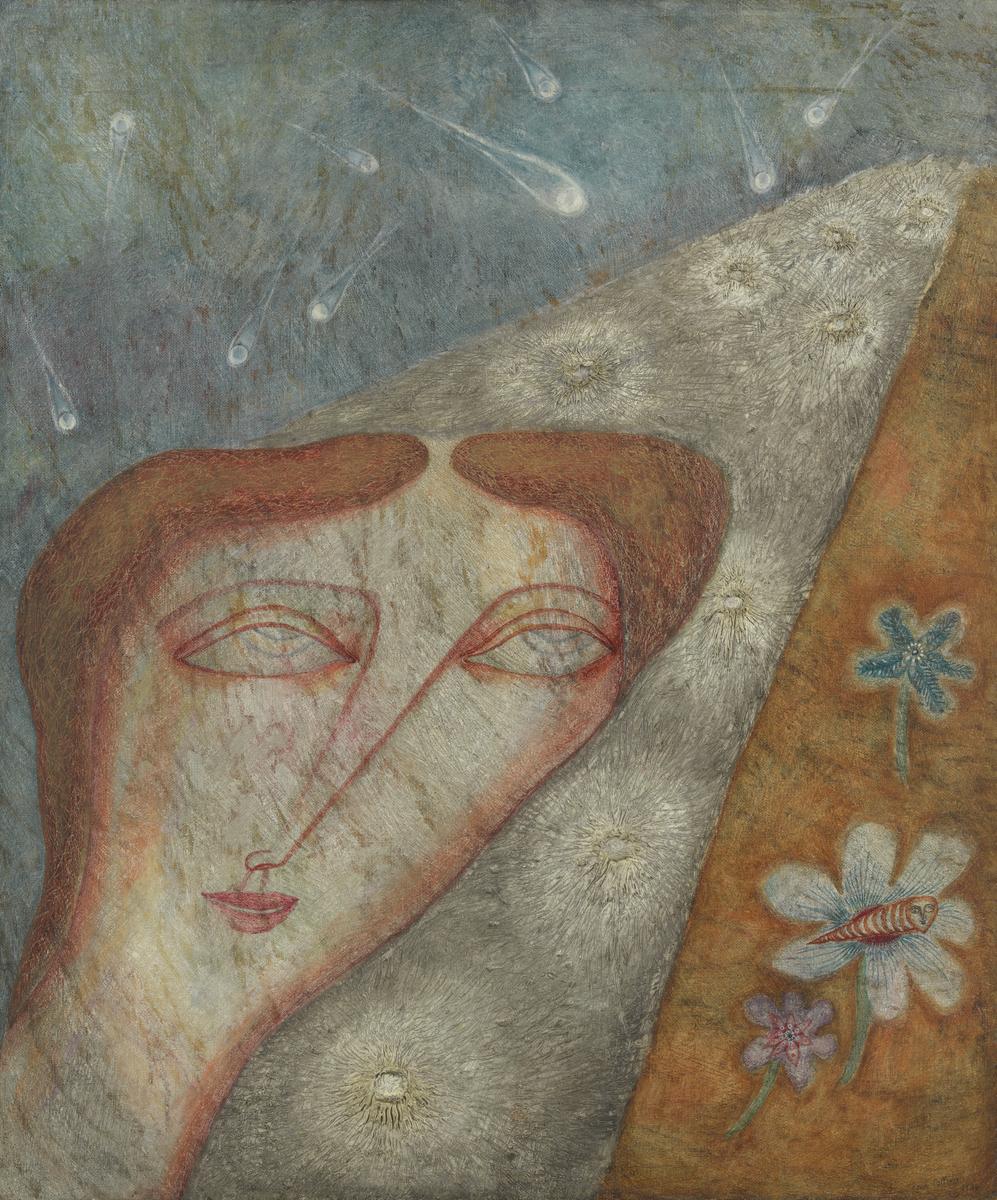
This is the “The Bride” by Sylvia Sleigh, painted in 1949. In it, Sleigh turns her partner, the art critic Lawrence Alloway, into a woman—she’s dressed as “Hetty Remington,” a mythological alter‑ego that the couple used in their private game of identity. The setting is deliberately enclosed, with soft pastel tones that give the portrait an almost dreamlike intimacy. Alloway’s costume echoes the gowns of powerful Tudor‑era queens, adding a layer of historical reference that contrasts with the modern fluidity of gender that the artist explores.
Sleigh’s brushwork is loose yet controlled, allowing the figure to float against a muted backdrop. The subtle use of light highlights the delicate jewellery—beads, a necklace, a veil—suggesting the ceremonial nature of a bride while subverting expectations about who can hold that role. The painting was considered too transgressive for public display until decades later, a fact that underscores its daring commentary on love, identity, and the roles we adopt.
Overall, “The Bride” offers a tender, almost voyeuristic glimpse into the couple’s private world, while also making a broader statement about fluidity in gender and the performative aspects of love.
See it in person
The Bride (Lawrence Alloway) is in the collection of Tate Modern on Bankside, London — free to enter. Point your phone at any artwork there and audioguide.london plays a free audio guide in six languages — no app download needed.