Slate Quarries
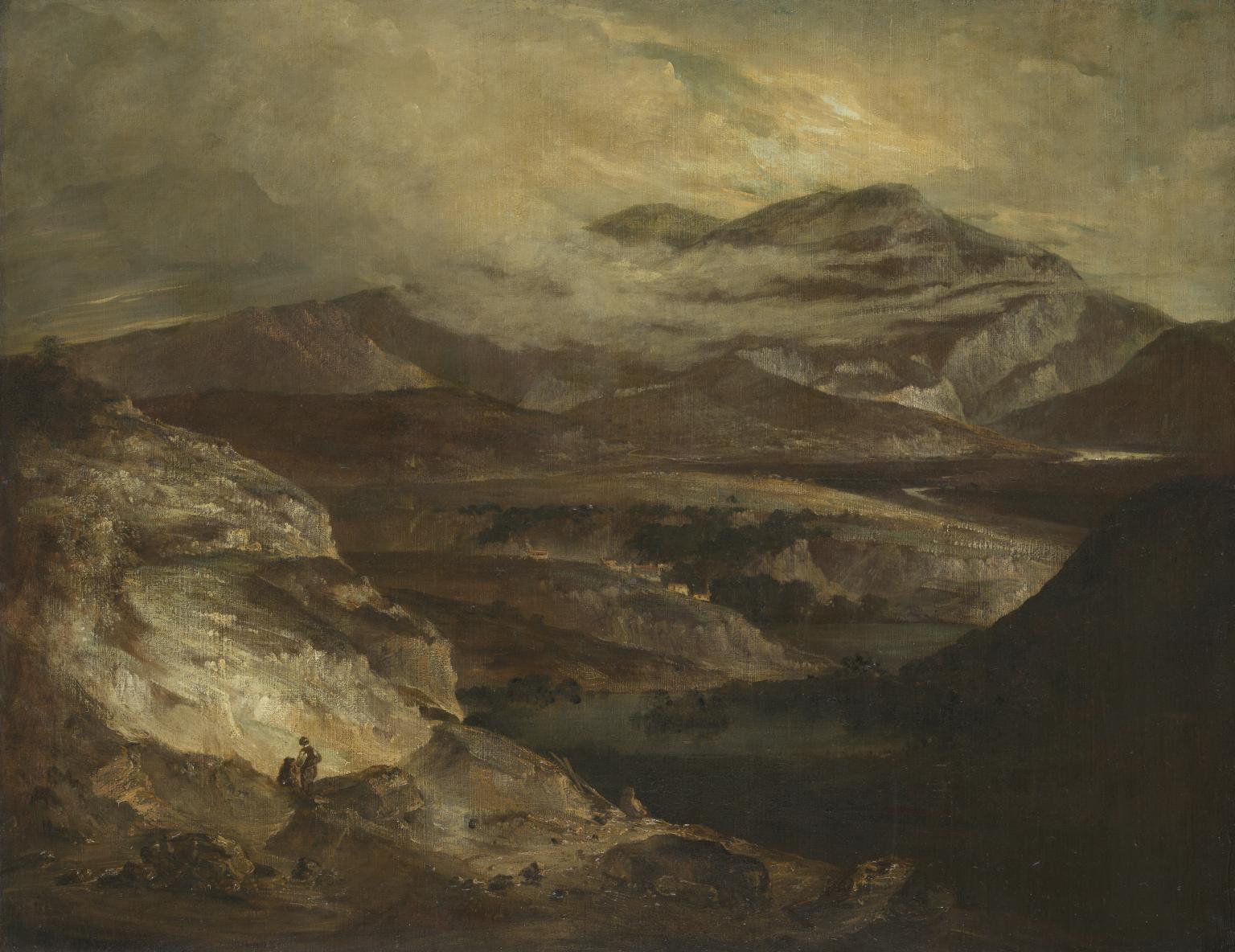
- Artist: John Crome
- Date: c.1802–5
- Medium: Oil paint on canvas
- Dimensions: support: 1238 x 1587 mm
- Museum: Tate Britain
- Collection record: Tate Britain website
Listen to the free audio guide
In the museum now? Point your phone at the next artwork and hear its guide.
About this artwork
This is the “Slate Quarries” by John Crome. Painted around 1802‑05, it’s a dramatic oil on canvas that Crome set on a rough, loosely woven surface—an unusual choice for a professional artist of his day. The scene drops you into the quarry itself, a low viewpoint that pulls the viewer right into the landscape. You can almost hear the hiss of stone being hewn and feel the grit in the air.
Crome, one of the founders of the Norwich Society of Artists, liked to experiment with materials and composition. He called himself a “drawing master,” but this work shows a bold, inventive spirit. The brushwork is energetic, the light dramatic, and the clouds above add a sweeping, almost Romantic quality. Even the few figures you spot seem to work against the harsh industrial backdrop, hinting at the human cost of progress.
Overall, “Slate Quarries” captures the tension between nature and industry that defined early 19th‑century Britain. It’s a powerful glimpse of the country’s industrial awakening, told through Crome’s daring and unorthodox technique.
See it in person
Slate Quarries is in the collection of Tate Britain on Millbank, London — free to enter. Point your phone at any artwork there and audioguide.london plays a free audio guide in six languages — no app download needed.