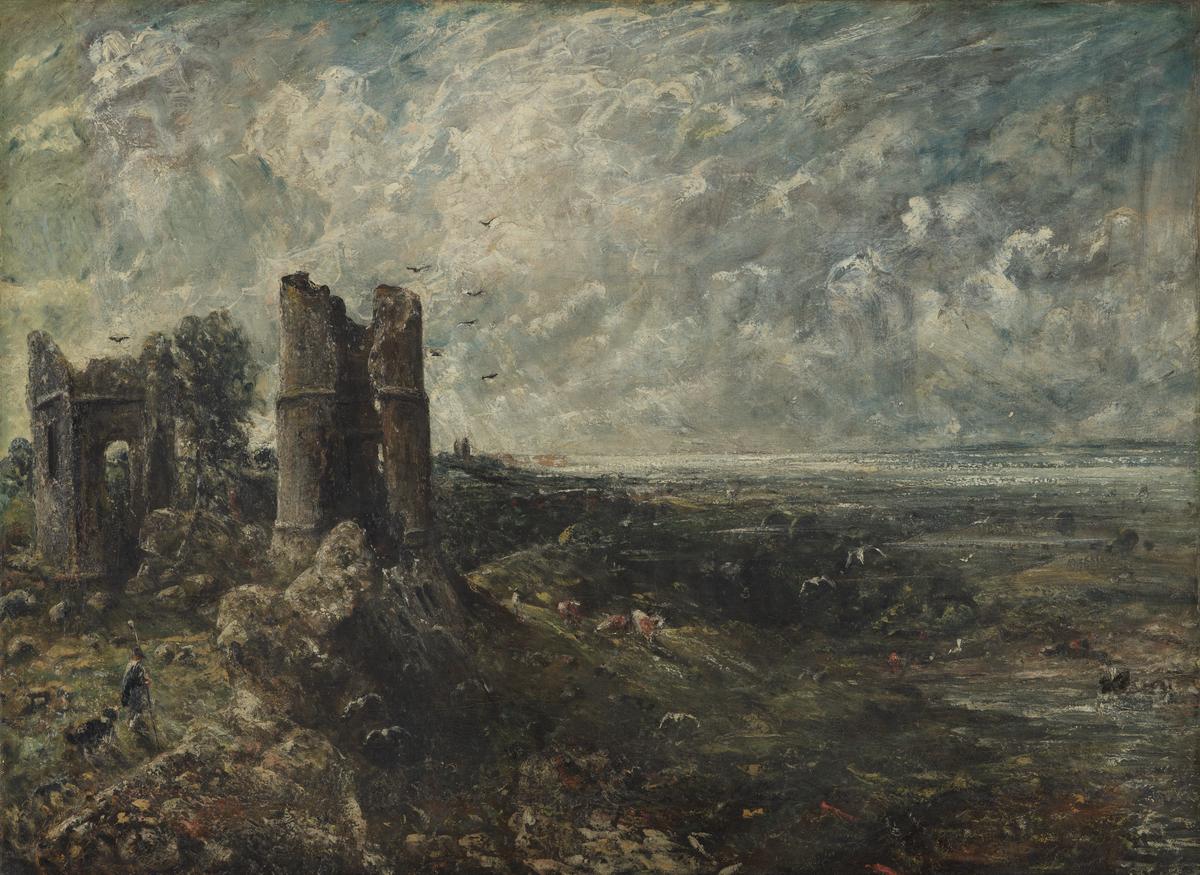
Sketch for ‘Hadleigh Castle’
- Artist: John Constable
- Date: c.1828–9
- Medium: Oil paint on canvas
- Dimensions: support: 1226 x 1673 mm
- Museum: Tate Britain
- Collection record: Tate Britain website
Listen to the free audio guide
About this artwork
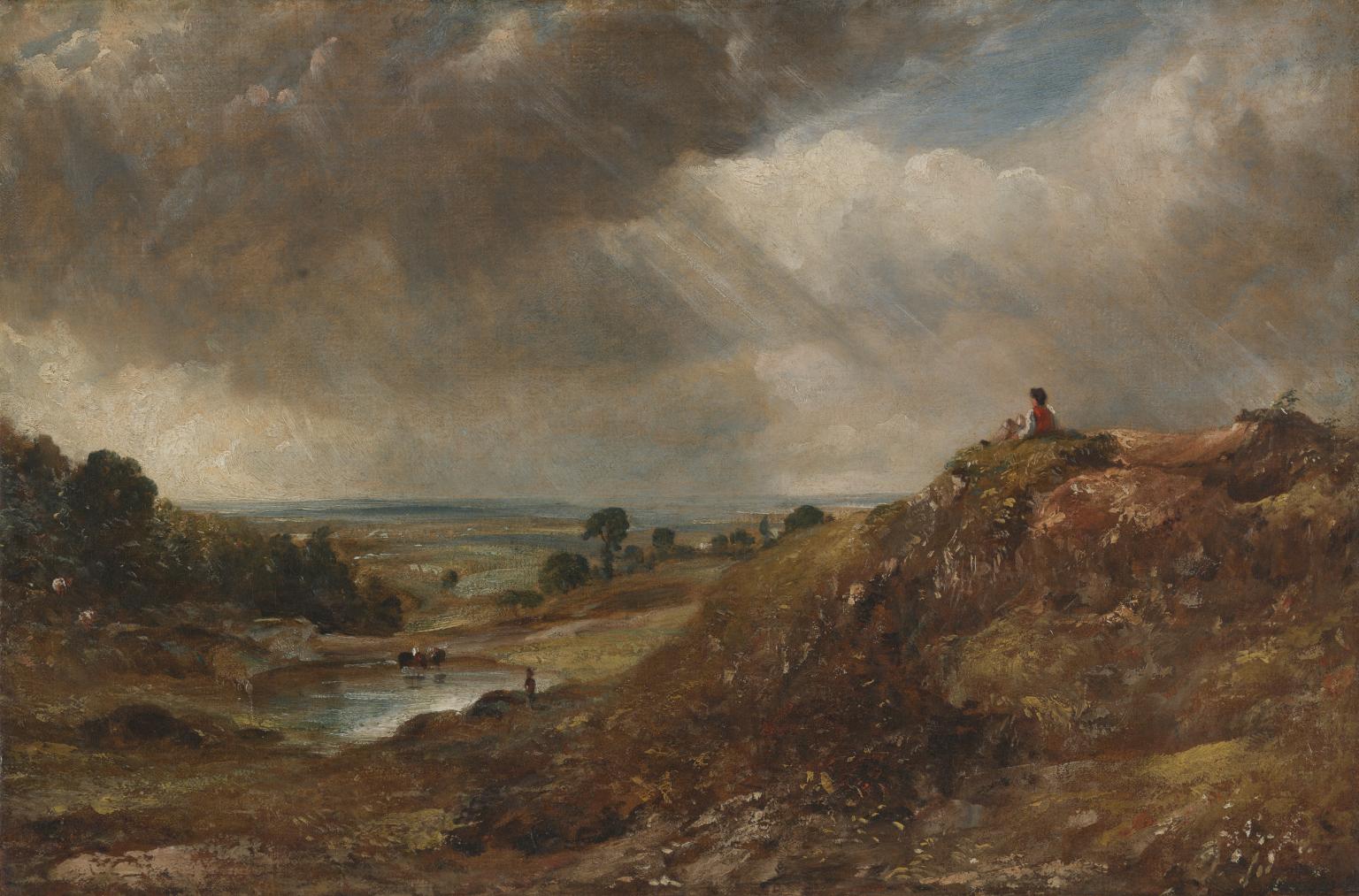
This is the "Sketch for ‘Hadleigh Castle’" by John Constable. Painted around 1828–9, it’s an oil on canvas that shows the artist testing the composition for a full‑size landscape before he went into the studio. The idea came from a tiny pencil sketch Constable made during a brief visit to the ruins in Essex in 1814. After his wife Maria died in 1828, he returned to the ruin and gave it a much darker, more somber mood, reflecting his grief. Notice the heavy, almost textured brushwork and the deep, cool tones that set the scene for a stormy morning at the Thames estuary. The ruined tower stands isolated, surrounded by a bleak sky, a lone gull, and a cow grazing in the foreground—simple figures that underscore the loneliness. This sketch was later turned into the finished painting that he exhibited at the Royal Academy in 1829, a step that marked a turning point toward a freer, more expressive style that shocked critics of the time. The work is a powerful window into Constable’s emotional state and a key moment in his artistic development.
See it in person
Sketch for ‘Hadleigh Castle’ is in the collection of Tate Britain on Millbank, London — free to enter. Point your phone at any artwork there and audioguide.london plays a free audio guide in six languages — no app download needed.