Sculpture of Shiva and Parvati
- Audio guide stop: 608
- Gallery: Room 33
- Culture: Orissa
- Made in: Orissa (coastal)
- Date: 12thC-13thC
- Object type: figure
- Materials: schist
- Museum number: 1872,0701.70
- Museum: The British Museum
- Collection record: British Museum website
- Image © The Trustees of the British Museum, shared under a CC BY-NC-SA 4.0 licence.
Listen to the free audio guide
About this object
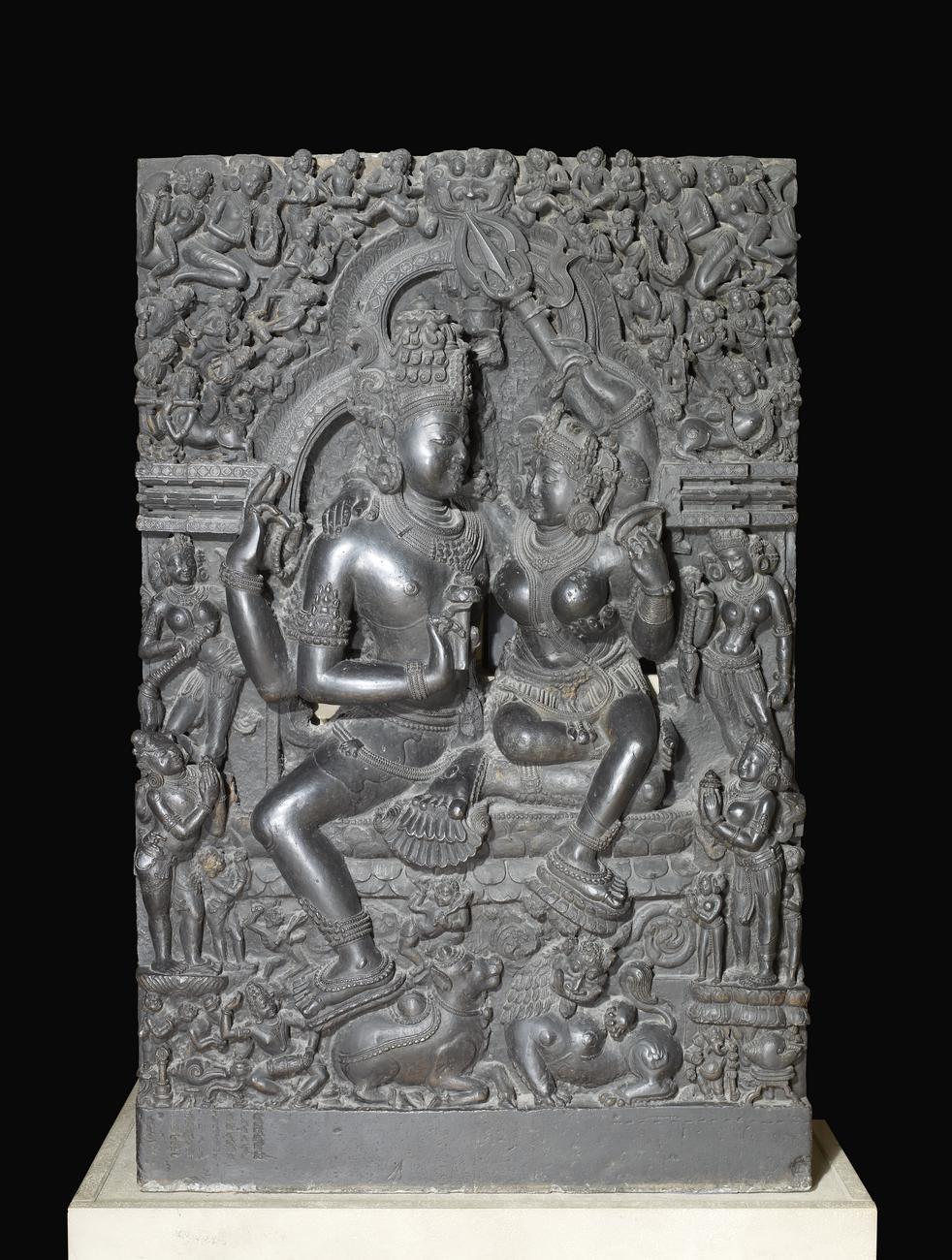
Before you is a stone sculpture titled "Sculpture of Shiva and Parvati," carved from polished schist. A seated figure of Śiva rests atop Pārvatī, shown seated on his knee. This combined form of the deities is known as "Hara-Pārvatī" or "Umamahesvaramurti."
The sculpture is richly detailed with a lion and a bull—Nandi, Śiva’s sacred vehicle—positioned below. Around the central figures are many attendants, including musicians and those bearing garlands. A row of ritual objects is placed at the base, including conch-shell trumpets, a bell, and a lamp.
Created in the coastal region of Orissa between the 12th and 13th centuries, this work reflects the region’s renowned sculptural tradition. The sculpture entered the British Museum in 1872, donated by the heirs of John Bridge, who had collected it decades earlier.
See it in person
Sculpture of Shiva and Parvati is on display in Room 33 at the British Museum on Great Russell Street, Bloomsbury, London — free to enter. Choose British Museum on audioguide.london and type its audio guide stop number, 608, from the gallery label, or take a photo of it, to hear this free audio guide in six languages — no app download needed.
New, in beta. British Museum support has just launched and is still improving: over 1,000 objects so far, with more added all the time.