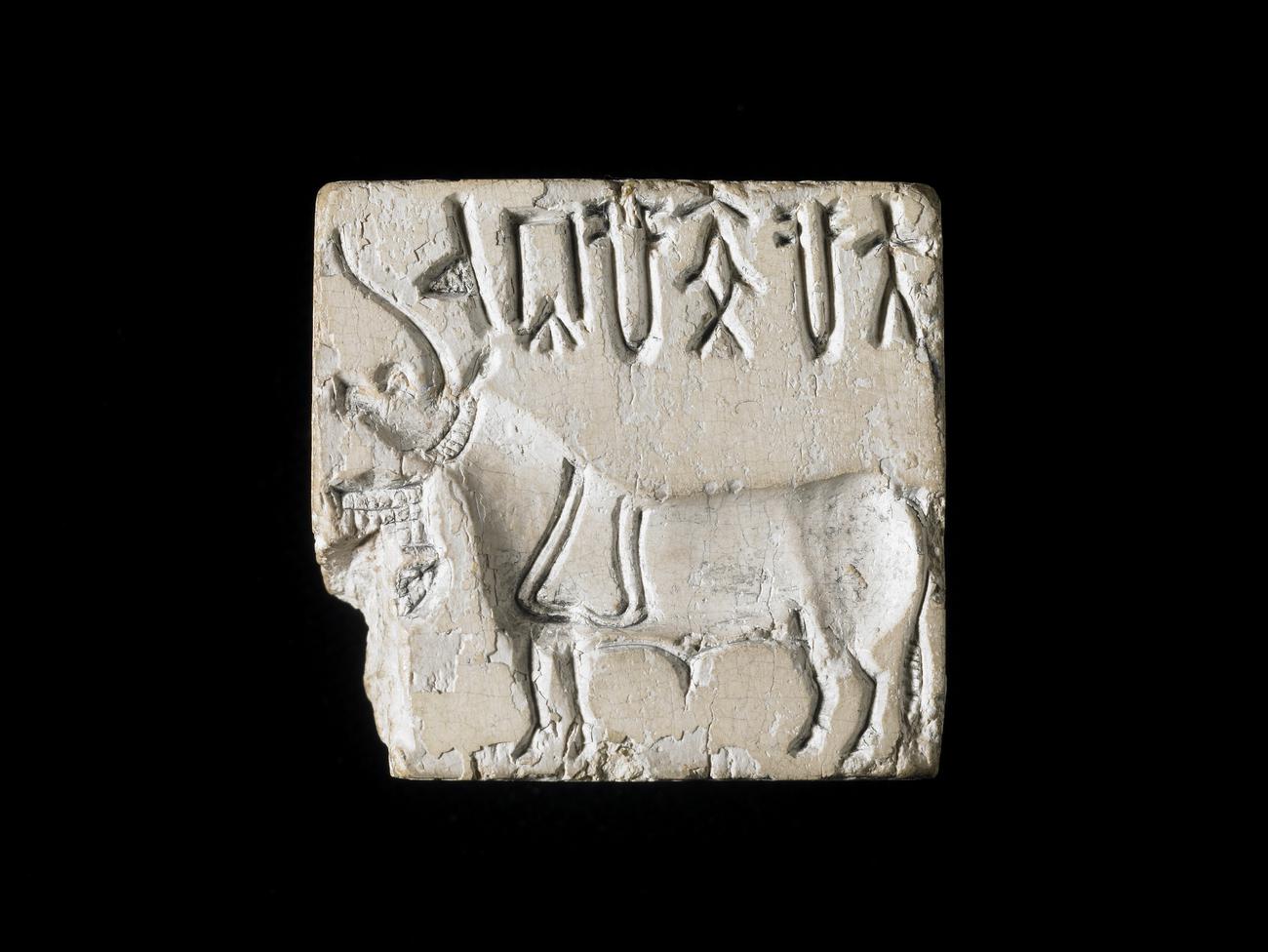
Stamp-seal of a unicorn
- Audio guide stop: 615
- Gallery: Room 33
- Culture: Indus Valley Civilisation
- Date: 2600BC-1900BC
- Object type: stamp-seal
- Materials: steatite
- Museum number: 1912,0507.1
- Museum: The British Museum
- Collection record: British Museum website
- Image © The Trustees of the British Museum, shared under a CC BY-NC-SA 4.0 licence.
Listen to the free audio guide
About this object
Before you is a stamp-seal from the Indus Valley Civilisation, dating between 2600 and 1900 BCE. The seal is carved from steatite, a type of stone commonly used for seals in ancient times. It shows a unicorn, a creature often associated with power and mystery in ancient cultures.
Carved with care, the unicorn's body is slender, and its posture appears lively, despite a chipped corner that shows the passage of time. Around the figure, there is an inscription—in Indus script, which scholars have yet to fully decipher. This seal was likely used to mark goods, trade items, or official documents, as was a common practice in the region.
This piece was discovered at Harappa and donated to the collection in 1912 by Mansel Longworth Dames. It gives us a small but fascinating glimpse into the artistic and administrative practices of one of the world’s earliest advanced civilisations.
See it in person
Stamp-seal of a unicorn is on display in Room 33 at the British Museum on Great Russell Street, Bloomsbury, London — free to enter. Choose British Museum on audioguide.london and type its audio guide stop number, 615, from the gallery label, or take a photo of it, to hear this free audio guide in six languages — no app download needed.
New, in beta. British Museum support has just launched and is still improving: over 1,000 objects so far, with more added all the time.