Romano-British mosaic pavement
- Gallery: Room 49
- Culture: Romano-British
- Date: 4thC
- Object type: mosaic pavement
- Materials: stone
- Museum number: 1908,1215.1
- Museum: The British Museum
- Collection record: British Museum website
- Image © The Trustees of the British Museum, shared under a CC BY-NC-SA 4.0 licence.
Listen to the free audio guide
In the museum now? Point your phone at the next object and hear its guide.
About this object
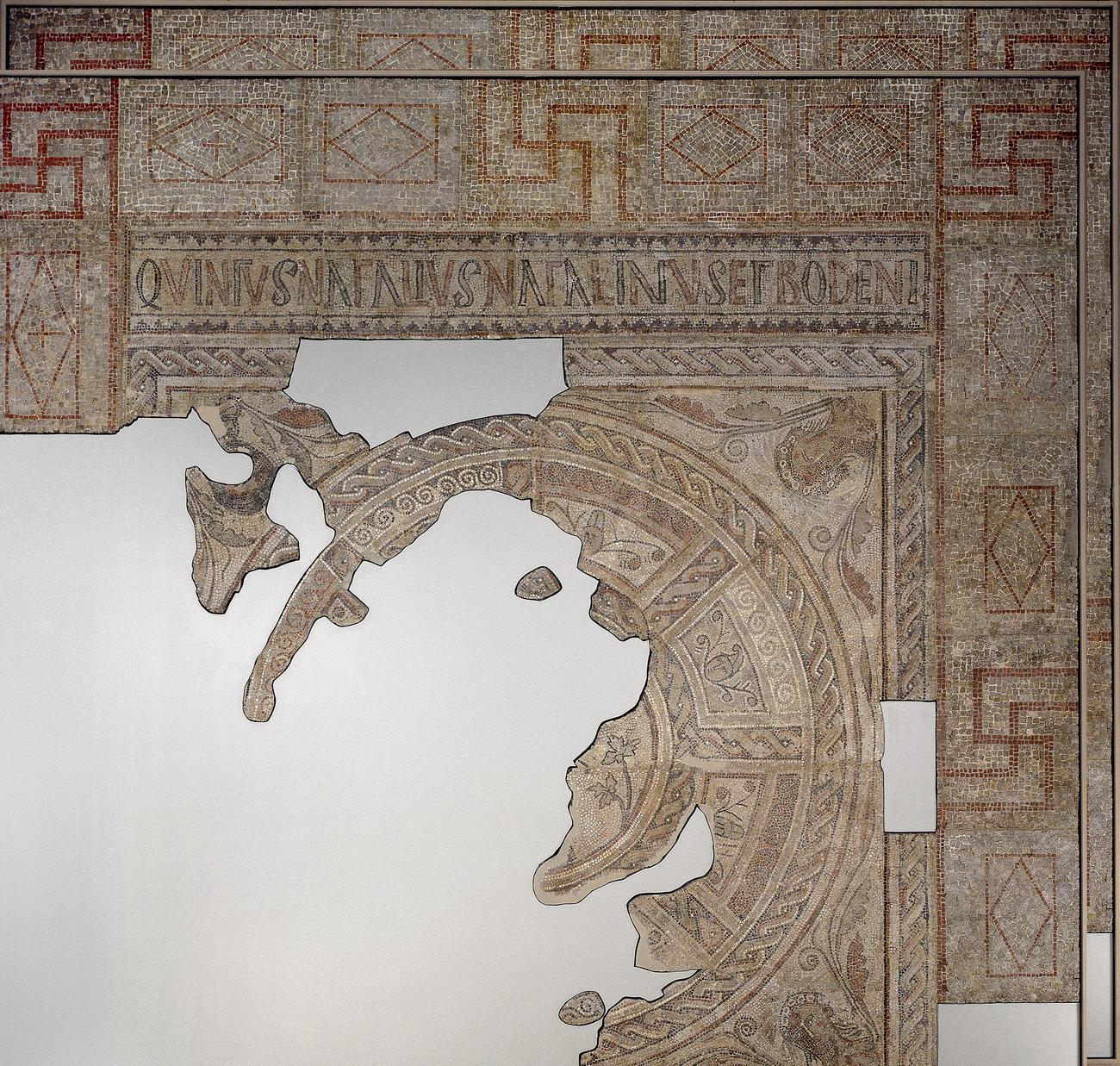
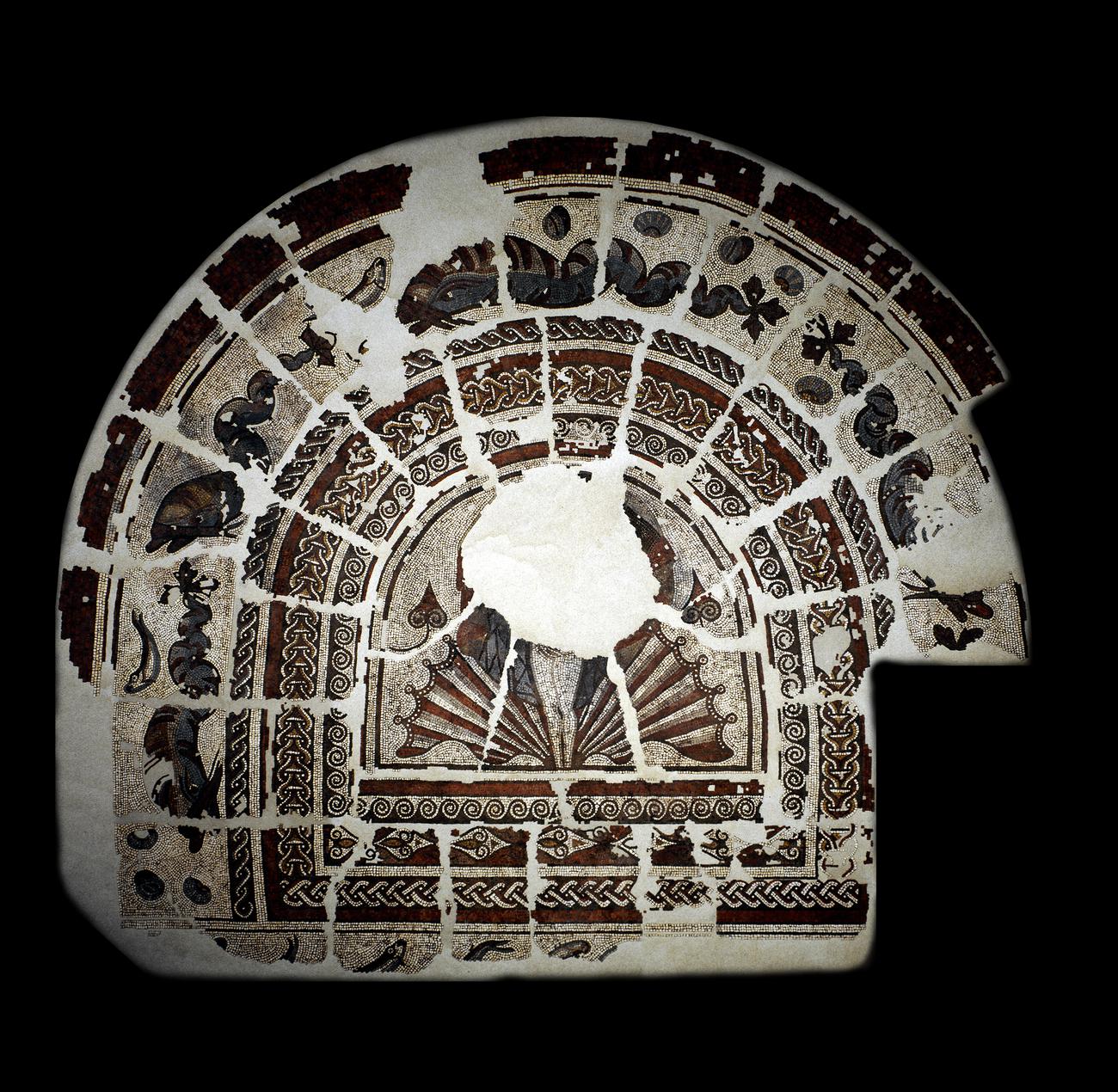
Before you stands a fragment of a Romano-British mosaic pavement. It comes from the apse of what was once a grand reception room. At the center is a depiction of the Roman goddess Venus. Though much of her upper body is missing, her white legs and one outstretched hand remain, framed against a richly detailed scallop shell. The shell is shown open like a fan, with ribbed patterns in black, red, grey, and white that lend it a textured, jewel-like appearance.
Surrounding Venus is a pattern of concentric bands—some edged in black, others adorned with undulating lines and heart-shaped motifs. Below her, a procession of five dolphins swims in rhythmic motion, flanked by shells and fish. The mosaic is made up of tiny colored stones, or tesserae, arranged with remarkable precision to bring the design to life.
This pavement dates to the 4th century and was discovered in Hemsworth. It was donated to the museum in the early 20th century and has since been carefully restored and displayed as an important example of Roman art in Britain.
See it in person
Romano-British mosaic pavement is on display in Room 49 at the British Museum on Great Russell Street, Bloomsbury, London — free to enter. Choose British Museum on audioguide.london and take a photo of it to hear this free audio guide in six languages — no app download needed.
New, in beta. British Museum support has just launched and is still improving: over 1,000 objects so far, with more added all the time.