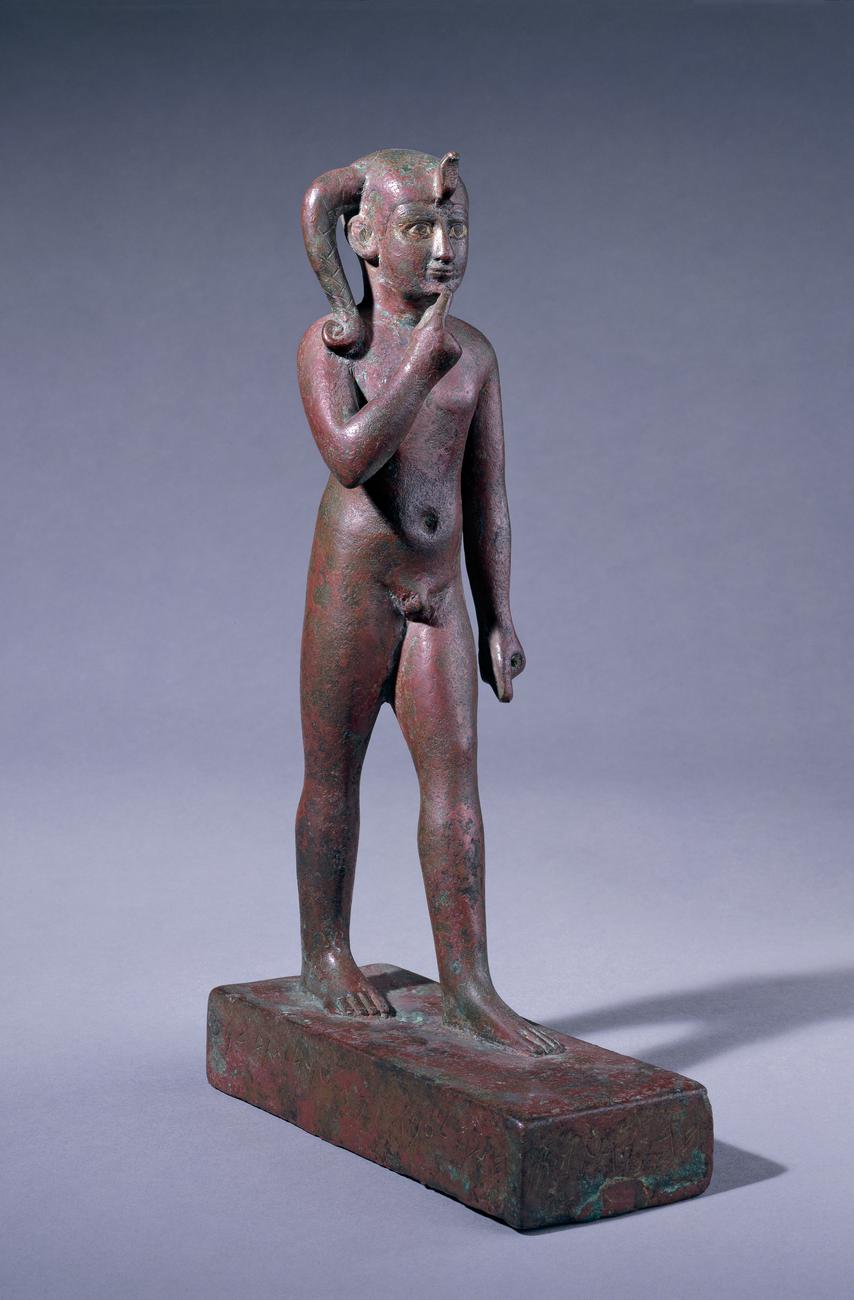
Phoenician statue
- Gallery: Room 57
- Culture: Phoenician
- Date: 6thC BC-4thC BC
- Object type: statue
- Materials: copper alloy; gold (leaf)
- Museum number: 132908
- Museum: The British Museum
- Collection record: British Museum website
- Image © The Trustees of the British Museum, shared under a CC BY-NC-SA 4.0 licence.
Listen to the free audio guide
In the museum now? Point your phone at the next object and hear its guide.
About this object
Before you stands a small but powerful copper alloy statue of the Egyptian child god Harpocrates, created by a Phoenician artisan between the 6th and 4th centuries BC. Carved from metal and accentuated with gold leaf in the eyes, the figure is carefully detailed with a pigtail and a uraeus, the stylized serpent symbol often worn by Egyptian gods. What makes this statue unique is its bilingual inscriptions—on the base’s right side you’ll find Egyptian hieroglyphs thanking Harpocrates for blessings, while the other sides are in Phoenician, a language and script closely tied to the Mediterranean’s ancient trade networks. The Phoenicians shared a strong cultural connection with Egypt, and this votive statue reflects their integration of Egyptian deities into their own spiritual practices.
See it in person
Phoenician statue is on display in Room 57 at the British Museum on Great Russell Street, Bloomsbury, London — free to enter. Choose British Museum on audioguide.london and take a photo of it to hear this free audio guide in six languages — no app download needed.
New, in beta. British Museum support has just launched and is still improving: over 1,000 objects so far, with more added all the time.