Phoenician bowl
- Gallery: Room 57
- Culture: Phoenician; Cypro-Archaic I
- Made in: Phoenicia (historic) (?); Cyprus (?)
- Date: 750BC-600BC
- Object type: bowl
- Materials: silver
- Museum number: 123053
- Museum: The British Museum
- Collection record: British Museum website
- Image © The Trustees of the British Museum, shared under a CC BY-NC-SA 4.0 licence.
Listen to the free audio guide
In the museum now? Point your phone at the next object and hear its guide.
About this object
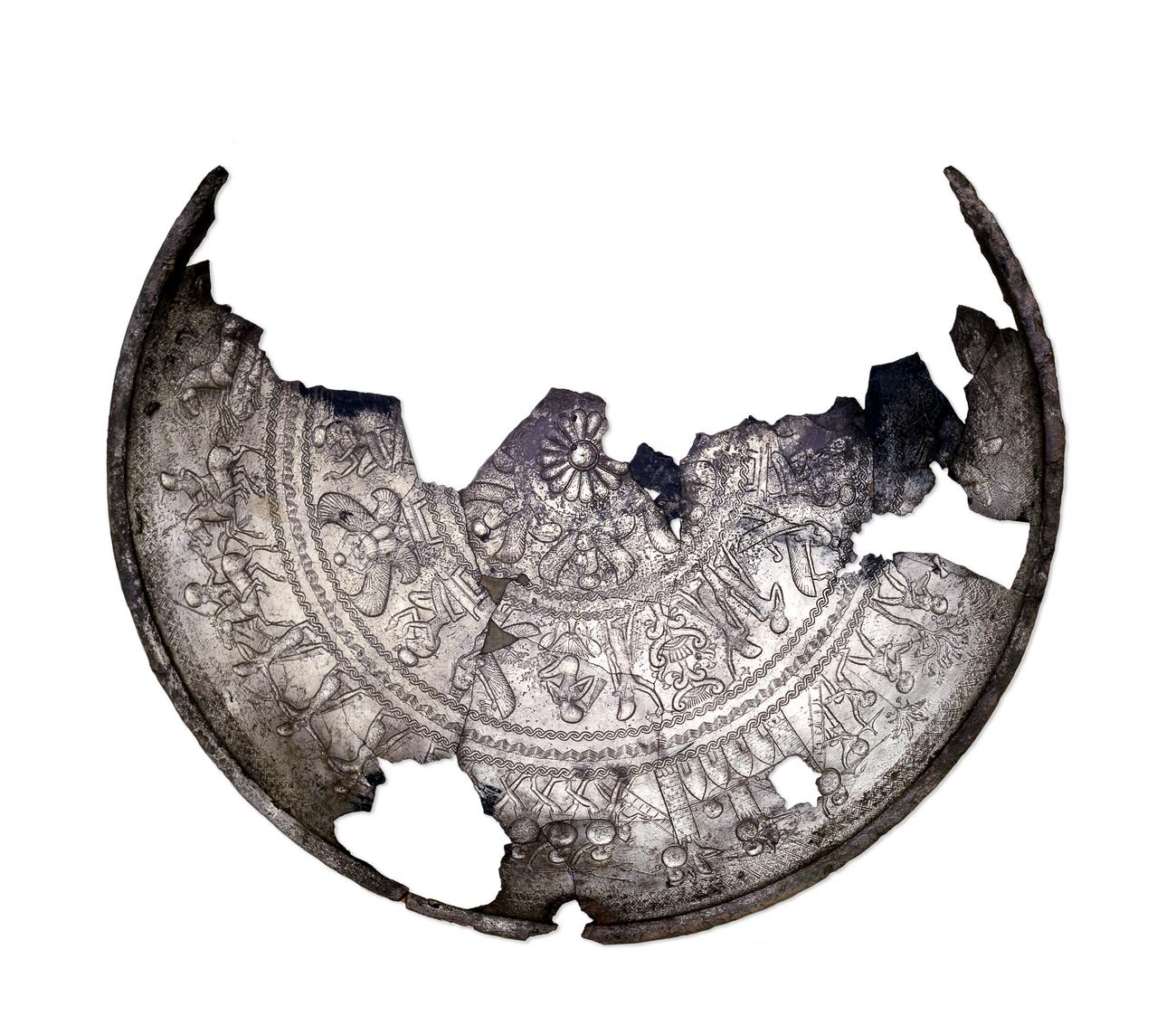
Before you is the Phoenician Bowl, a remarkable piece of Phoenician art dating to between 750 and 600 BC. Silver, lightweight, and striking, the bowl is more than just a vessel—it’s a scene-packed narrative carved in repoussé and engraved with incredible detail.
The central rosette is framed by a zig-zag band, leading into registers of figures. Sphinxes, Egyptian deities and an Assyrian-style scene unfold around it. The outer edge suggests a dramatic siege, with soldiers in a mix of hoplite Greek, Egyptian, and Urartian armor. It’s a fusion of styles that mirrors the cultural exchange of the ancient Eastern Mediterranean.
Though its exact place of making is uncertain—possibly Phoenicia or Cyprus—the bowl was likely buried in Amathus, Cyprus. Whether as a royal or warrior burial remains debated, but the artistry shows a high level of craftsmanship. Take a moment to look closely at the fine lines and layered imagery—this bowl is not just ancient; it’s a small universe of ancient storytelling.
See it in person
Phoenician bowl is on display in Room 57 at the British Museum on Great Russell Street, Bloomsbury, London — free to enter. Choose British Museum on audioguide.london and take a photo of it to hear this free audio guide in six languages — no app download needed.
New, in beta. British Museum support has just launched and is still improving: over 1,000 objects so far, with more added all the time.