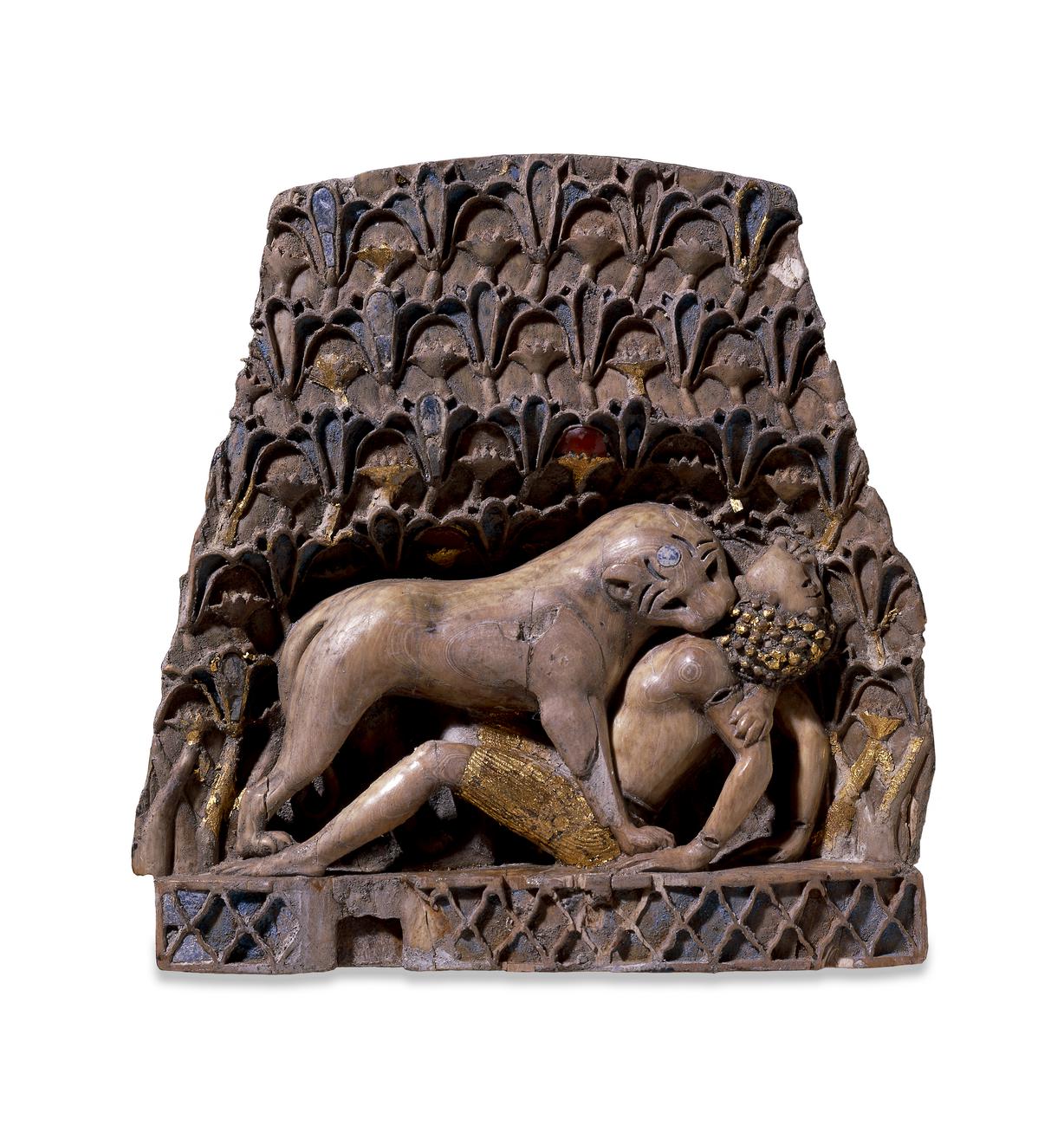
Ivory plaque of a lioness
- Audio guide stop: 382
- Gallery: Room 57
- Culture: Phoenician
- Date: 900BC-700BC
- Object type: plaque, furniture-fitting
- Materials: ivory; gold; cornelian; lapis lazuli
- Museum number: 127412
- Museum: The British Museum
- Collection record: British Museum website
- Image © The Trustees of the British Museum, shared under a CC BY-NC-SA 4.0 licence.
Listen to the free audio guide
About this object
Before you stands a striking ivory plaque carved by a Phoenician craftsman sometime between 900 and 700 BCE. At the center, a powerful lioness is shown mauling a crouched African figure whose knees are drawn up and hands press into the ground. This dynamic scene is rich in detail: the lioness's teeth are at the African’s throat, and she wears a short kilt inlaid with gold leaf.
The figure's curly hair is rendered with gilt-topped ivory plugs. Behind them, lotus and papyrus flowers in gold leaf are accented with lapis lazuli and cornelian. On both the top and base of the plaque are two incised Phoenician “aleph” letters, and multiple mortice holes suggest it was once attached to a piece of furniture.
Probably part of decorative furnishings, this plaque shows exceptional craftsmanship. It reflects the Phoenician influence in the region and gives rare insight into the luxurious artistry of the ancient world.
See it in person
Ivory plaque of a lioness is on display in Room 57 at the British Museum on Great Russell Street, Bloomsbury, London — free to enter. Choose British Museum on audioguide.london and type its audio guide stop number, 382, from the gallery label, or take a photo of it, to hear this free audio guide in six languages — no app download needed.
New, in beta. British Museum support has just launched and is still improving: over 1,000 objects so far, with more added all the time.