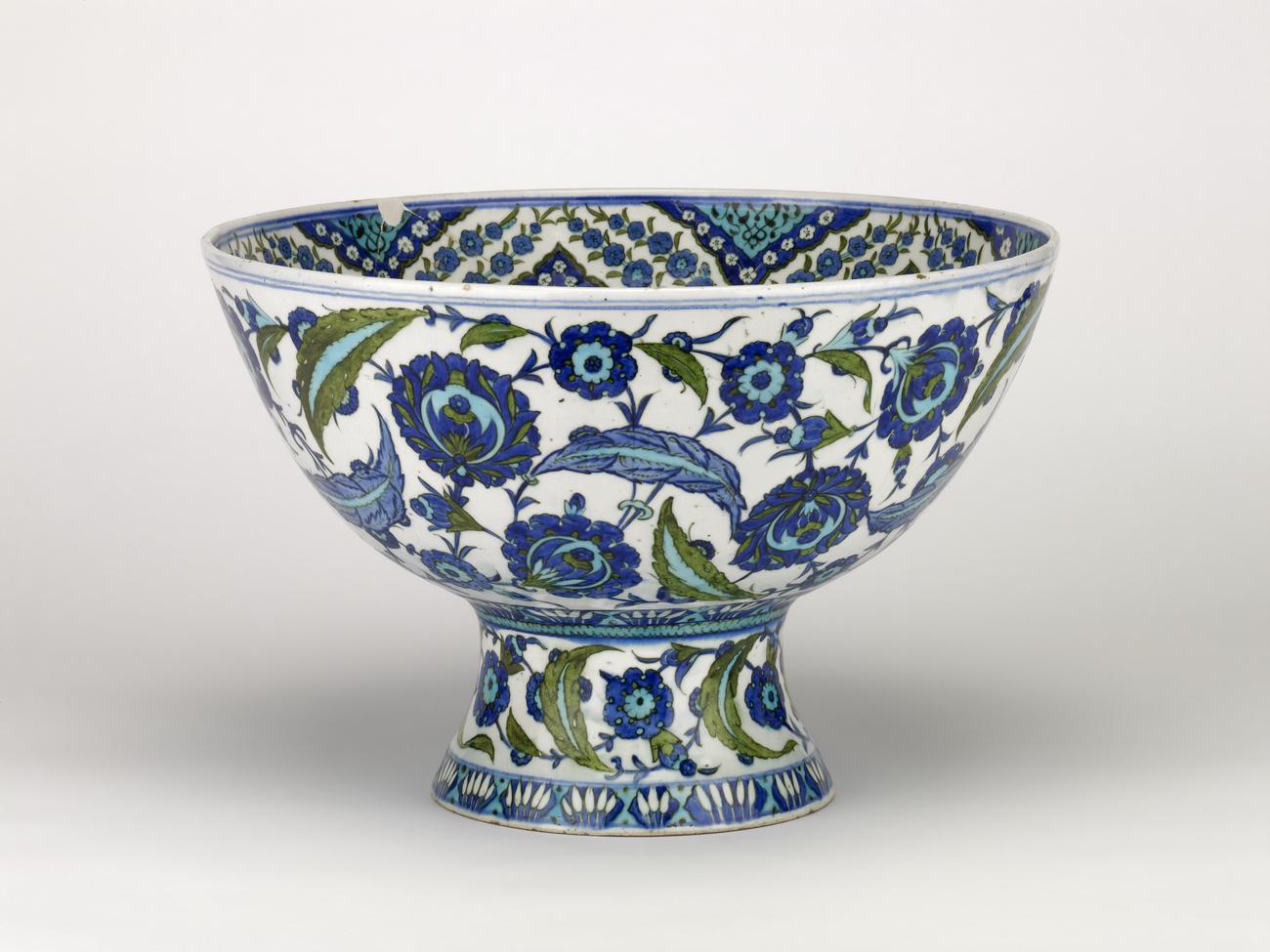
Iznik footed bowl
- Audio guide stop: 633
- Gallery: Room 43
- Culture: Ottoman dynasty
- Made in: Iznik
- Date: 1545-1550 (circa)
- Object type: basin
- Materials: pottery
- Museum number: G.66
- Museum: The British Museum
- Collection record: British Museum website
- Image © The Trustees of the British Museum, shared under a CC BY-NC-SA 4.0 licence.
Listen to the free audio guide
About this object
Before you is an "Iznik footed bowl," a striking ceramic piece from the Ottoman dynasty. It dates to around 1545–1550 and was made in Iznik, a renowned center for ceramic art. The bowl is richly decorated in cobalt, green, and turquoise. On its exterior, you’ll notice bands of tulips and lobed medallions, along with intricate designs of lotuses, saz leaves, and double prunus stems. These floral motifs are characteristic of Iznik pottery, known for its elegant use of color and form.
The bowl's base is footed, and its rim spans 42 centimeters, giving it a balanced, stable presence. Painted and glazed, the ceramic surfaces gleam with a smooth finish. The work reflects the artistic style of the Iznik school, which flourished under Ottoman patronage.
Curators regard this piece as important for its connection to other Iznik wares. Not long ago, it entered the collection through bequest by Miss Edith Godman. Look closely—each swirl and curve carries an echo of a time when floral artistry reached great heights in ceramic design.
See it in person
Iznik footed bowl is on display in Room 43 at the British Museum on Great Russell Street, Bloomsbury, London — free to enter. Choose British Museum on audioguide.london and type its audio guide stop number, 633, from the gallery label, or take a photo of it, to hear this free audio guide in six languages — no app download needed.
New, in beta. British Museum support has just launched and is still improving: over 1,000 objects so far, with more added all the time.