Oxus Treasure: votive plaque
- Gallery: Room 52
- Culture: Achaemenid
- Date: 5thC BC-4thC BC
- Object type: votive plaque
- Materials: gold
- Museum number: 123966
- Museum: The British Museum
- Collection record: British Museum website
- Image © The Trustees of the British Museum, shared under a CC BY-NC-SA 4.0 licence.
Listen to the free audio guide
In the museum now? Point your phone at the next object and hear its guide.
About this object
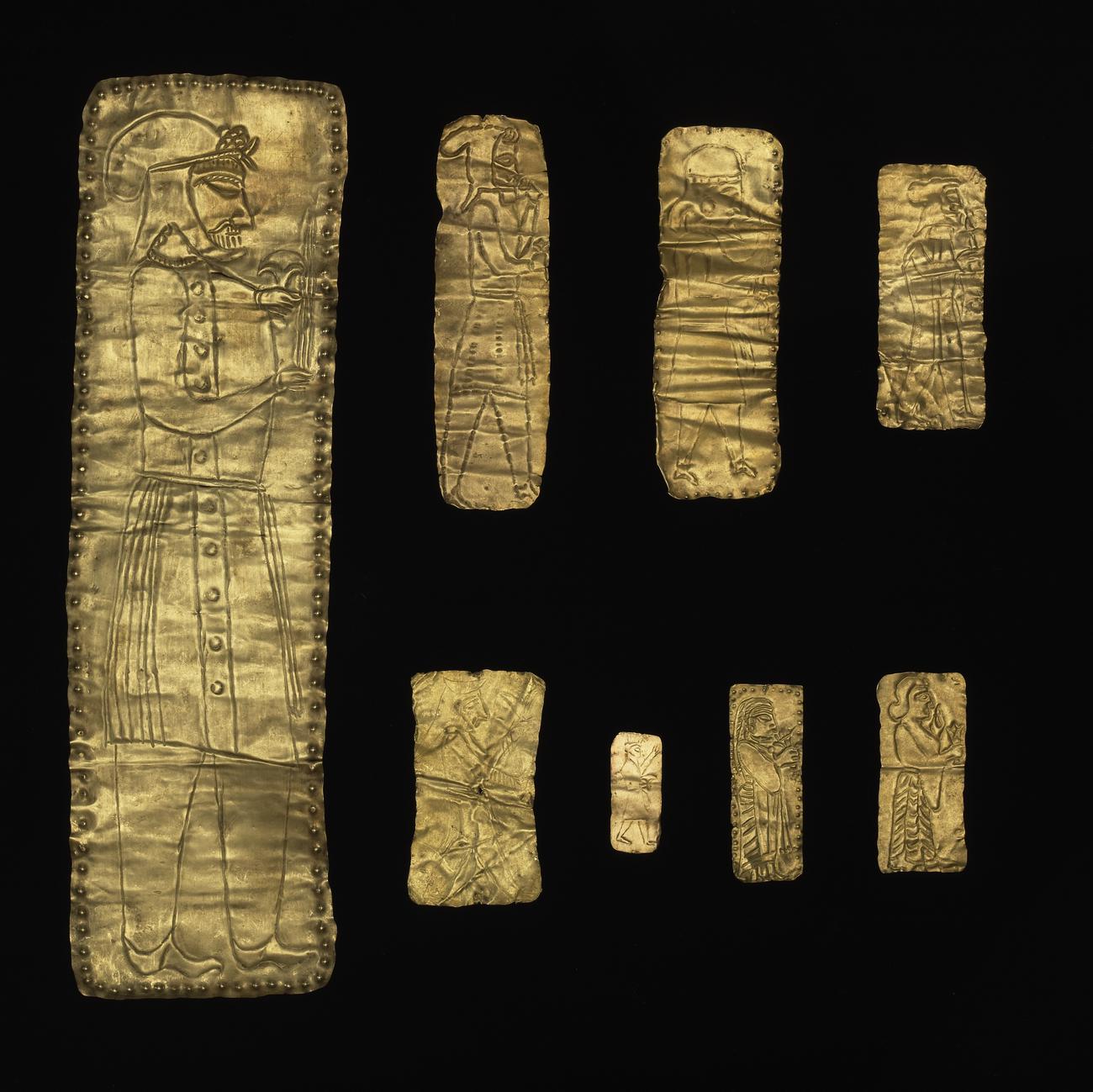
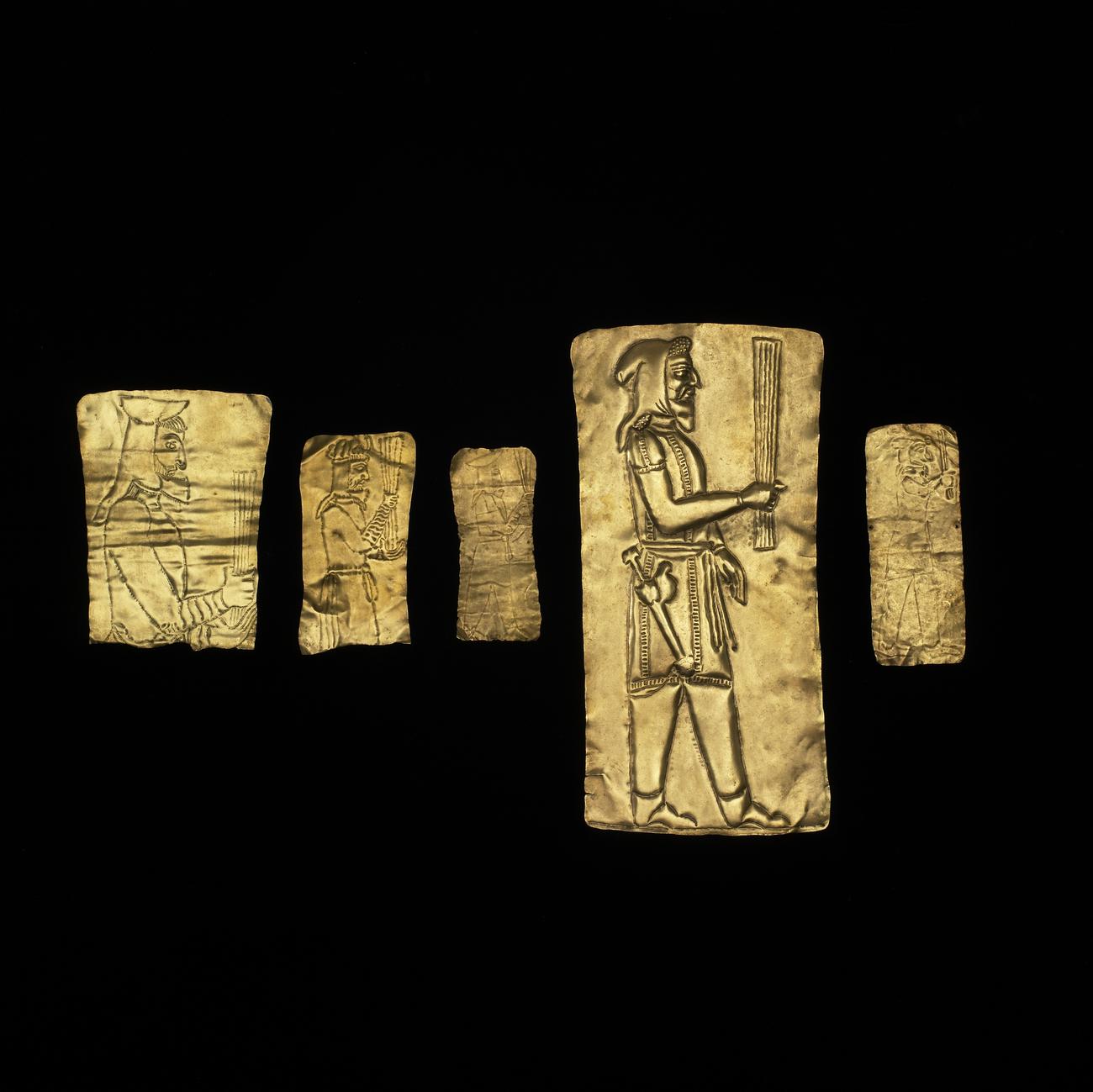
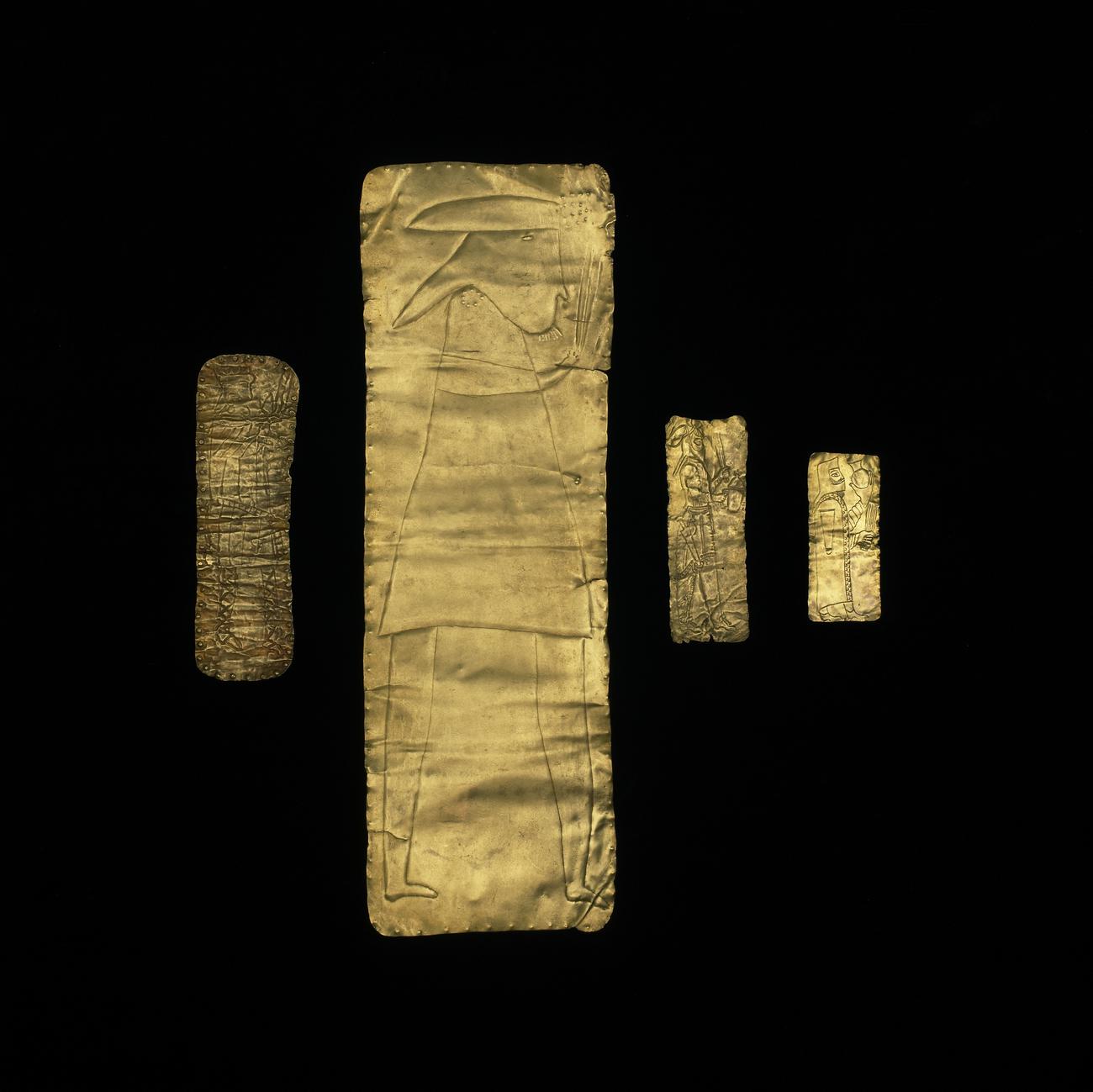
Before you is a small but remarkable gold plaque from the Oxus Treasure. This Achaemenid-era artifact dates to between the 5th and 4th centuries BC and is rich with detail. The decoration shows a male figure facing right, dressed in a tunic and trousers, with a soft cap and neck guard. He may have a beard and wears an earring. In his right hand, he holds a "barsom"—a bundle of sacred rods significant in Zoroastrian tradition.
The plaque is skillfully worked in chased and embossed gold, with small dots along its edge, adding texture and visual interest. Though only about 22.7 centimetres tall, it captures a powerful sense of ritual and artistry.
This piece is made of nearly pure gold, with small traces of silver, copper, and lead. It once belonged to Captain Francis Charles Burton and was later bequeathed to the museum by Sir Augustus Wollaston Franks.
A true testament to ancient craftsmanship and Achaemenid culture, it invites us to imagine the spiritual practices and artistry of the ancient world.
See it in person
Oxus Treasure: votive plaque is on display in Room 52 at the British Museum on Great Russell Street, Bloomsbury, London — free to enter. Choose British Museum on audioguide.london and take a photo of it to hear this free audio guide in six languages — no app download needed.
New, in beta. British Museum support has just launched and is still improving: over 1,000 objects so far, with more added all the time.