Oxus Treasure: vessel
- Gallery: Room 52
- Culture: Achaemenid
- Date: 5thC BC-4thC BC
- Object type: vessel, pendant
- Materials: gold
- Museum number: 123917
- Museum: The British Museum
- Collection record: British Museum website
- Image © The Trustees of the British Museum, shared under a CC BY-NC-SA 4.0 licence.
Listen to the free audio guide
About this object
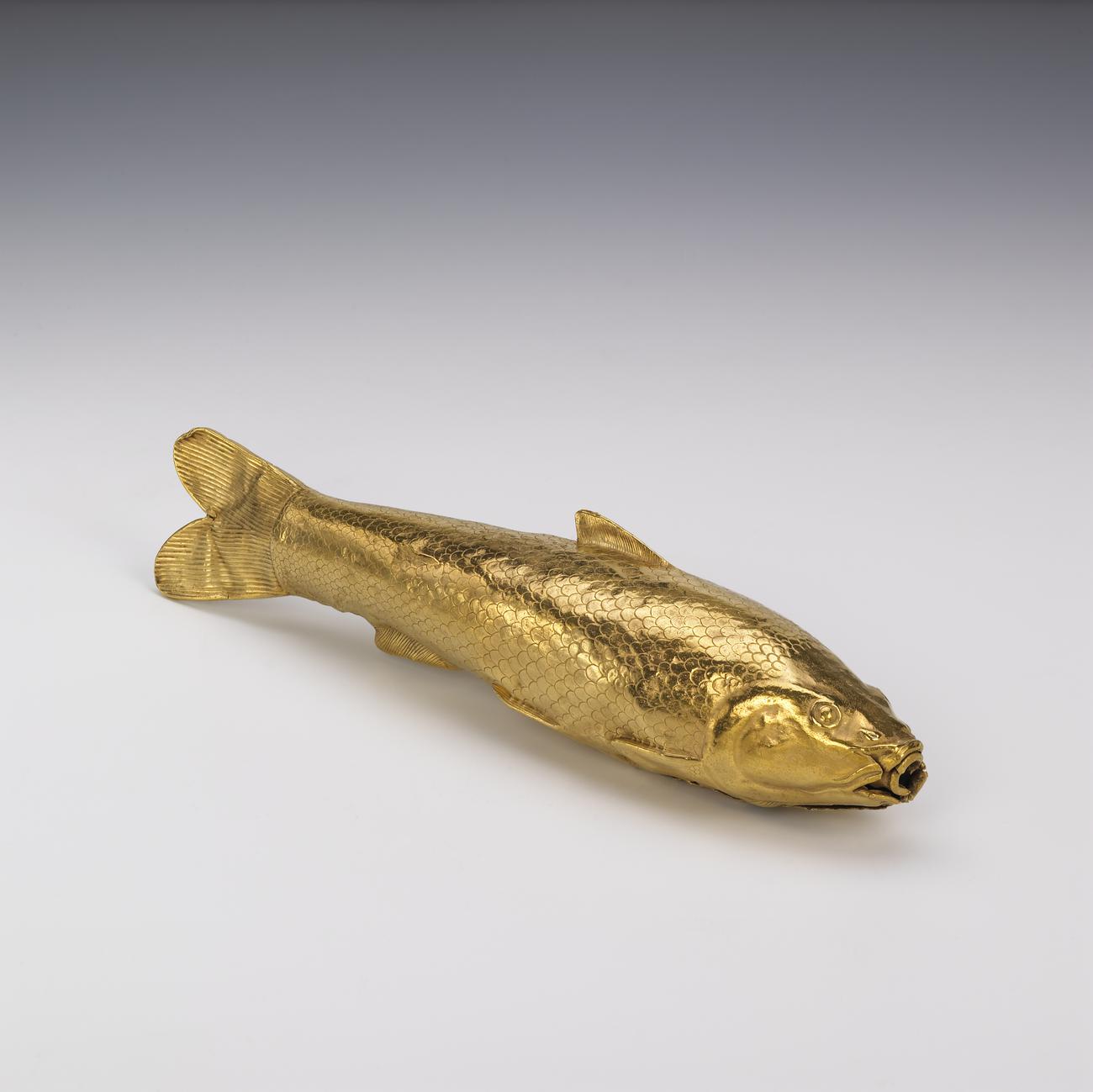
Before you is the Oxus Treasure - a small gold fish-shaped vessel from the Achaemenid period, dating between the 5th and 4th centuries BC. The fish is hollow, carefully hammered from gold sheet, with intricate scales created using overlapping patterns known as imbrications. The fins are detailed with punched, parallel lines, and the mouth features an inner lining with a thickened edge.
A metal loop attached to the left fin suggests it may have been worn as a pendant or used as a mount for a missing stopper. Some scholars believe it could have been used in ritual ceremonies, possibly connected to river worship — an idea that ties into other archaeological finds from the region.
Made of pure gold, this piece is lightweight yet rich in detail, and remains a fascinating example of ancient Persian craftsmanship. It was discovered in the Takht-i Kuwad area and is part of the Oxus Treasure collection bequeathed by Sir Augustus Wollaston Franks.
See it in person
Oxus Treasure: vessel is on display in Room 52 at the British Museum on Great Russell Street, Bloomsbury, London — free to enter. Choose British Museum on audioguide.london and take a photo of it to hear this free audio guide in six languages — no app download needed.
New, in beta. British Museum support has just launched and is still improving: over 1,000 objects so far, with more added all the time.