Oxus treasure
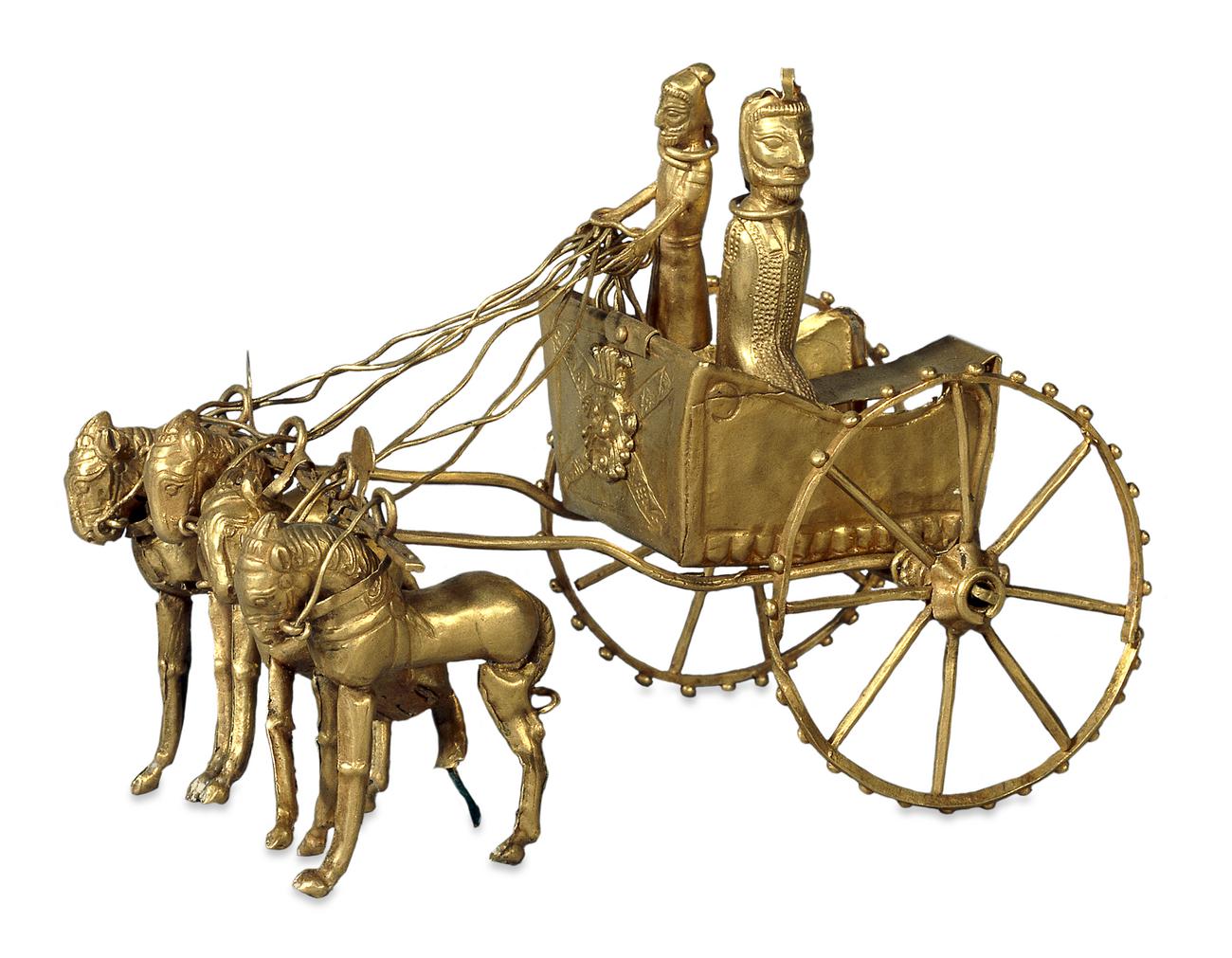
- Audio guide stop: 423
- Gallery: Room 52
- Audio guide: one commentary for a group of objects shown together
- Museum: The British Museum
- Image © The Trustees of the British Museum, shared under a CC BY-NC-SA 4.0 licence.
Listen to the free audio guide
About these objects
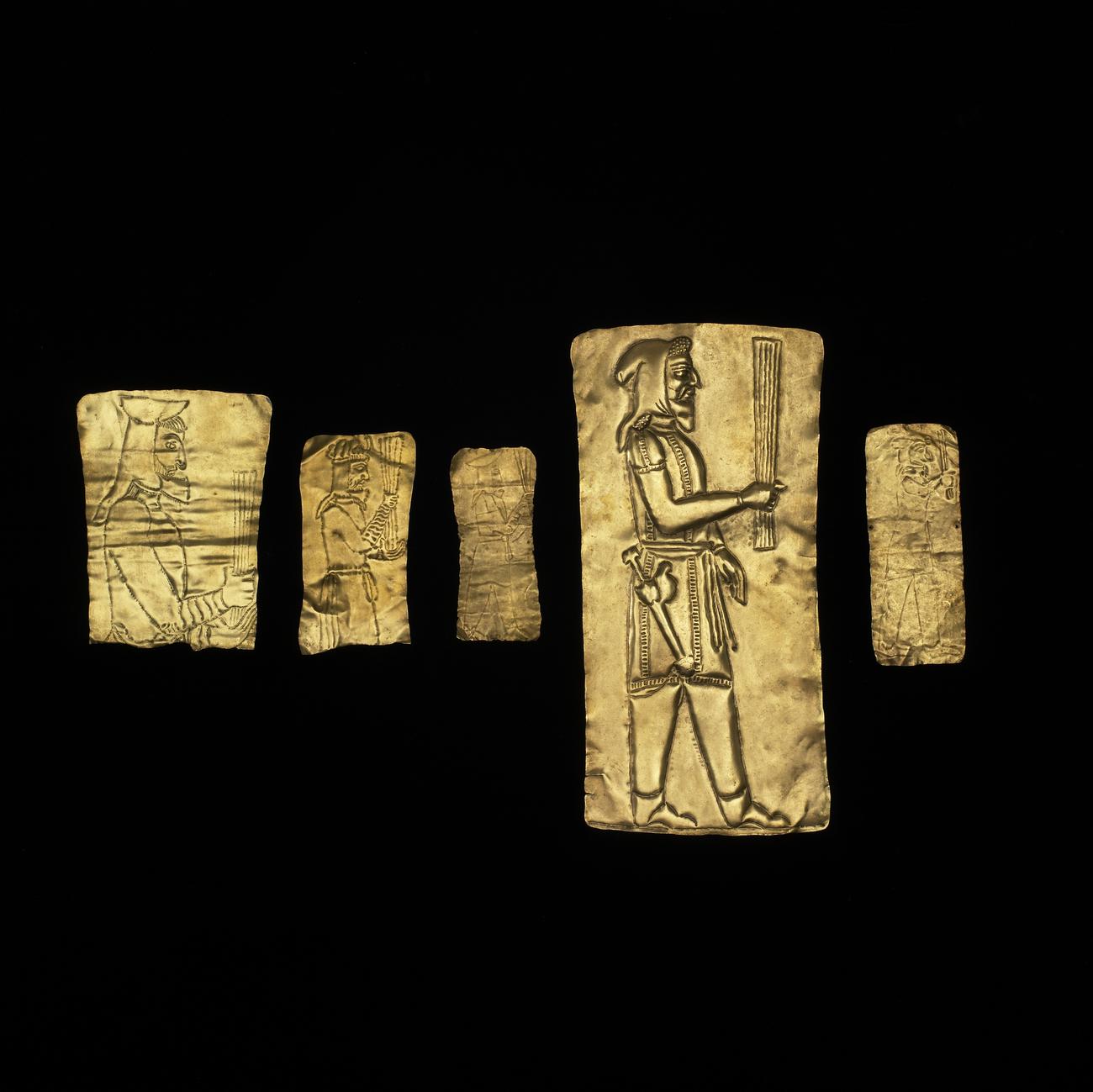
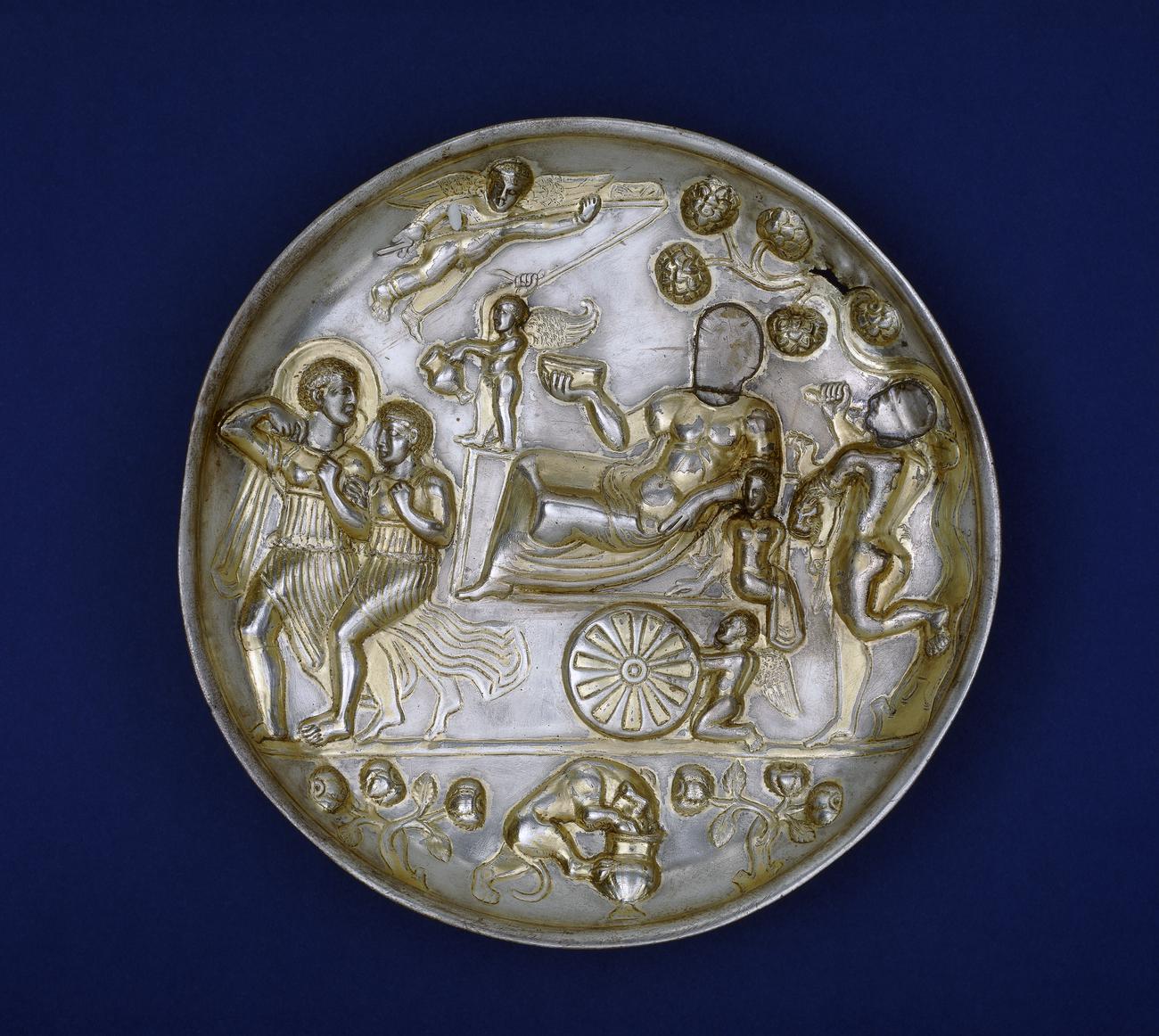
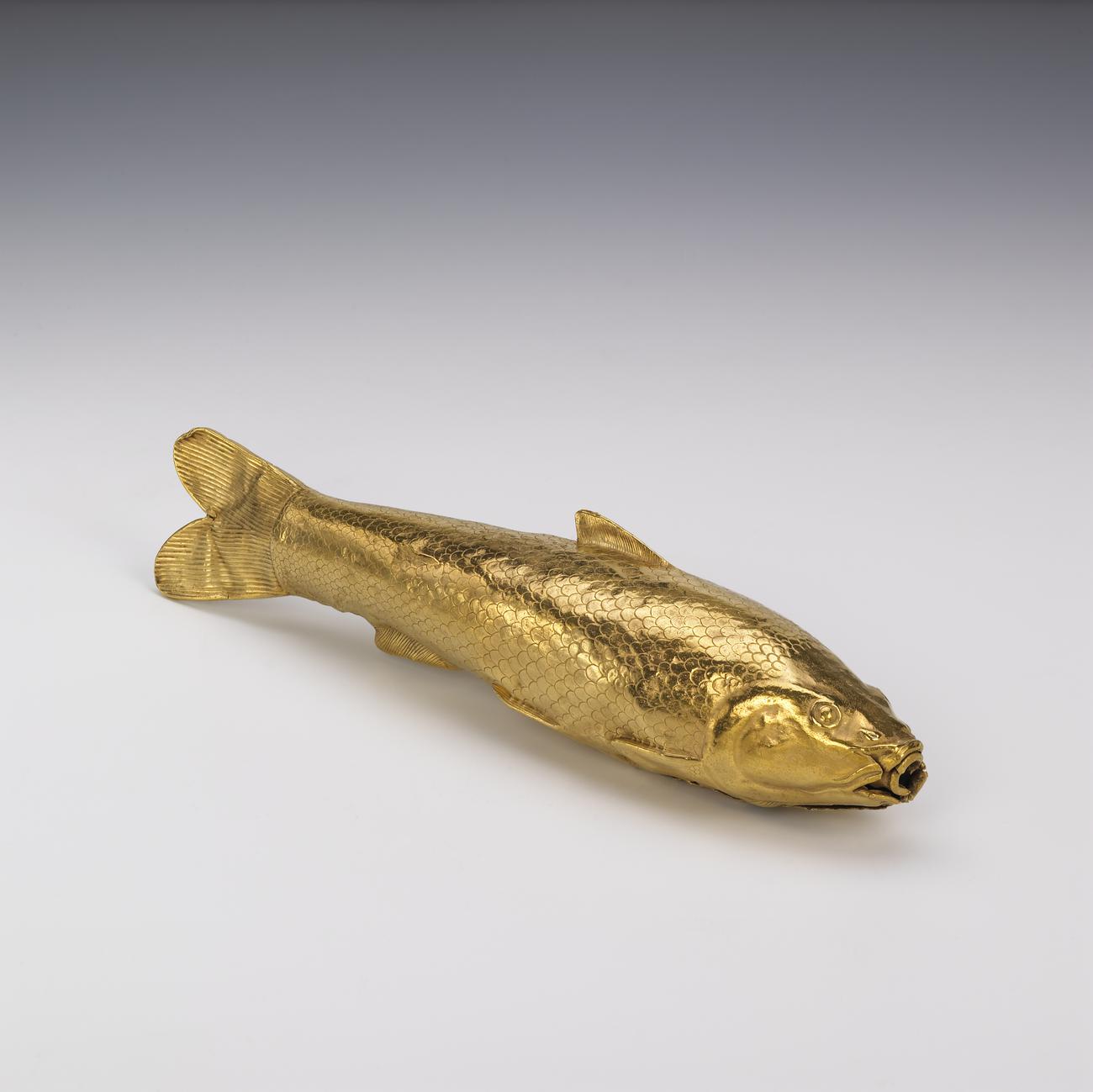
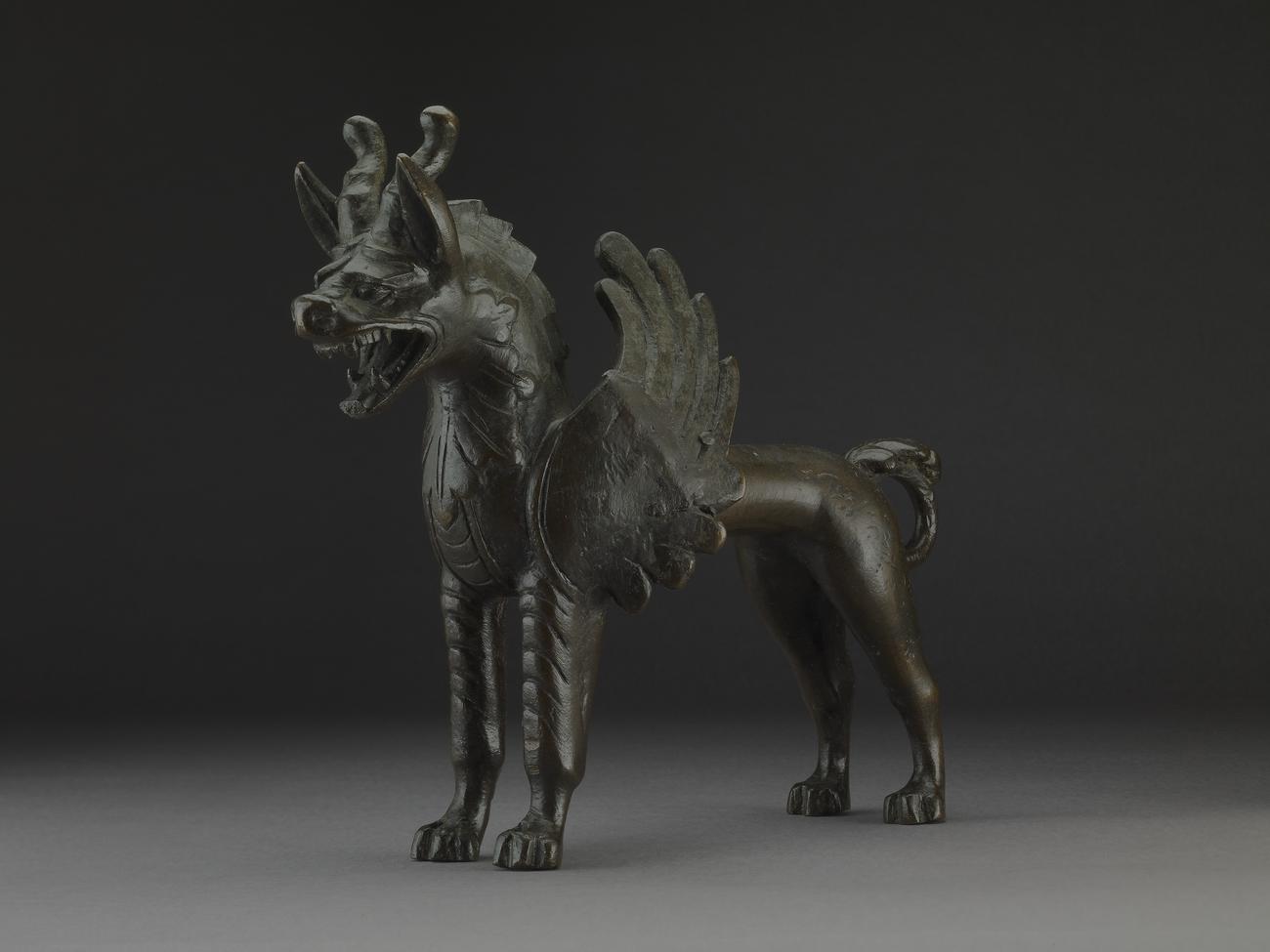
The "Oxus Treasure" on display before you is a remarkable collection of gold and silver artifacts from ancient Bactria, dating to the 5th to 4th centuries BC. These objects were likely part of a hoard from the Achaemenid period—perhaps buried as a symbol of status or stored for safekeeping during troubled times.
What unites these items is their craftsmanship and intricate decoration. Each one speaks of a world where gold wasn't just valuable for its rarity, but also for the artistry with which it was transformed. Look for the gold chariot model, its open back and finely incised details suggesting it was not just a toy, but possibly a ceremonial or symbolic object connected to youth and protection.
Also of note is the silver statuette of a nude youth, its foreshortened posture and gilded cap hinting at a style that blends Persian with influences from farther afield. Another highlight is the rectangular gold plaque, with a warrior in Median-style dress, who holds a sacred barsom bundle—suggesting a ritual or votive function.
Each piece in the group offers a glimpse into the artistry and symbolism of ancient Bactria, a region at the crossroads of East and West.
See it in person
Oxus treasure is on display in Room 52 at the British Museum on Great Russell Street, Bloomsbury, London — free to enter. Choose British Museum on audioguide.london and type its audio guide stop number, 423, from the gallery label, or take a photo of it, to hear this free audio guide in six languages — no app download needed.
New, in beta. British Museum support has just launched and is still improving: over 1,000 objects so far, with more added all the time.