Ophelia
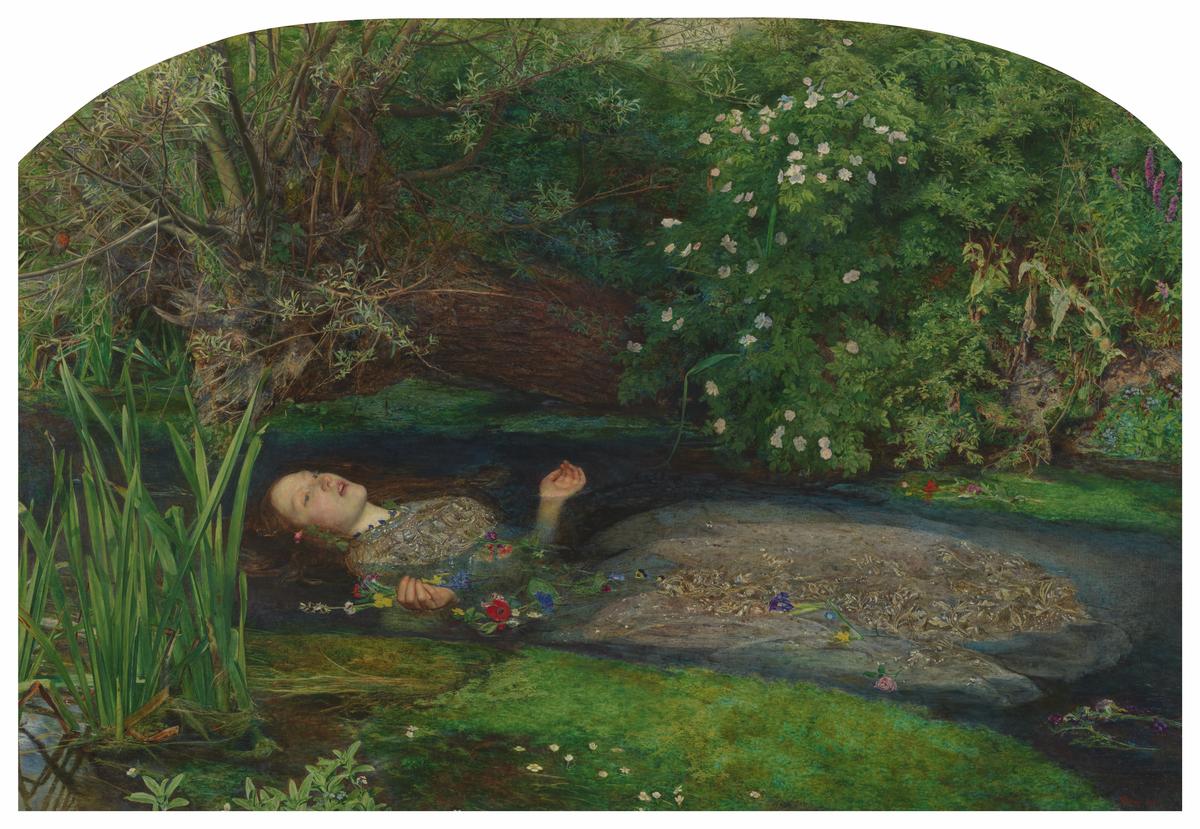
- Artist: Sir John Everett Millais, Bt
- Date: 1851–2
- Medium: Oil paint on canvas
- Dimensions: support: 762 x 1118 mm
- Museum: Tate Britain
- Collection record: Tate Britain website
Listen to the free audio guide
About this artwork
This is the “Ophelia” by Sir John Everett Millais, finished in 1851–2. The canvas captures the tragic moment when Shakespeare’s Ophelia, shaken by her father’s murder and Hamlet’s broken promise, slips into the Hogsmill River and floats away. Millais spent months painting the surrounding landscape leaf by leaf, working out every droplet of water and leaf detail in the Surrey countryside.
To give Ophelia a realistic presence, the artist had Elizabeth Siddal, a close friend and model, pose in a bathtub full of warm water, wearing a wedding dress. The scene was a subtle critique of the era’s tendency to marry for money and status, a sentiment echoed in the flowers that litter the riverbank. Poppies mark the inevitable death, while roses, daisies, and forget‑me‑nots hint at love, innocence, and memory.
The oil on canvas shows Millais’ Pre‑Raphaelite devotion to nature, yet his brushwork also carries the melancholy of a woman drowning in her own grief. This painting was presented to the collection by Sir Henry Tate in 1894 and has been displayed in numerous exhibitions, reminding us of the power of art to capture both beauty and sorrow.
See it in person
Ophelia is in the collection of Tate Britain on Millbank, London — free to enter. Point your phone at any artwork there and audioguide.london plays a free audio guide in six languages — no app download needed.