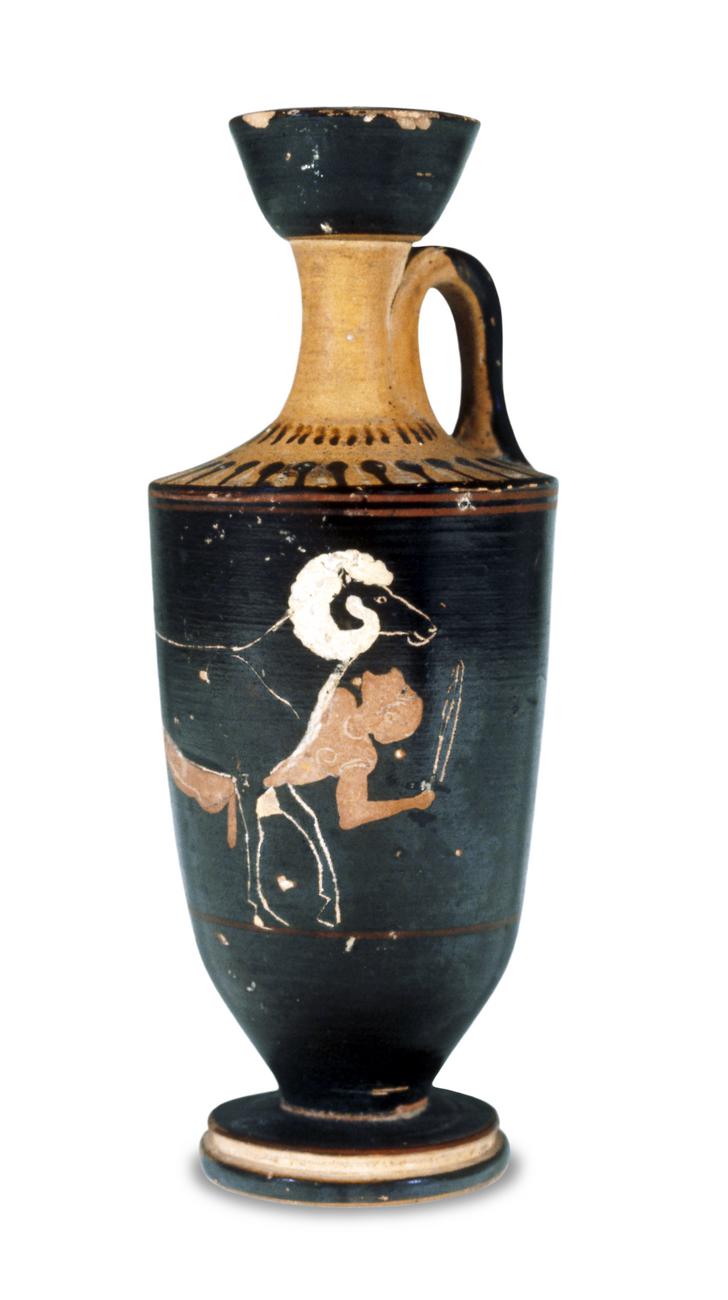
Oil-jar of Odysseus
- Audio guide stop: 235
- Gallery: Room 14
- Culture: Attic
- Made in: Attica (Greece)
- Date: 480BC (circa)
- Object type: lekythos
- Materials: pottery
- Museum number: 1837,0609.72
- Museum: The British Museum
- Collection record: British Museum website
- Image © The Trustees of the British Museum, shared under a CC BY-NC-SA 4.0 licence.
Listen to the free audio guide
About this object
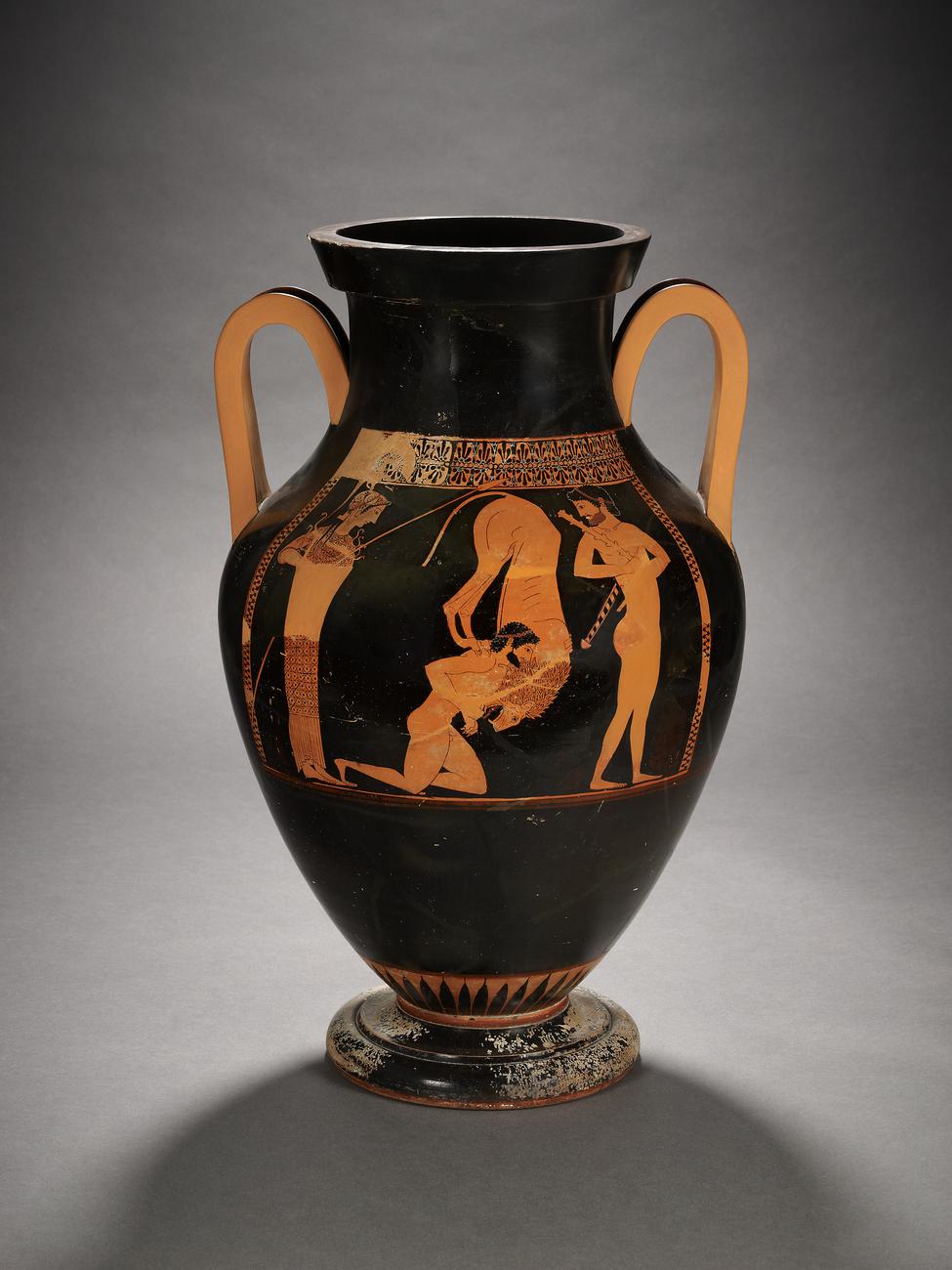
This is the "Oil-jar of Odysseus," an Attic lekythos made around 480 BC. It features a detailed scene painted using the Six technique: dark outlines on a black background with hints of red and white. Odysseus appears in the scene, bound under a ram as he escapes from Polyphemus. Details like his sword, chiton, and the ram’s white horns bring motion and drama to the narrative.
The jar’s surface is decorated with red and black rays along the neck and shoulder, adding rhythmic energy. Incised lines highlight key features, while painted figures and decorative elements showcase Greek craftsmanship. This lekythos was excavated in Vulci and later purchased in 1837 from Prince Lucien Bonaparte.
Though small, just over 15 centimeters tall, the jar captures a pivotal moment in Greek mythology. It reflects how ancient Greeks used vases to tell stories and celebrate heroic feats.
See it in person
Oil-jar of Odysseus is on display in Room 14 at the British Museum on Great Russell Street, Bloomsbury, London — free to enter. Choose British Museum on audioguide.london and type its audio guide stop number, 235, from the gallery label, or take a photo of it, to hear this free audio guide in six languages — no app download needed.
New, in beta. British Museum support has just launched and is still improving: over 1,000 objects so far, with more added all the time.