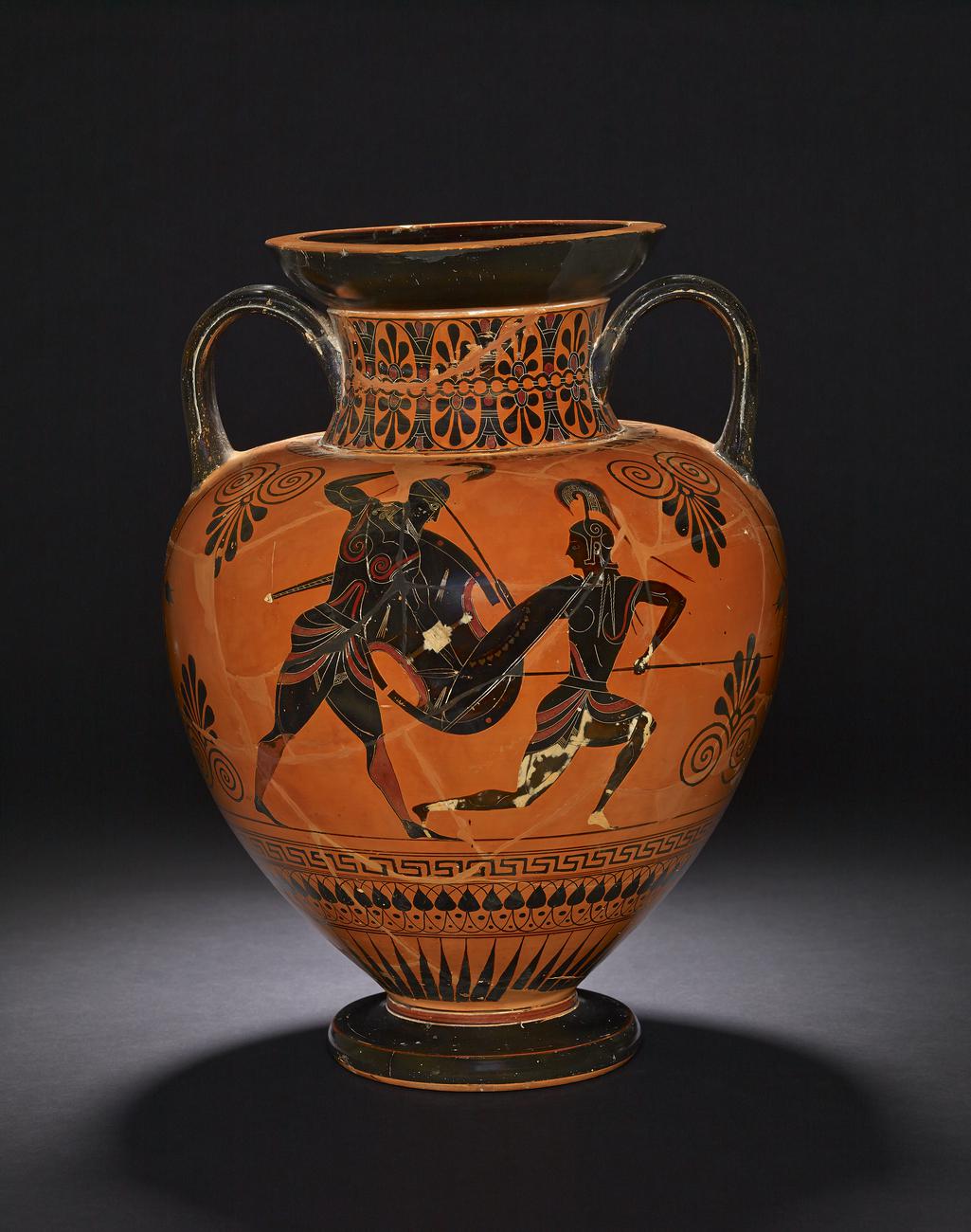
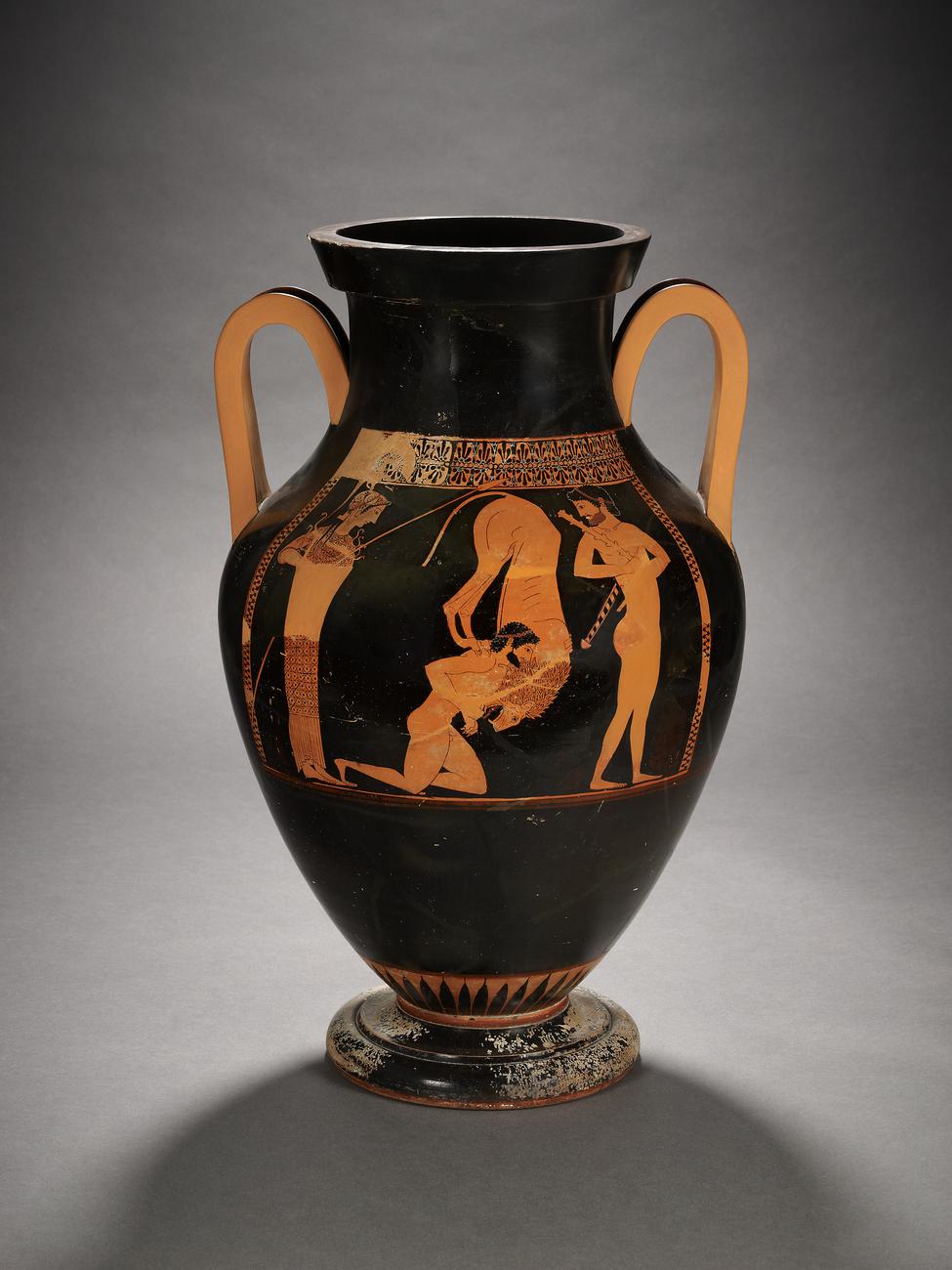
Amphora with Herakles
- Audio guide stop: 234
- Gallery: Room 14
- Maker: Attributed to The Andokides Painter
- Culture: Attic
- Made in: Attica (Greece)
- Date: 520BC-500BC (circa)
- Object type: amphora
- Materials: pottery
- Museum number: 1839,1109.2
- Museum: The British Museum
- Collection record: British Museum website
- Image © The Trustees of the British Museum, shared under a CC BY-NC-SA 4.0 licence.
Listen to the free audio guide
About this object
Before you is the "Amphora with Herakles," a striking example of Athenian black- and red-figure pottery from around 520 to 500 BCE. This dual-sided amphora features two distinct painted scenes, likely created by different hands or styles, adding to its artistic and historical intrigue.
On one side, Achilles and Ajax, possibly, relax in a scene of play or contest, each reaching toward a table filled with pessi—small tokens used in games. The figures are richly dressed and detailed, with carefully rendered armor and elaborate patterns.
On the opposite side, a powerful Herakles battles the Nemean lion, gripping it by the paw and poised to throw it to the ground. Nearby stand Athena, crowned and armed, and Iolaos, Herakles' companion, capturing a dynamic moment from mythology.
This piece not only demonstrates the painter's skill in both black- and red-figure techniques but also reflects the culture of athletic and mythological storytelling in ancient Greece.
See it in person
Amphora with Herakles is on display in Room 14 at the British Museum on Great Russell Street, Bloomsbury, London — free to enter. Choose British Museum on audioguide.london and type its audio guide stop number, 234, from the gallery label, or take a photo of it, to hear this free audio guide in six languages — no app download needed.
New, in beta. British Museum support has just launched and is still improving: over 1,000 objects so far, with more added all the time.