Neo-Assyrian wall panel
- Gallery: Room 9
- Culture: Neo-Assyrian
- Date: 705BC-681BC
- Object type: wall panel, relief
- Materials: gypsum
- Museum number: 124772
- Museum: The British Museum
- Collection record: British Museum website
- Image © The Trustees of the British Museum, shared under a CC BY-NC-SA 4.0 licence.
Listen to the free audio guide
In the museum now? Point your phone at the next object and hear its guide.
About this object
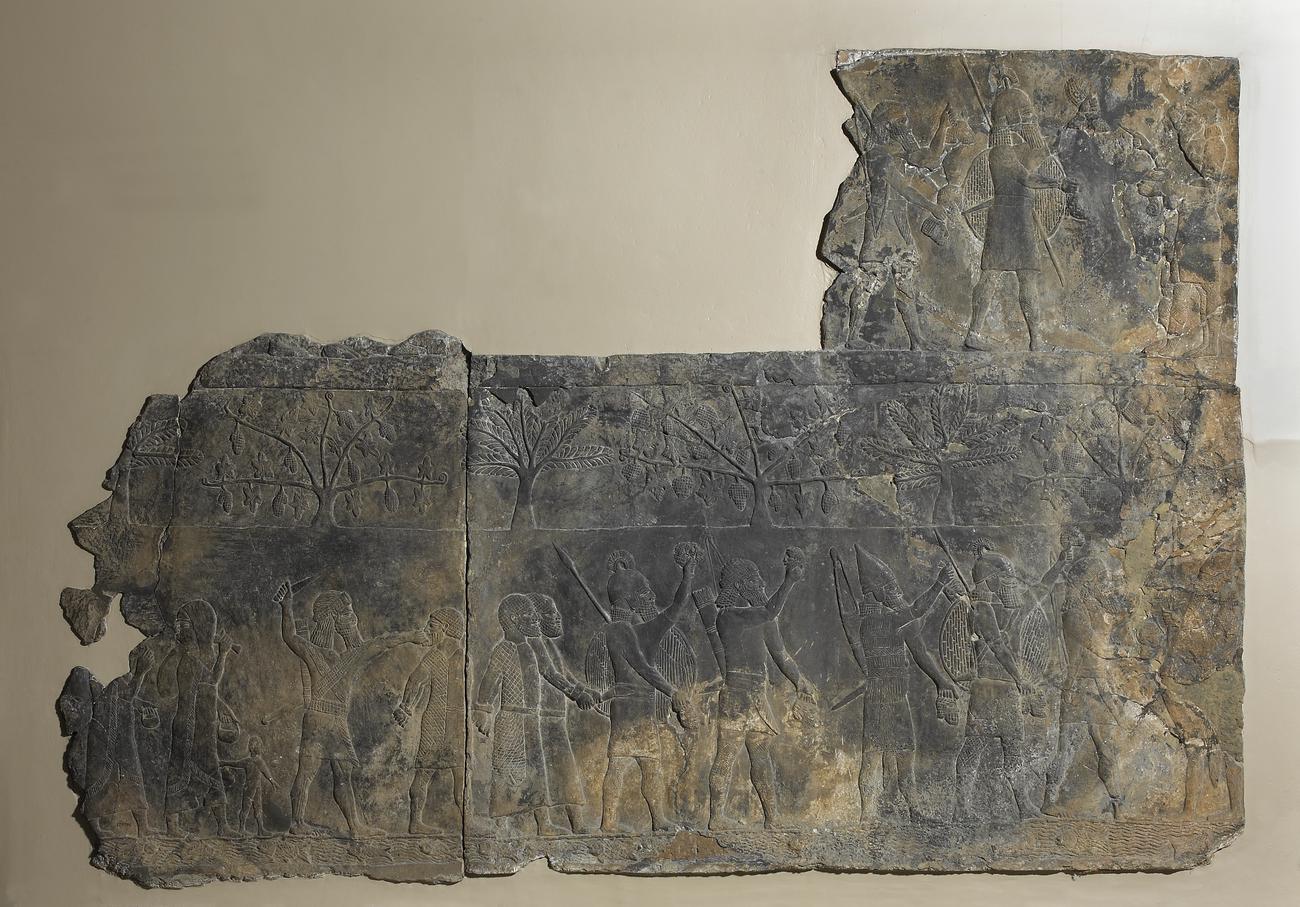
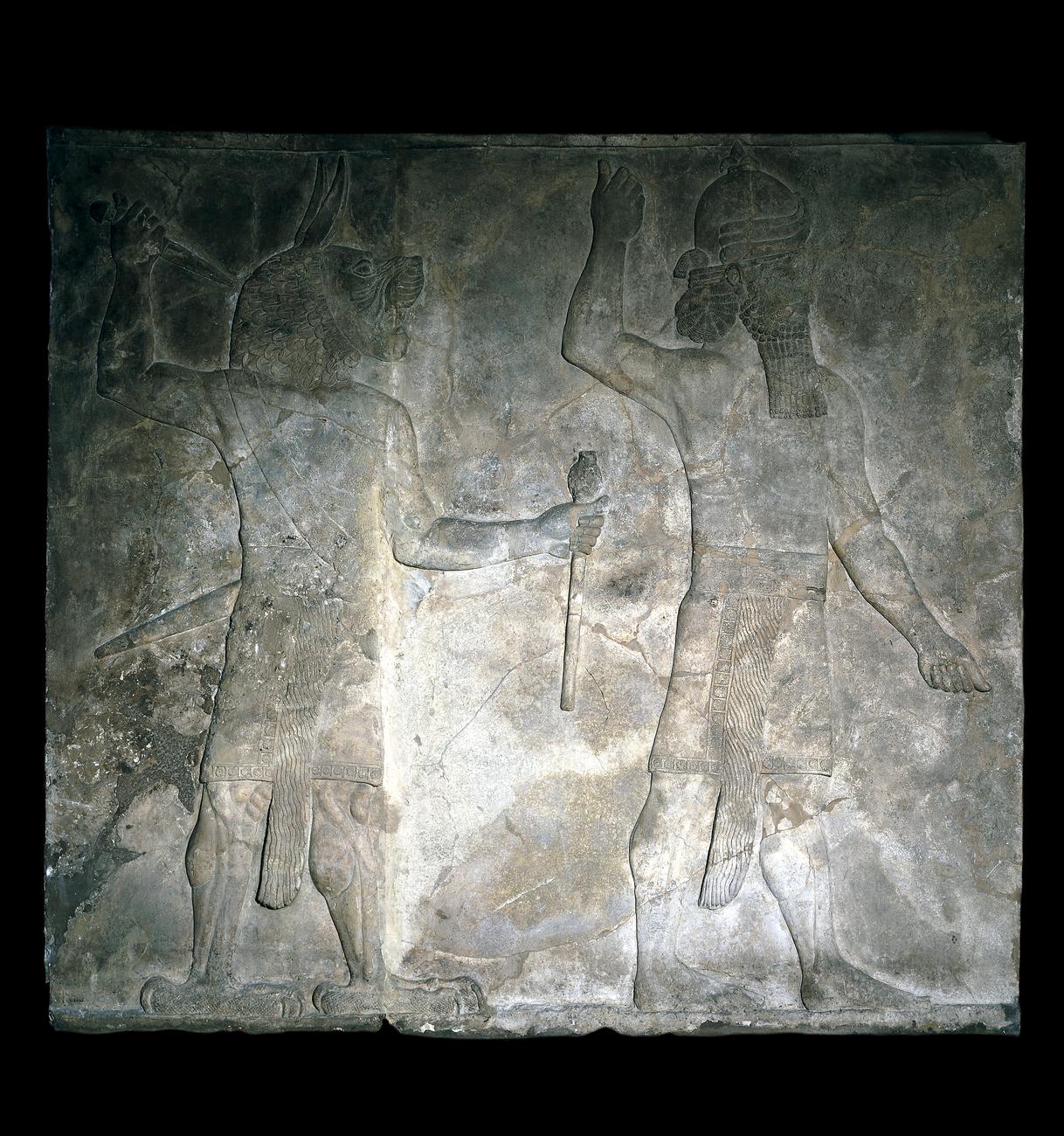
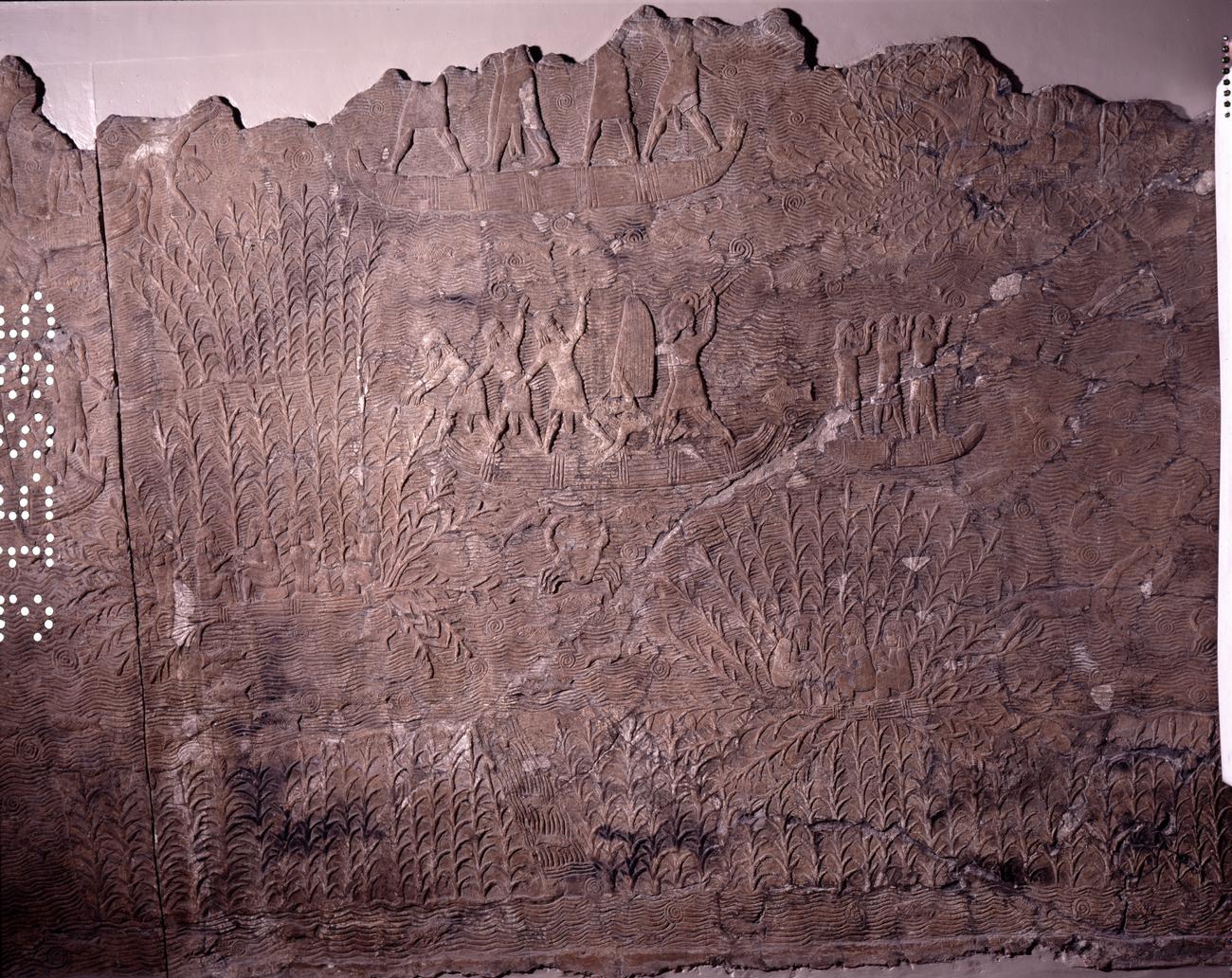
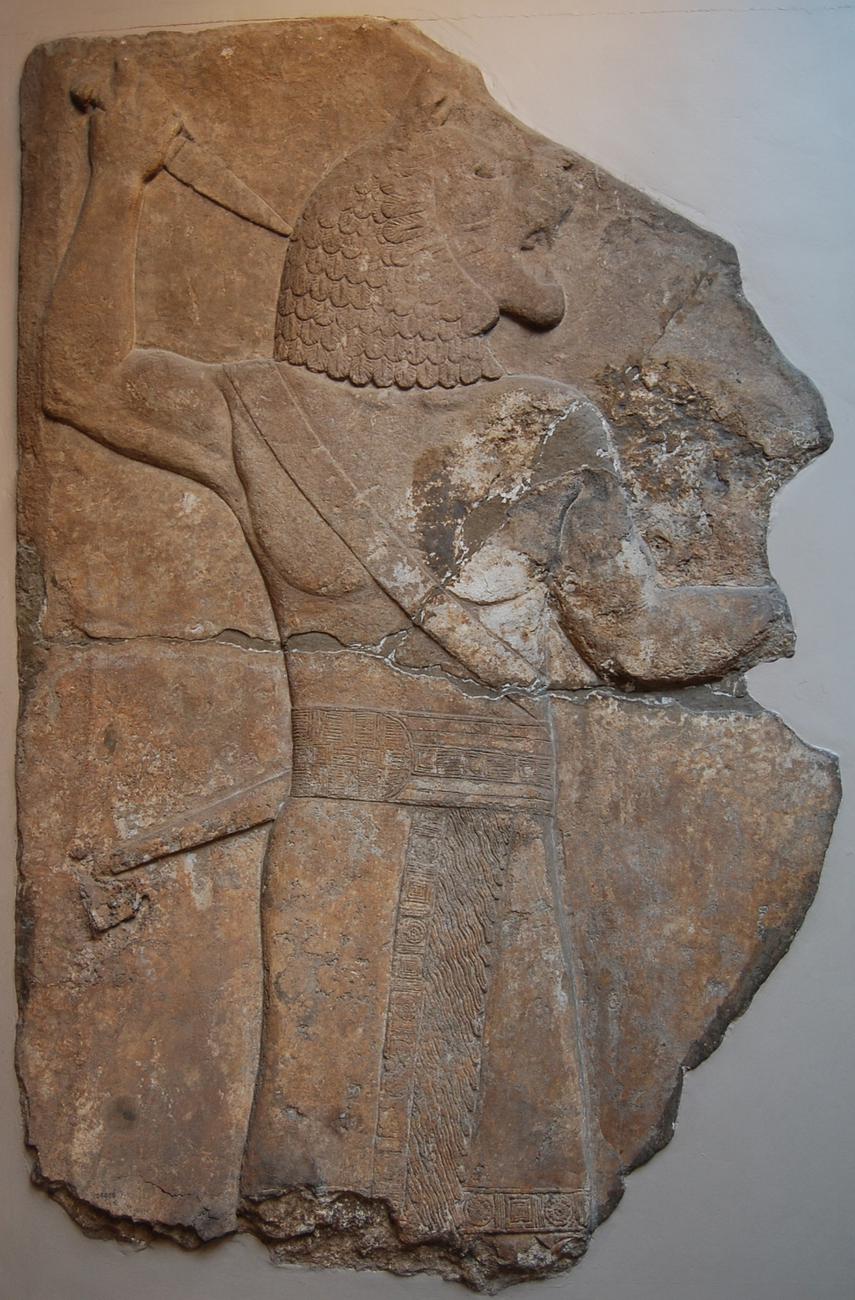
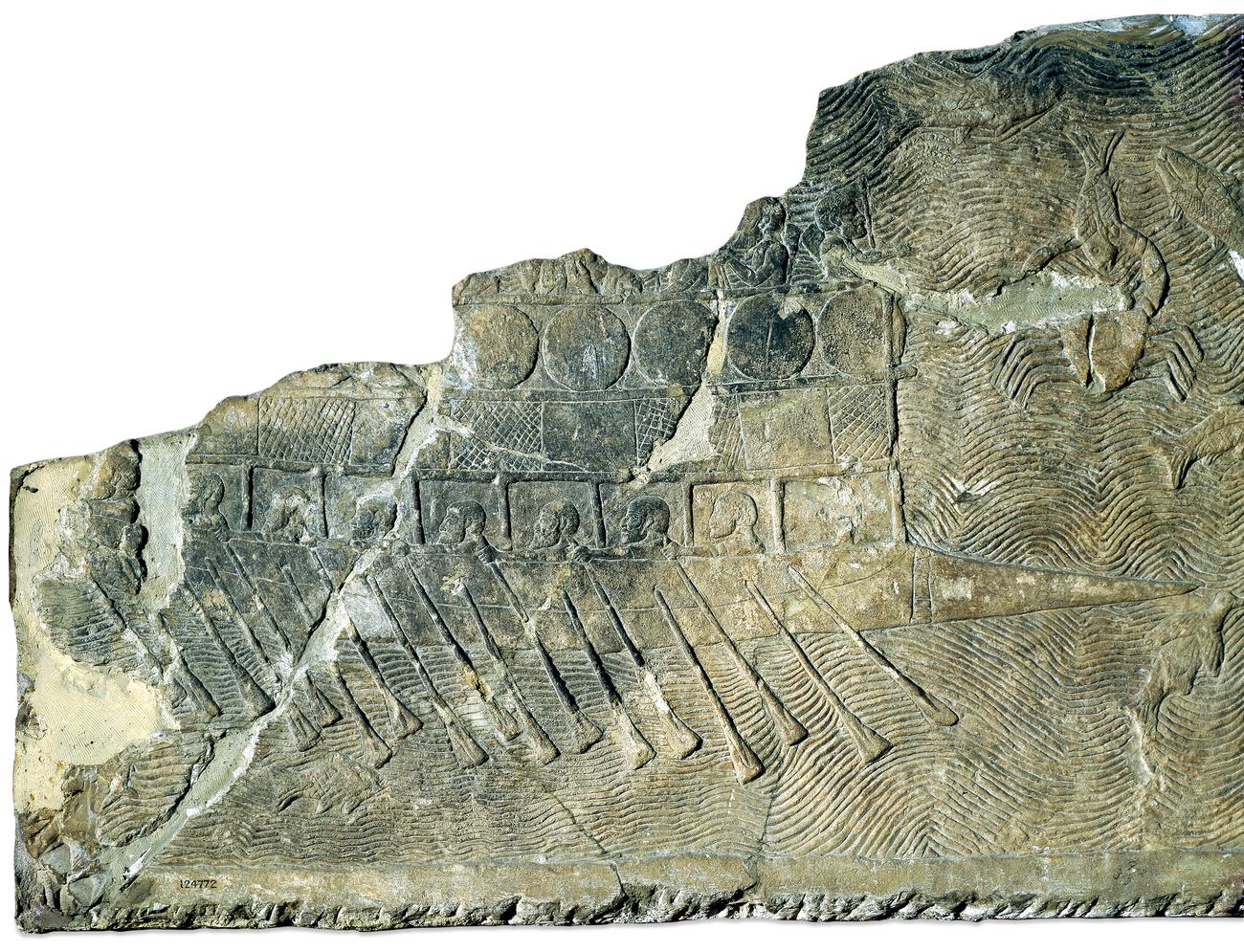
Before you is a Neo-Assyrian wall panel carved from gypsum. It dates to between 705 and 681 BCE and was discovered in the South West Palace in Nineveh. The relief depicts a Phoenician ship, a type of Mediterranean galley, being rowed down the Euphrates River. Shields hang from the upper deck, and a carved bird appears to carry off a fish near the ship’s prow.
Notable details include the incised markings resembling rope, possibly showing the ship's ram lashed to its hull. The panel uses a mix of hatching and smooth areas, possibly to suggest different materials.
This cast comes from the British Museum's replica collection and echoes descriptions by 19th-century archaeologist Sir Austen Henry Layard, who uncovered such scenes of Assyrian military activity in grand halls at the site.
See it in person
Neo-Assyrian wall panel is on display in Room 9 at the British Museum on Great Russell Street, Bloomsbury, London — free to enter. Choose British Museum on audioguide.london and take a photo of it to hear this free audio guide in six languages — no app download needed.
New, in beta. British Museum support has just launched and is still improving: over 1,000 objects so far, with more added all the time.