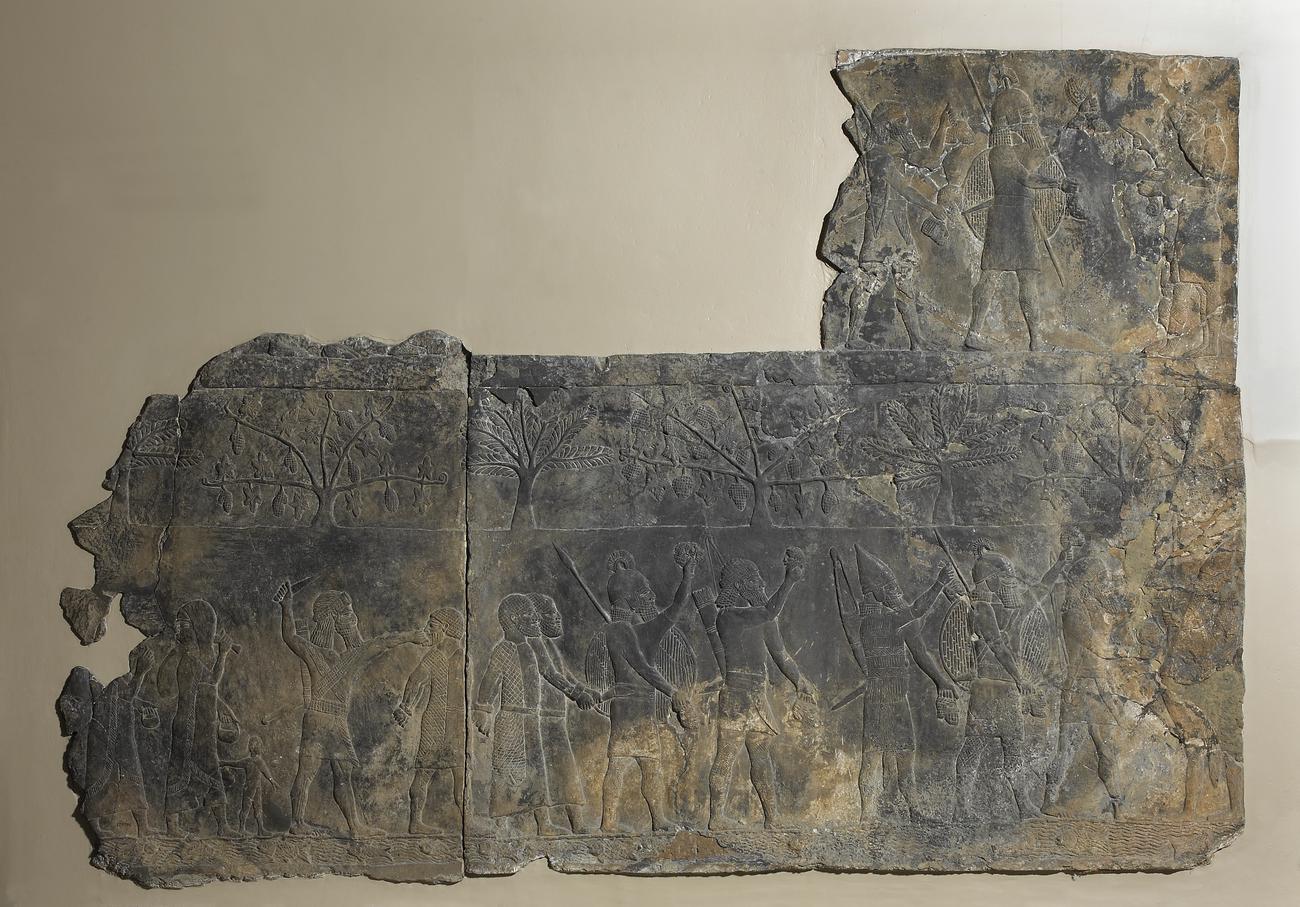
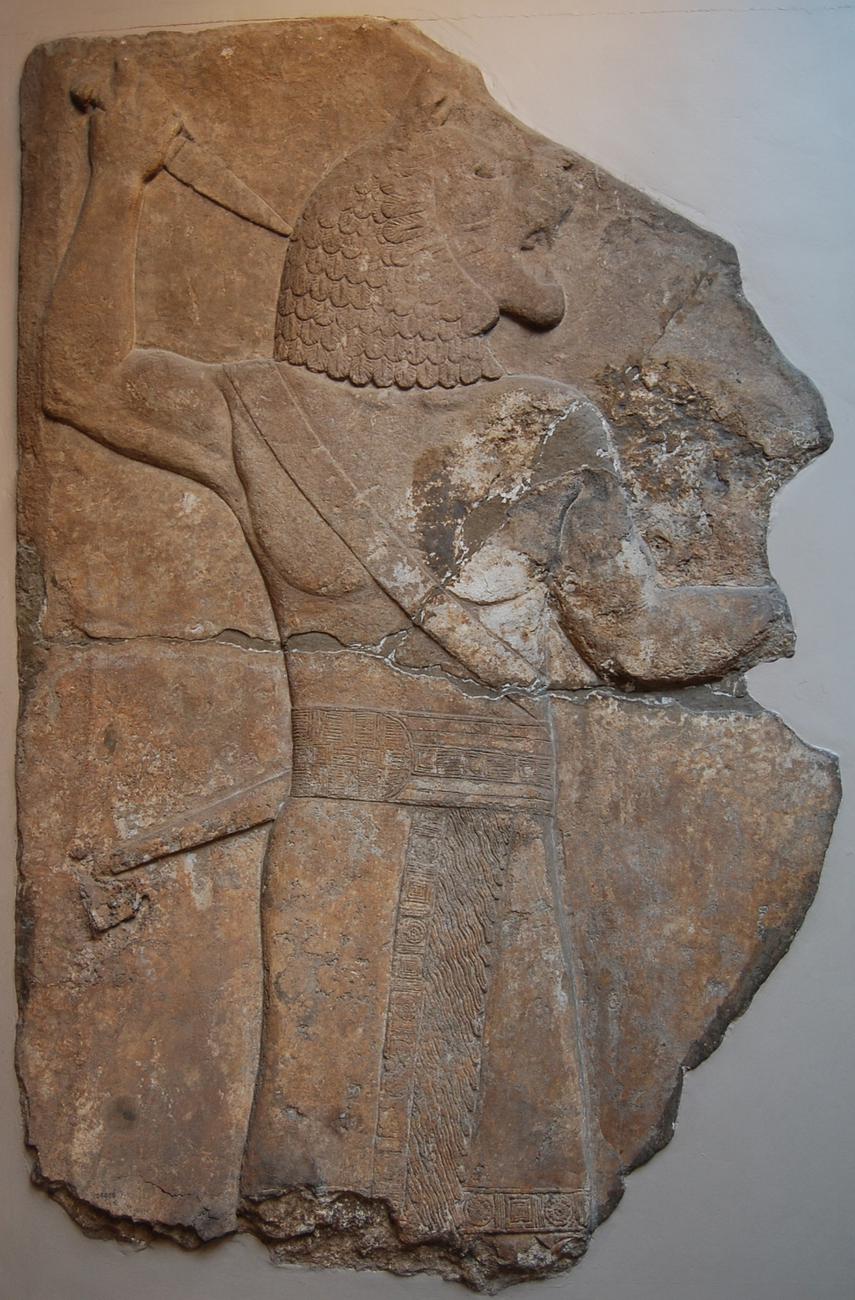
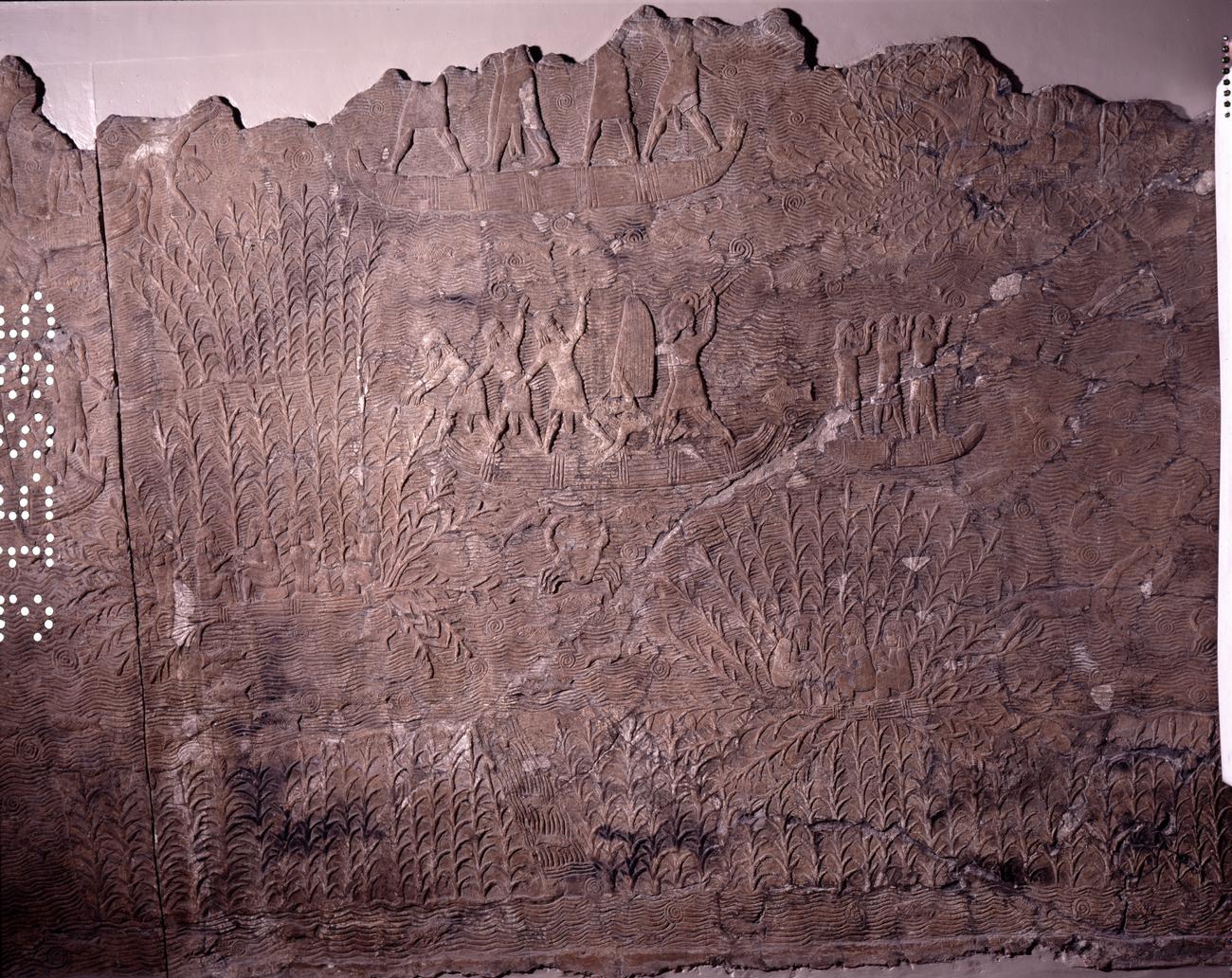
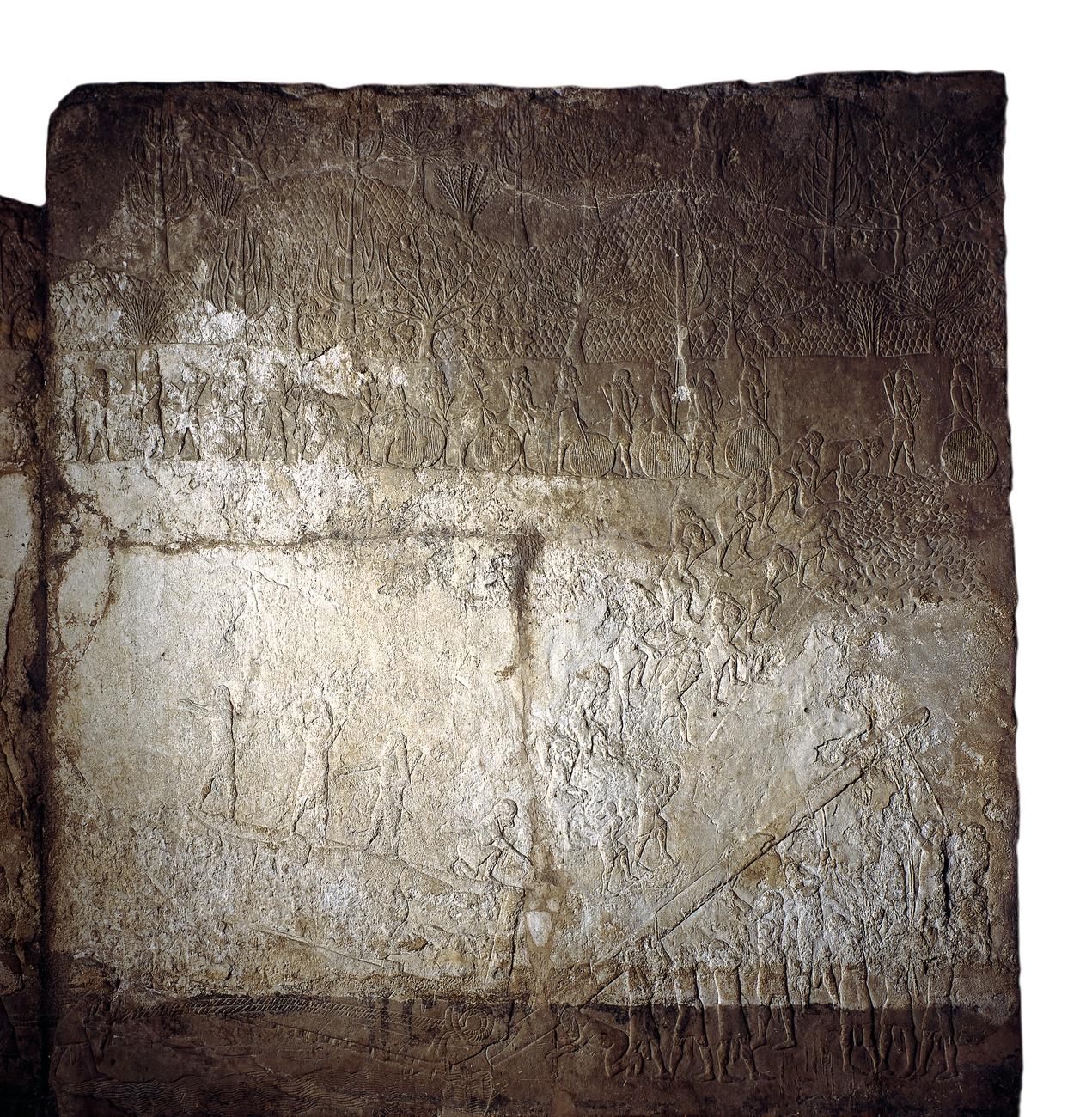
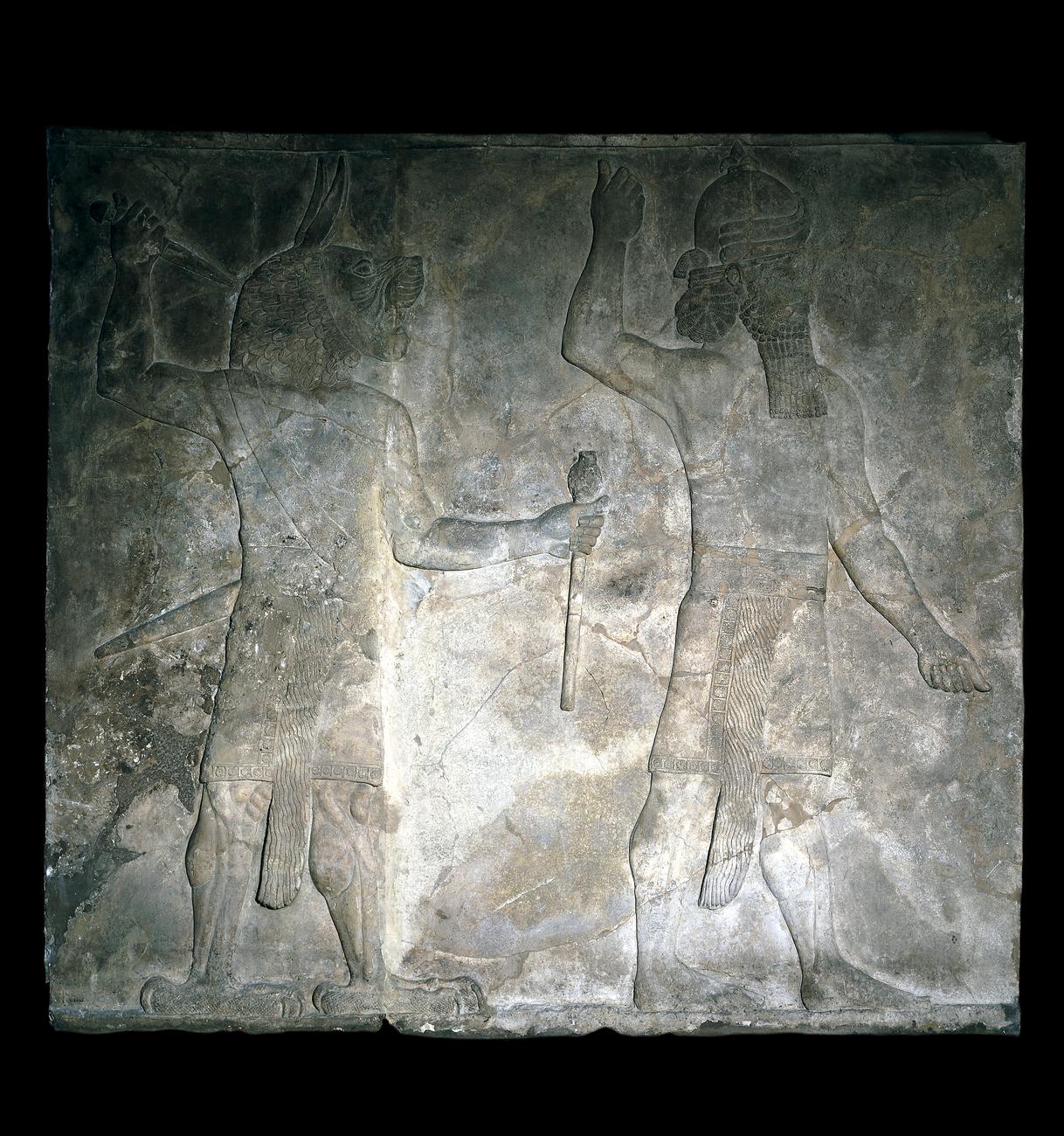
Neo-Assyrian wall panel
- Gallery: Room 9
- Culture: Neo-Assyrian
- Date: 700BC-692BC
- Object type: wall panel, relief
- Materials: gypsum
- Museum number: 118932
- Museum: The British Museum
- Collection record: British Museum website
- Image © The Trustees of the British Museum, shared under a CC BY-NC-SA 4.0 licence.
Listen to the free audio guide
About this object
This is a Neo-Assyrian wall panel dating to around 700 to 692 BCE. It was discovered at the South West Palace in Nineveh and made from gypsum. The panel depicts two protective spirits facing to the right. One is an Ugallu — a powerful lion-like guardian figure — and next to it may be a house god.
The relief is a fine example of Assyrian decorative art, showing the important role of protective spirits in ancient Near Eastern culture. These figures were meant to ward off evil and ensure the safety of the palace. The detailed craftsmanship suggests this panel came from a significant architectural feature, possibly an entrance — these figures are often carved with greater depth than other palace reliefs.
This piece offers a glimpse into the spiritual and artistic world of the Neo-Assyrian Empire, where art served both aesthetic and protective purposes.
See it in person
Neo-Assyrian wall panel is on display in Room 9 at the British Museum on Great Russell Street, Bloomsbury, London — free to enter. Choose British Museum on audioguide.london and take a photo of it to hear this free audio guide in six languages — no app download needed.
New, in beta. British Museum support has just launched and is still improving: over 1,000 objects so far, with more added all the time.