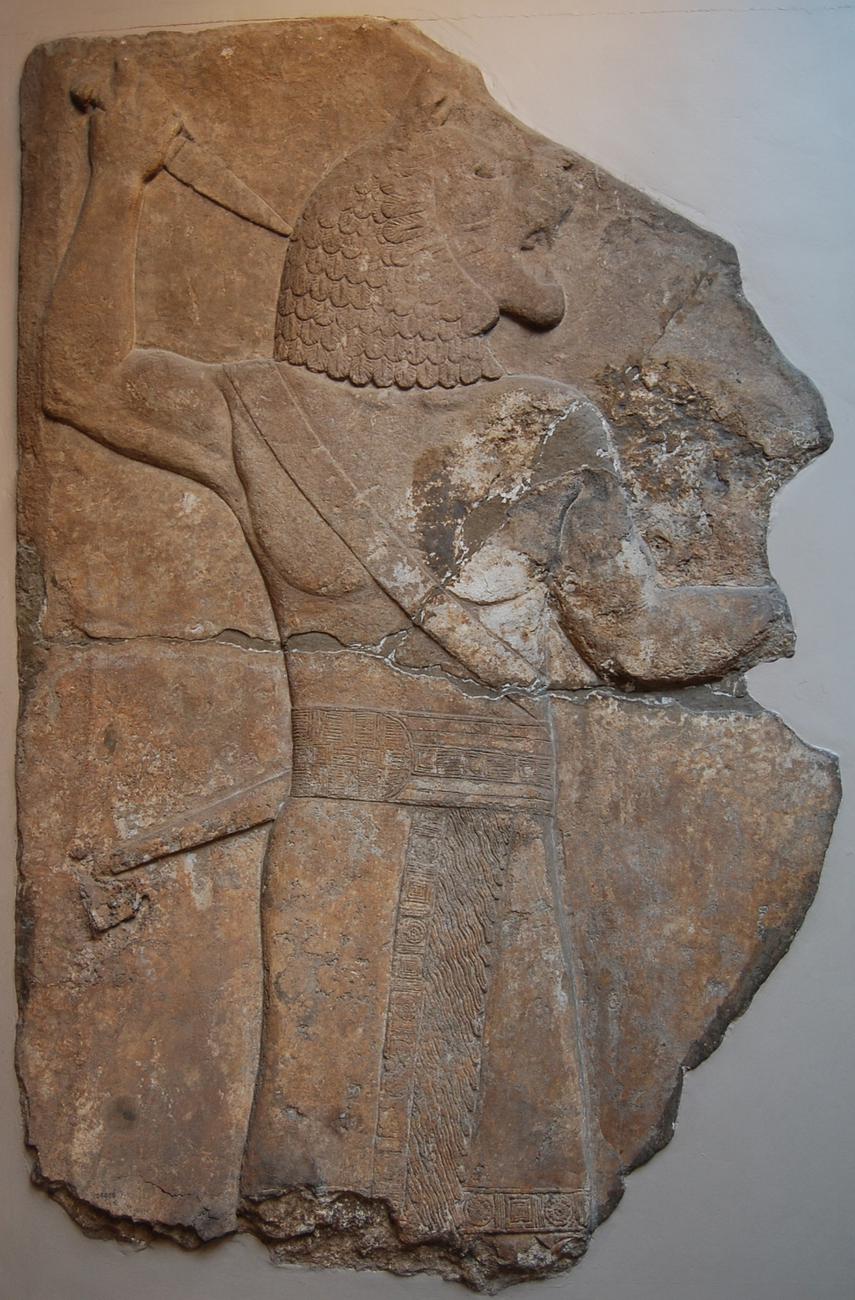
Neo-Assyrian wall panel
- Gallery: Room 9
- Culture: Neo-Assyrian
- Date: 700BC-692BC
- Object type: wall panel, relief
- Materials: gypsum
- Museum number: 124826
- Museum: The British Museum
- Collection record: British Museum website
- Image © The Trustees of the British Museum, shared under a CC BY-NC-SA 4.0 licence.
Listen to the free audio guide
About this object
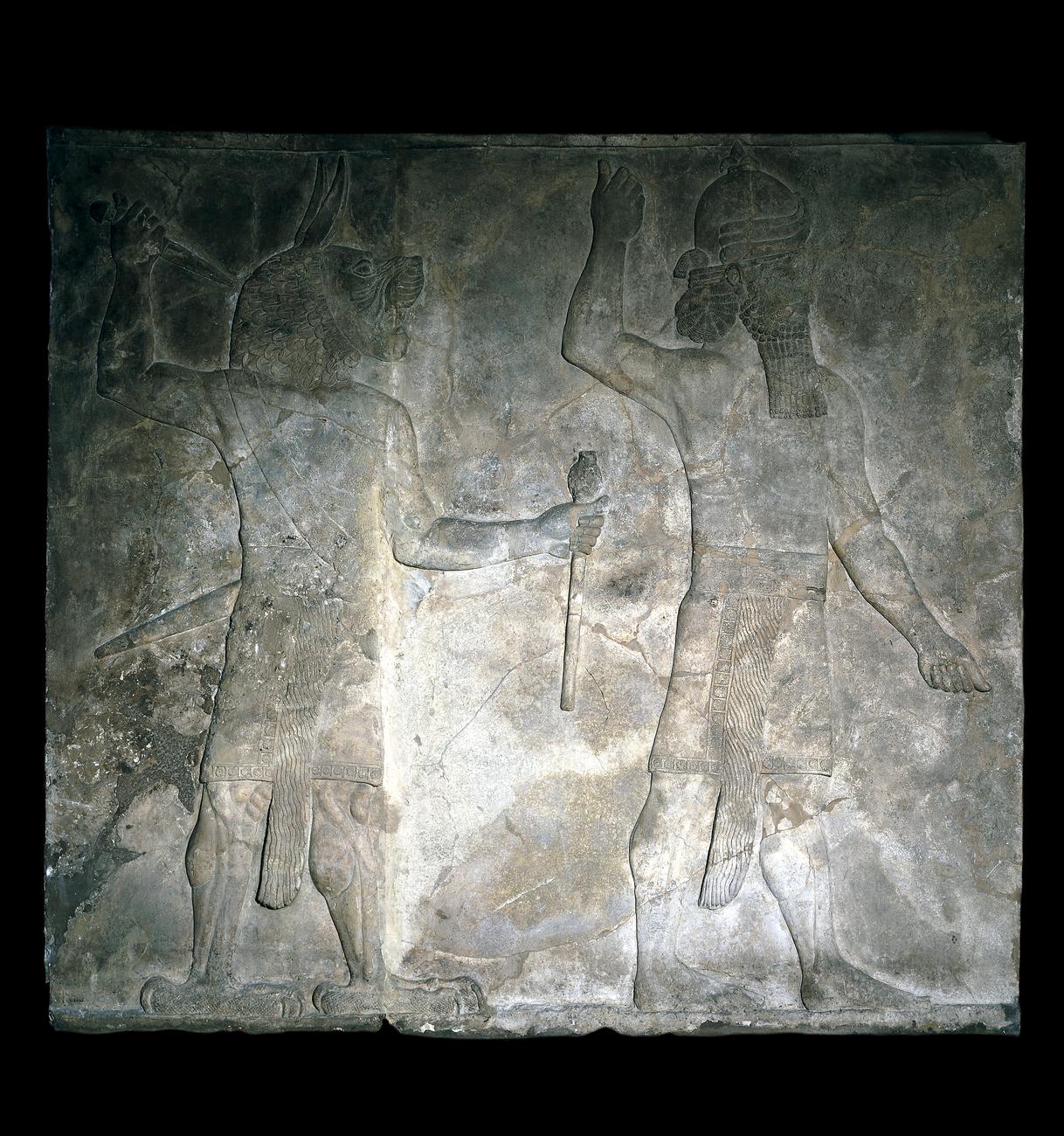
Before you is a Neo-Assyrian wall panel from the 7th century BC. This remarkable gypsum relief shows a lion-headed man, known as the Ugallu or "great lion," holding a dagger. The Ugallu was believed to be a protective spirit, often placed at gateways to ward off dangers.
Created from two joined fragments, this artwork is rich in historical and symbolic meaning. Scholars suggest figures like this may have been part of New Year Festival rituals or used as guardians.
This piece was excavated from the South West Palace in Nineveh, now part of modern-day Iraq. It was discovered by the British archaeologist Sir Austen Henry Layard, who explored ancient Assyrian sites in the 19th century.
Take a close look at the carving's precision and the expressive face of the Ugallu—these details reveal the artistic sophistication of the Neo-Assyrian period.
See it in person
Neo-Assyrian wall panel is on display in Room 9 at the British Museum on Great Russell Street, Bloomsbury, London — free to enter. Choose British Museum on audioguide.london and take a photo of it to hear this free audio guide in six languages — no app download needed.
New, in beta. British Museum support has just launched and is still improving: over 1,000 objects so far, with more added all the time.