Neo-Assyrian sculpture
- Gallery: Room 10c
- Culture: Neo-Assyrian
- Date: 710BC-705BC
- Object type: sculpture
- Materials: gypsum
- Museum number: 118808,a
- Museum: The British Museum
- Collection record: British Museum website
- Image © The Trustees of the British Museum, shared under a CC BY-NC-SA 4.0 licence.
Listen to the free audio guide
In the museum now? Point your phone at the next object and hear its guide.
About this object
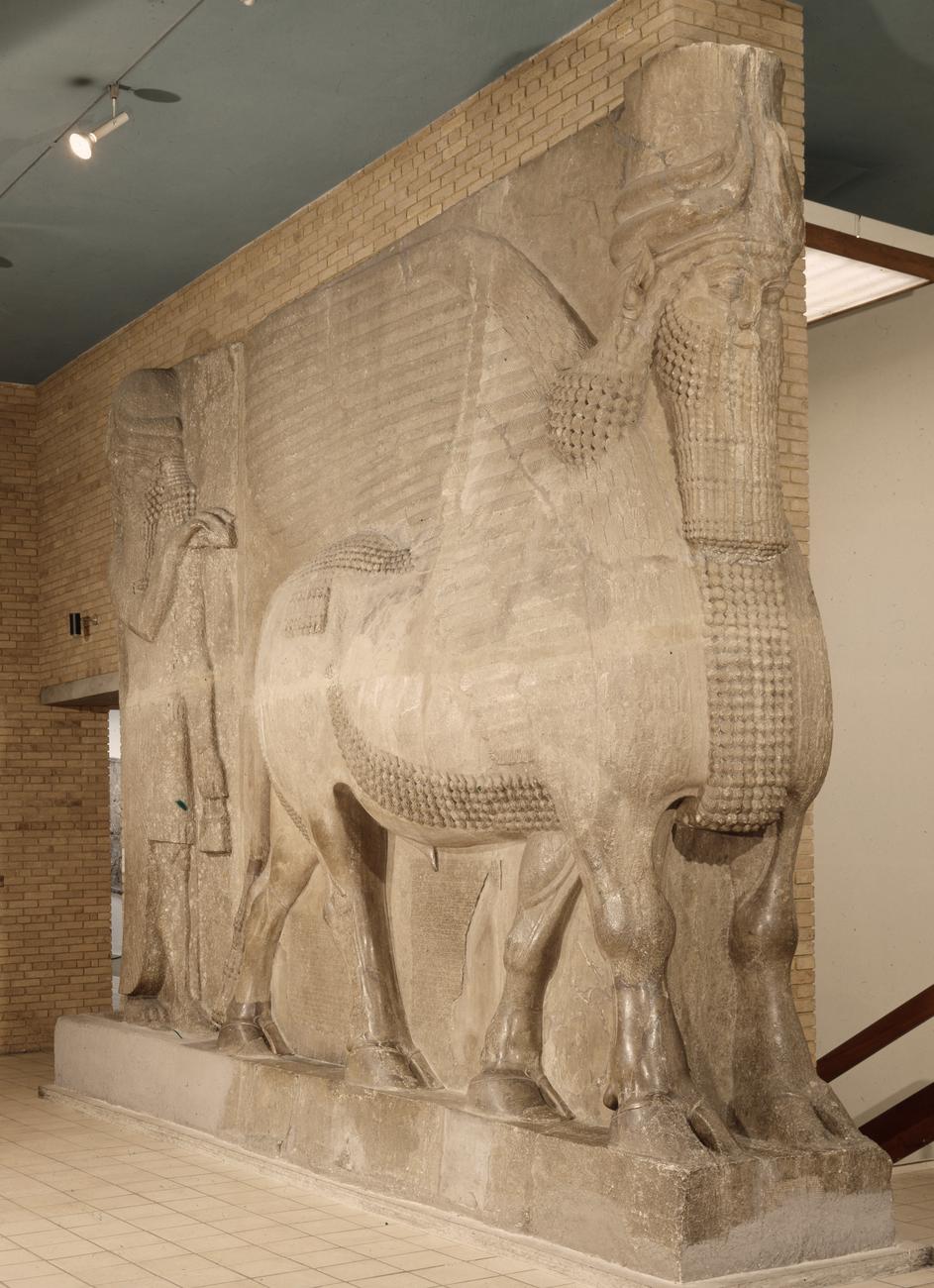
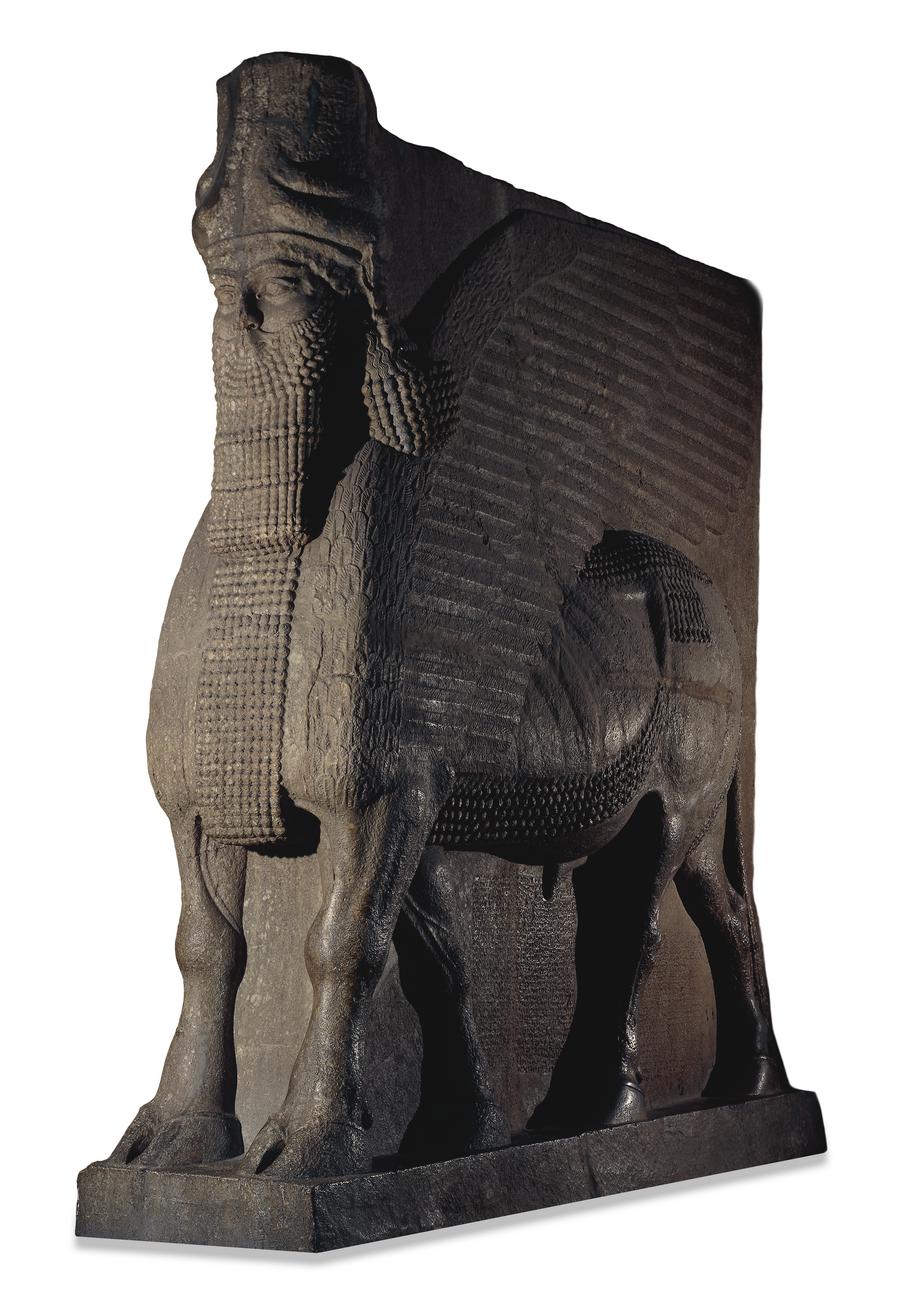
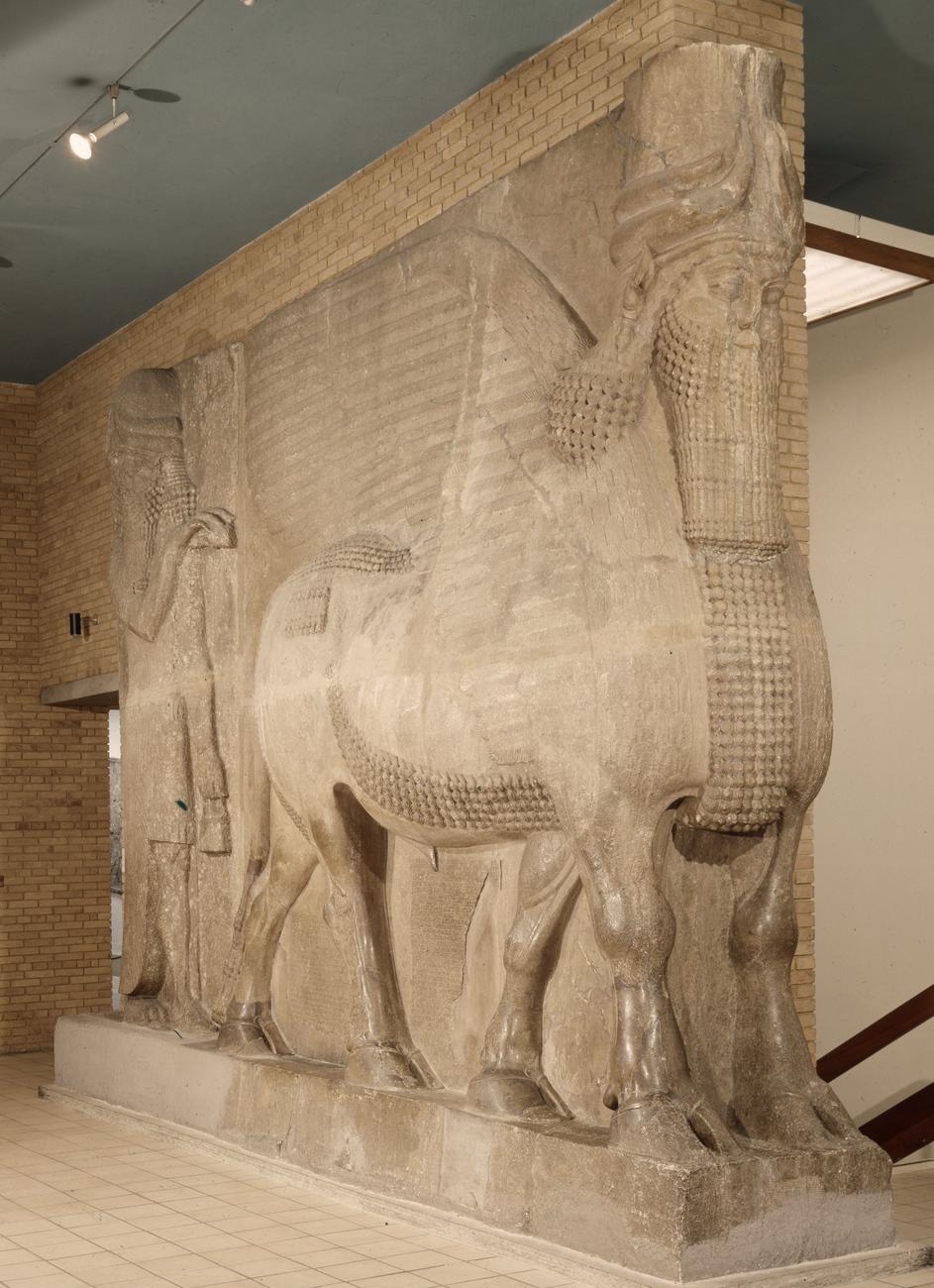
Before you stands a powerful Neo-Assyrian sculpture carved from gypsum. This winged bull, facing left, once guarded a gateway in the citadel wall at Khorsabad. It features two carved panels showing a winged divine figure holding a cone and a bucket, possibly for ritual anointing.
The sculpture is part of a pair, designed to keep evil forces out. Curators note the current setup is not original — the panels should be placed differently, facing away from the bull.
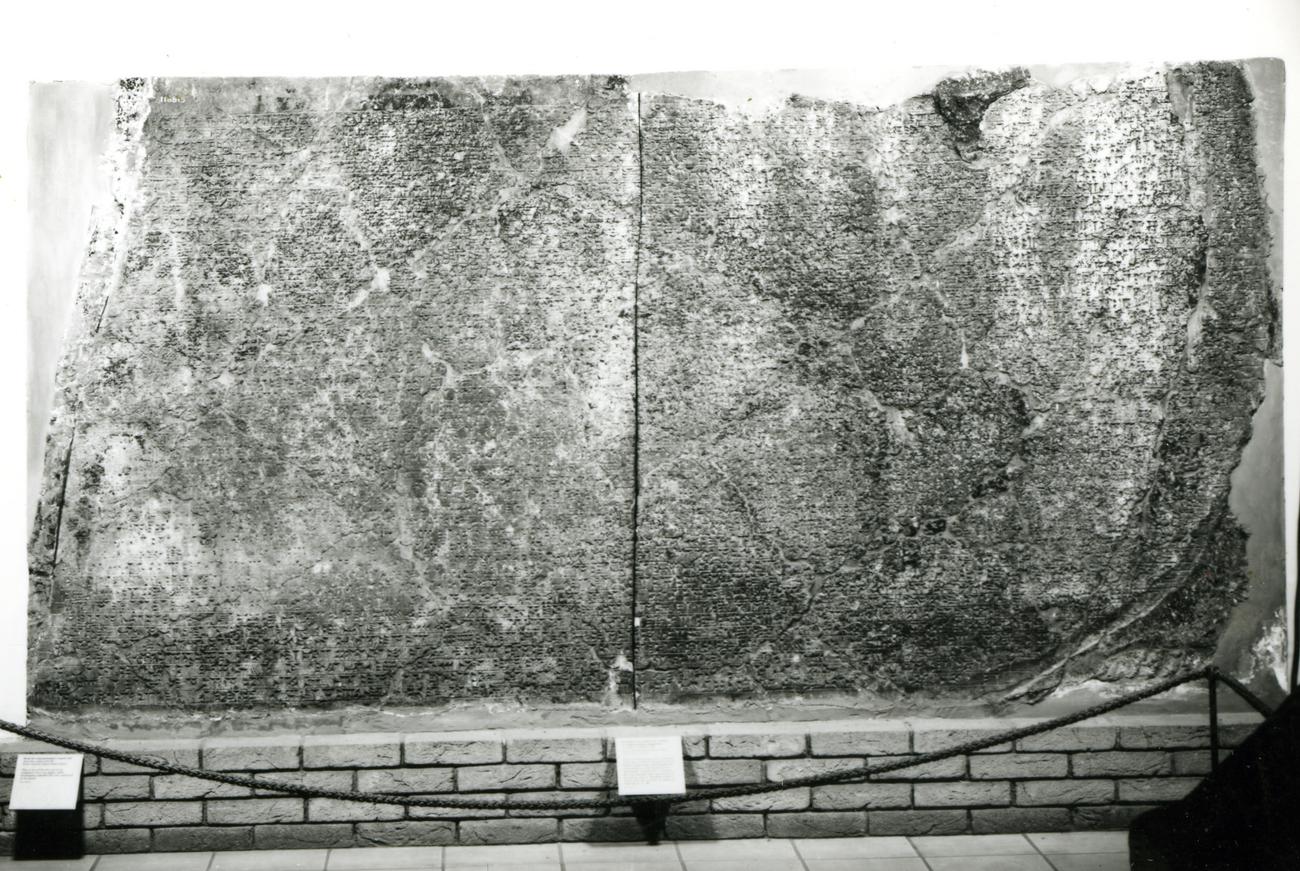
Dating to around 707 BC, this work reflects the Neo-Assyrian tradition of using protective spirits. Inscribed with cuneiform, it names Sennacherib, the Assyrian king of that time.
Acquired from Sir Henry Creswicke Rawlinson, it was originally linked to the colossal bulls from Khorsabad. The piece is a rare example of an ancient protective spirit, showing both power and craftsmanship.
See it in person
Neo-Assyrian sculpture is on display in Room 10c at the British Museum on Great Russell Street, Bloomsbury, London — free to enter. Choose British Museum on audioguide.london and take a photo of it to hear this free audio guide in six languages — no app download needed.
New, in beta. British Museum support has just launched and is still improving: over 1,000 objects so far, with more added all the time.