Sculpture of a winged bull
- Audio guide stop: 216
- Gallery: Room 10c
- Audio guide: one commentary for a group of objects shown together
- Museum: The British Museum
- Image © The Trustees of the British Museum, shared under a CC BY-NC-SA 4.0 licence.
Listen to the free audio guide
About these objects
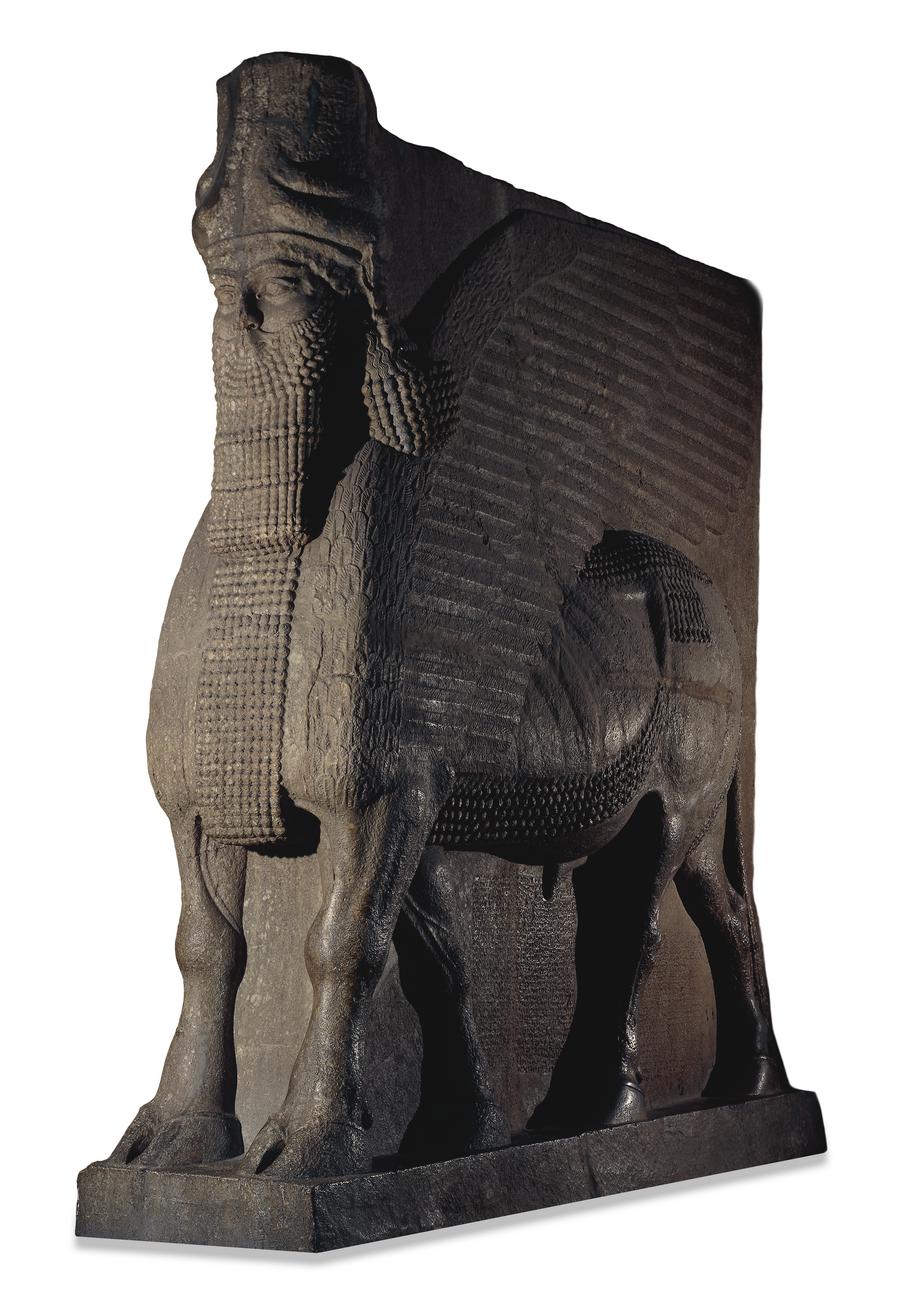
In front of you is a striking sculpture of a winged bull, one of the masterpieces from the ancient Assyrian city of Khorsabad. These monumental figures guarded the gates of royal citadels, acting as powerful protective spirits. Carved from gypsum with immense detail, this human-headed winged bull faces right, much like its twin that once stood across from it.
The sculpture includes small panels showing a winged divine figure, seemingly in the act of anointing — a ritual gesture that might have been meant to enhance the spirit's mystical powers. The figures were not displayed as they originally were, and museum records suggest a rearrangement over time to correct their position.
This artwork dates to around 705 BCE, during the reign of King Sennacherib, and was recovered from the same site as the colossal bulls you may have already seen. Look closely at the intricate carving and note the thoughtful placement of the panels. Nearby is a matching sculpture and a game board carved between the hooves of one of the bulls. Together, these objects give a glimpse into the grandeur and symbolism of Assyrian royal architecture.
See it in person
Sculpture of a winged bull is on display in Room 10c at the British Museum on Great Russell Street, Bloomsbury, London — free to enter. Choose British Museum on audioguide.london and type its audio guide stop number, 216, from the gallery label, or take a photo of it, to hear this free audio guide in six languages — no app download needed.
New, in beta. British Museum support has just launched and is still improving: over 1,000 objects so far, with more added all the time.