Sculptures from the Mausoleum of Halikarnassos
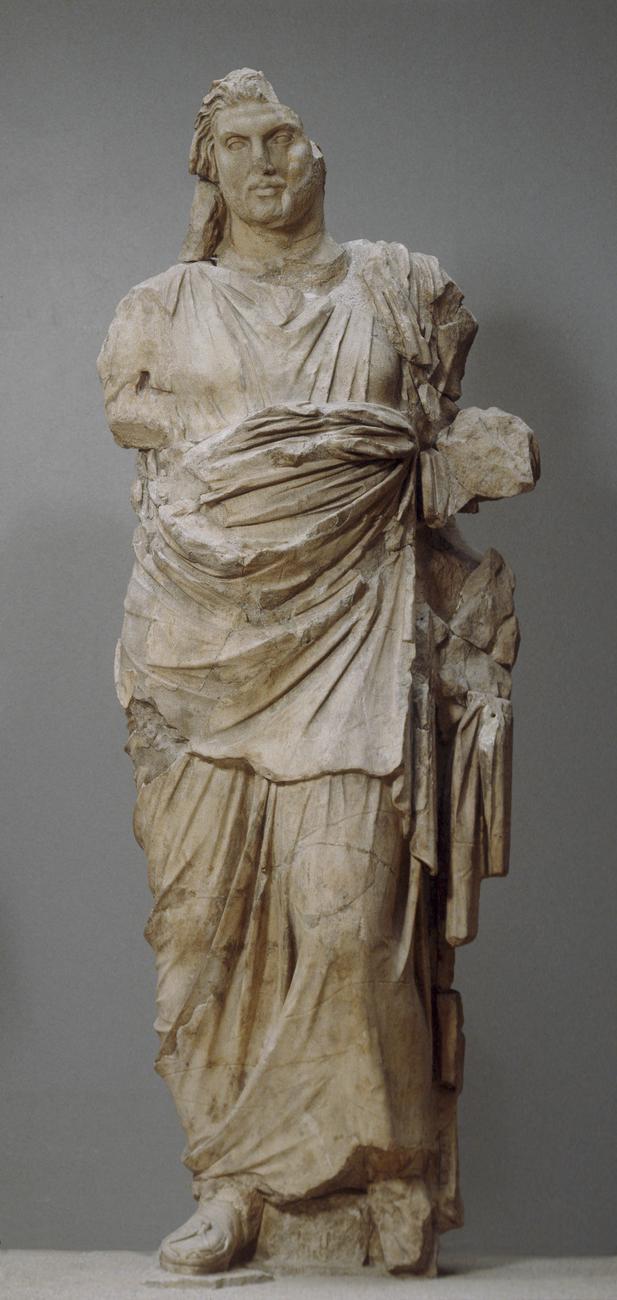
- Audio guide stop: 273
- Gallery: Room 21
- Audio guide: one commentary for a group of objects shown together
- Museum: The British Museum
- Image © The Trustees of the British Museum, shared under a CC BY-NC-SA 4.0 licence.
Listen to the free audio guide
About these objects
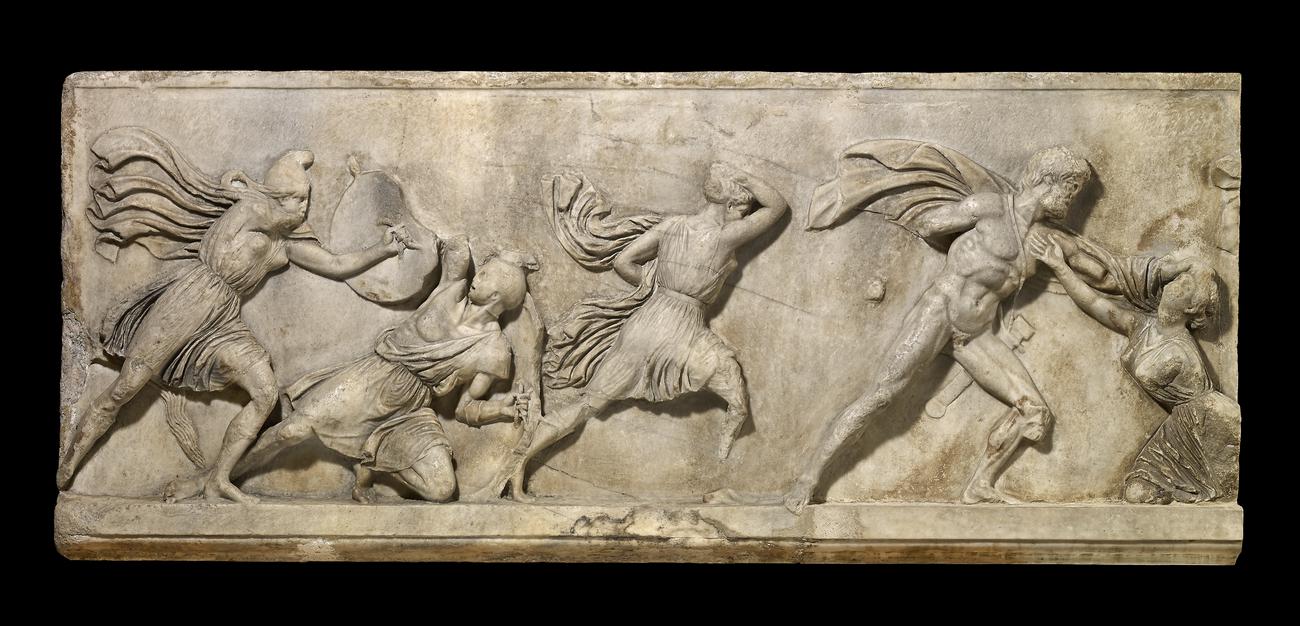
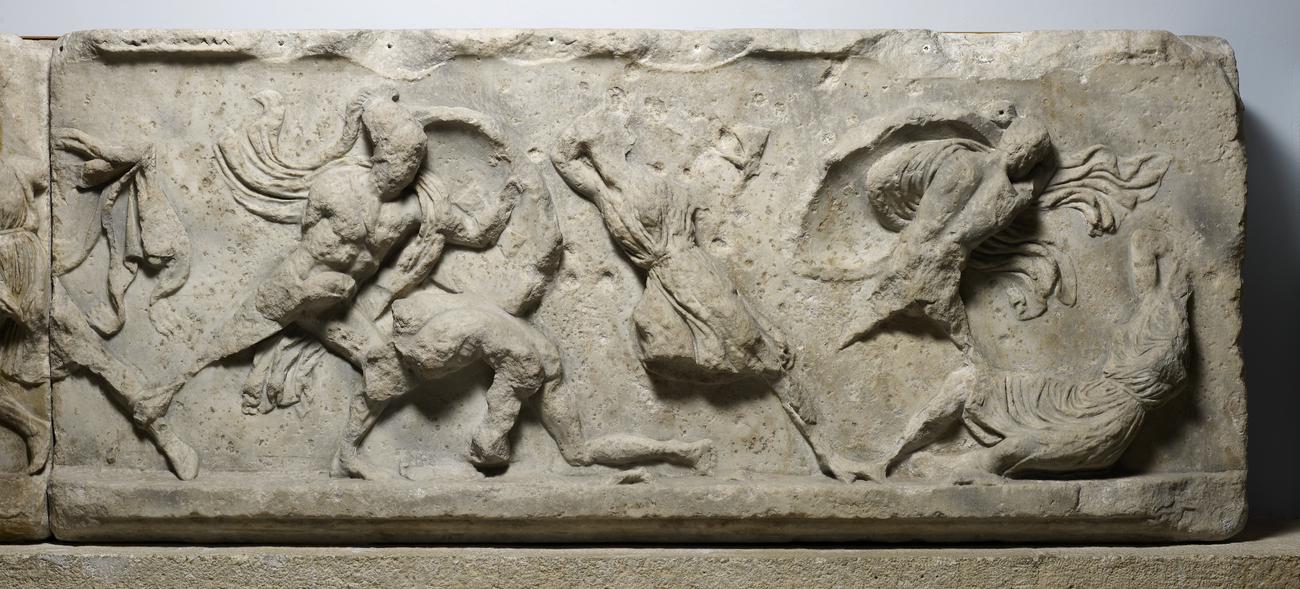
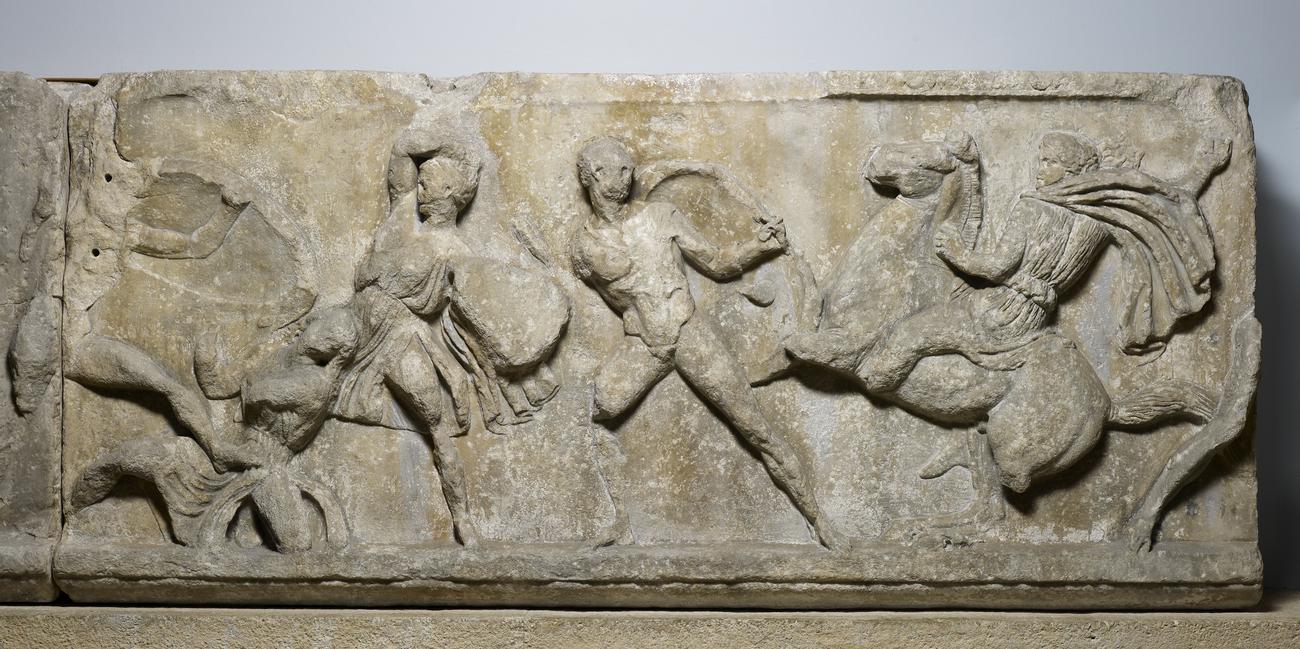
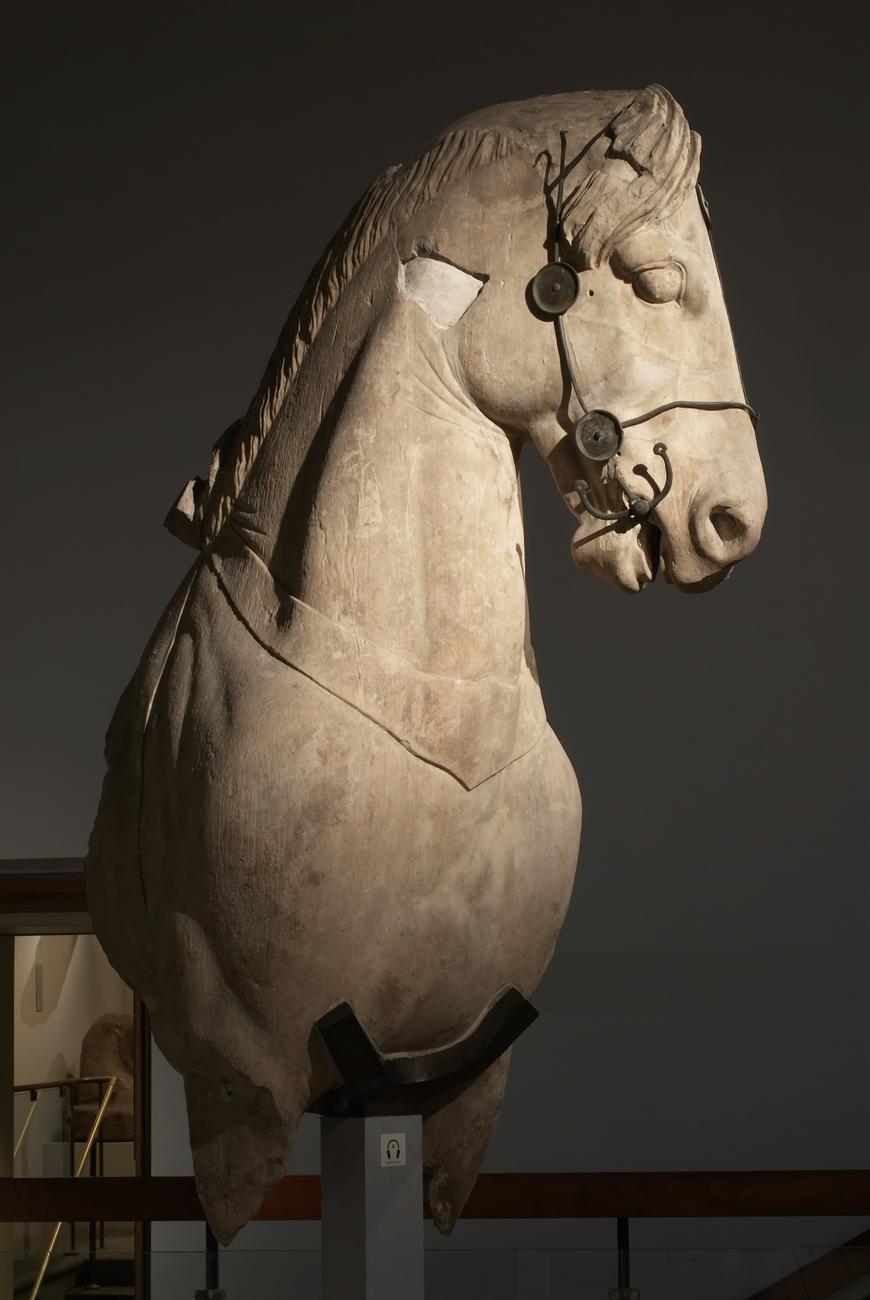
In front of you is a remarkable group of sculptures: fragments from the Mausoleum of Halikarnassos. This famous ancient tomb was built in the 4th century BC to honor Mausolus and his wife Artemisia, the rulers of the region now known as Bodrum, Turkey. These marble statues were carved by Greek artisans and once adorned the grand monument.
Two key pieces stand out in this display. One is a large, standing male figure, thought to represent Mausolus. His head still survives with expressive, detailed features and a carefully carved beard that suggests a noble and dignified presence.
Beside it is a monumental female figure, believed to be a portrait of Artemisia. Though her eyes and much of her face are lost, the style of her hair and the draped garment suggest a regal identity. Her posture and imposing scale once conveyed the majesty of a powerful queen.
These sculptures reflect the artistic excellence of Classical Greece and serve as a lasting tribute to a royal couple. Look for their strong forms, subtle details, and the sense of presence they still convey.
See it in person
Sculptures from the Mausoleum of Halikarnassos is on display in Room 21 at the British Museum on Great Russell Street, Bloomsbury, London — free to enter. Choose British Museum on audioguide.london and type its audio guide stop number, 273, from the gallery label, or take a photo of it, to hear this free audio guide in six languages — no app download needed.
New, in beta. British Museum support has just launched and is still improving: over 1,000 objects so far, with more added all the time.