Mrs Worrell as Hebe
- Artist: Benjamin West
- Date: c.1775–8
- Medium: Oil paint on canvas
- Dimensions: support: 1270 x 1003 mm
- Museum: Tate Britain
- Collection record: Tate Britain website
Listen to the free audio guide
About this artwork
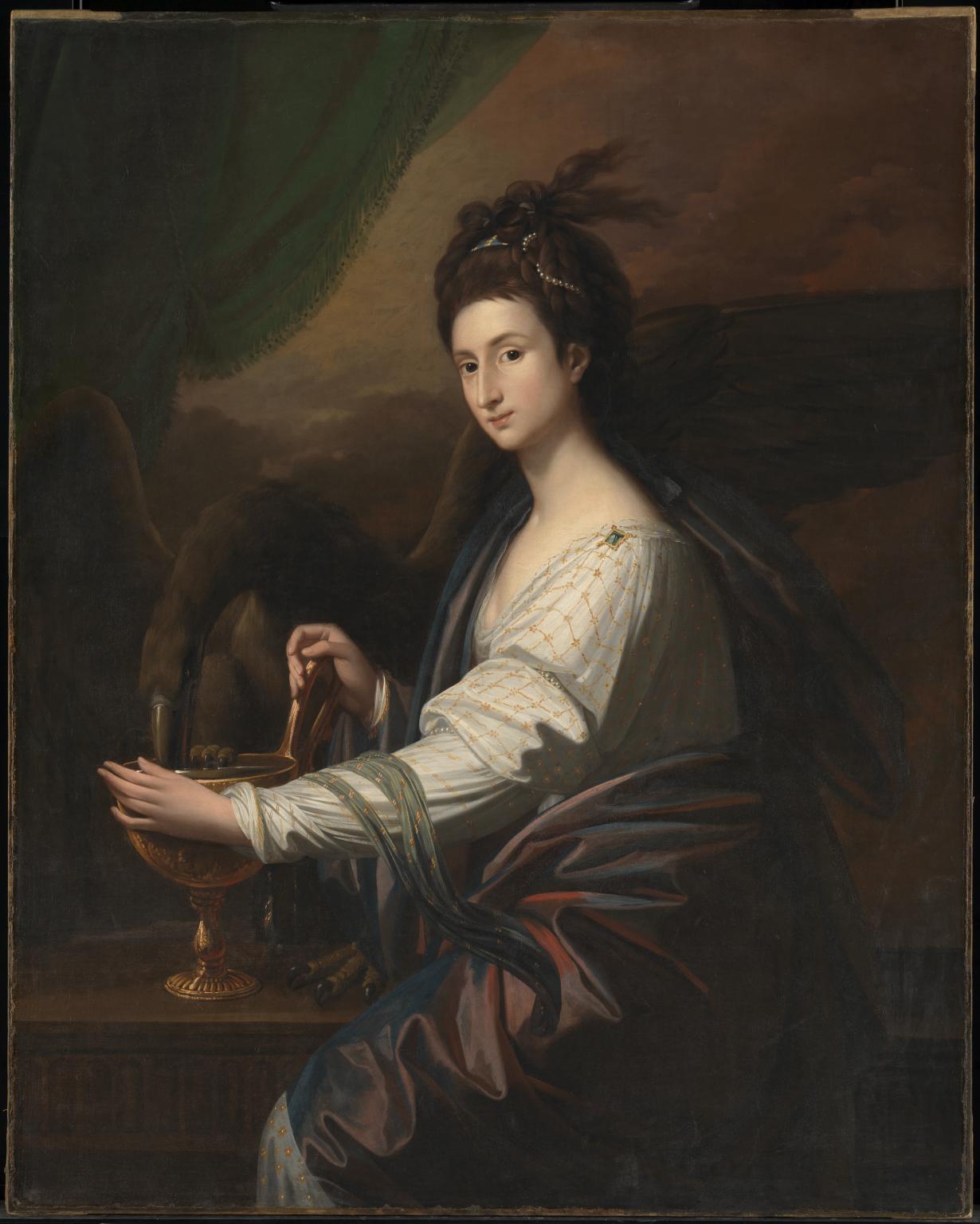
This is “Mrs Worrell as Hebe” by Benjamin West, painted around 1775‑78. The sitter, Catherine Worrell, is dressed as the Greek goddess of youth, Hebe, a popular choice for fashionable portraits at the time. West places her on a step, holding a delicate cup from which a stylised eagle—symbolic of Zeus—drinks. A heavy green curtain peeks from the left, and beyond it a hazy cloudscape evokes the heavens.
West’s technique is restrained and polished; the flesh tones are smooth, the drapery folded in bold, almost sculptural bands. That calm, almost marble‑like quality was the hallmark of West’s “grand manner” portraits and earned him high fees. He was a leading figure at the Royal Academy and often turned his sitters into mythic figures to give them an air of timeless dignity.
The portrait was commissioned by Catherine’s husband, Jonathan Worrell, a wealthy landowner who had moved from Barbados to England in the 1760s. His wealth came from plantations that relied on enslaved Africans. The painting therefore sits at the intersection of aesthetic fashion and the darker Atlantic economy that underpinned much of Britain’s wealth at that period.
All in all, the work is a striking blend of mythic symbolism and the social realities of 18th‑century Britain, wrapped in West’s elegant, almost sculptural brushwork.
See it in person
Mrs Worrell as Hebe is in the collection of Tate Britain on Millbank, London — free to enter. Point your phone at any artwork there and audioguide.london plays a free audio guide in six languages — no app download needed.