Pylades and Orestes Brought as Victims before Iphigenia
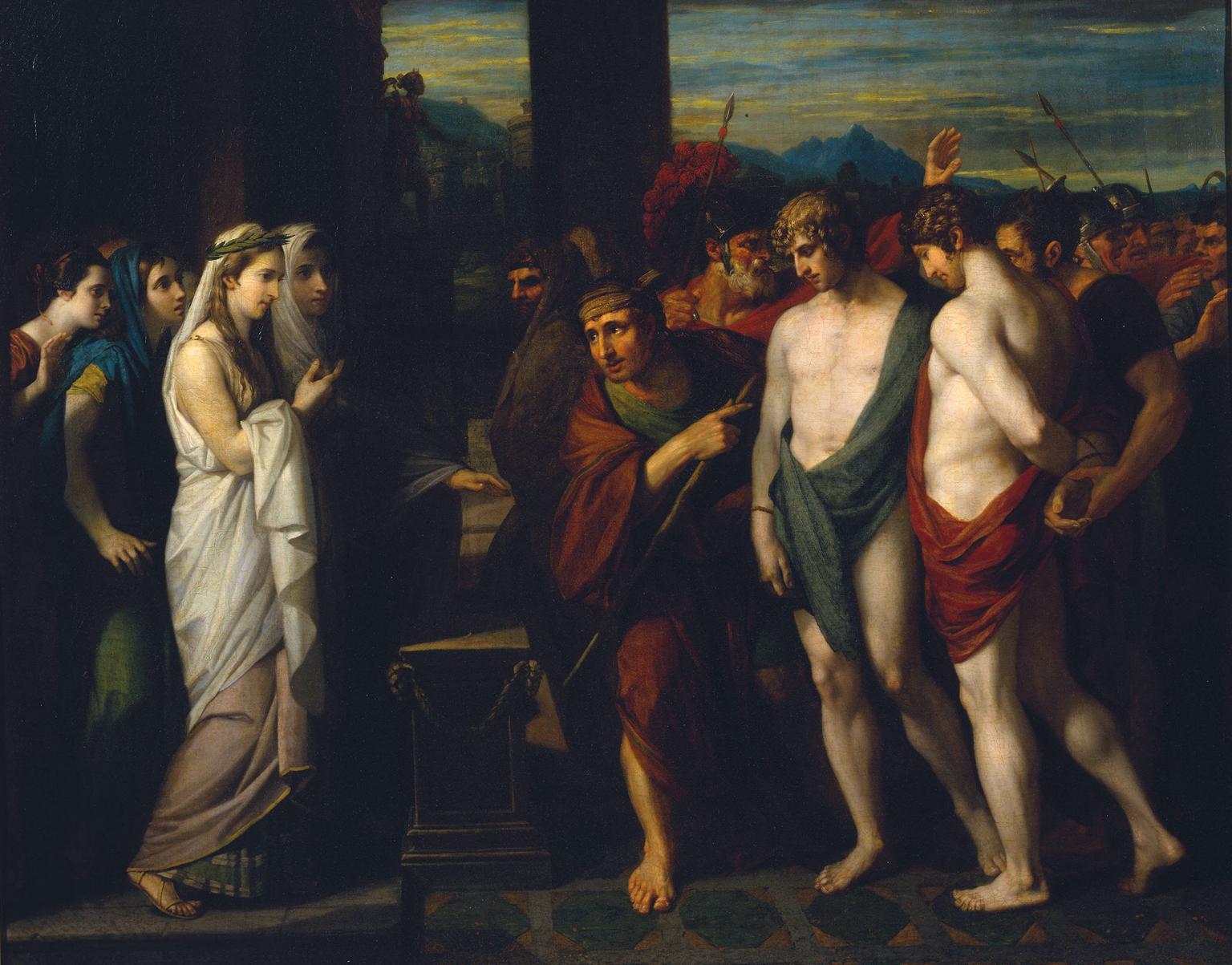
- Artist: Benjamin West
- Date: 1766
- Medium: Oil paint on canvas
- Dimensions: support: 1003 x 1264 mm
- Museum: Tate Britain
- Collection record: Tate Britain website
Listen to the free audio guide
About this artwork
This is the "Pylades and Orestes Brought as Victims before Iphigenia" by Benjamin West, painted in 1766. The scene draws directly from Euripides' Iphigenia in Tauris, where two half‑naked men are seized for attempting to steal a gold statue of Diana from the temple. They are brought before Iphigenia, a priestess who is about to sacrifice them on an altar. In the painting, the figure in the red drapery turns out to be Orestes, Iphigenia’s long‑lost brother, creating a tense moment of recognition and familial conflict. West’s composition shows the clear influence of his Italian studies: the sculptural friezes on classical tombs and the frescoes of Raphael guide the arrangement and the calm, heroic poses. He also drew on the work of Hamilton and Mengs, blending classical narrative with the heroic grandeur of the Grand Manner style. The canvas first appeared in London’s Society of Artists exhibition in 1766 and was later presented to the public in 1826 by Sir George Beaumont. It remains a striking example of 18th‑century history painting that melds drama, myth, and a deep reverence for antiquity.
See it in person
Pylades and Orestes Brought as Victims before Iphigenia is in the collection of Tate Britain on Millbank, London — free to enter. Point your phone at any artwork there and audioguide.london plays a free audio guide in six languages — no app download needed.