Ming dynasty khatvanga
- Gallery: Room 33
- Culture: Ming dynasty; Yongle
- Date: 1403-1424
- Object type: khatvanga, sceptre
- Materials: iron; gold; silver
- Museum number: 1981,0207.1
- Museum: The British Museum
- Collection record: British Museum website
- Image © The Trustees of the British Museum, shared under a CC BY-NC-SA 4.0 licence.
Listen to the free audio guide
In the museum now? Point your phone at the next object and hear its guide.
About this object
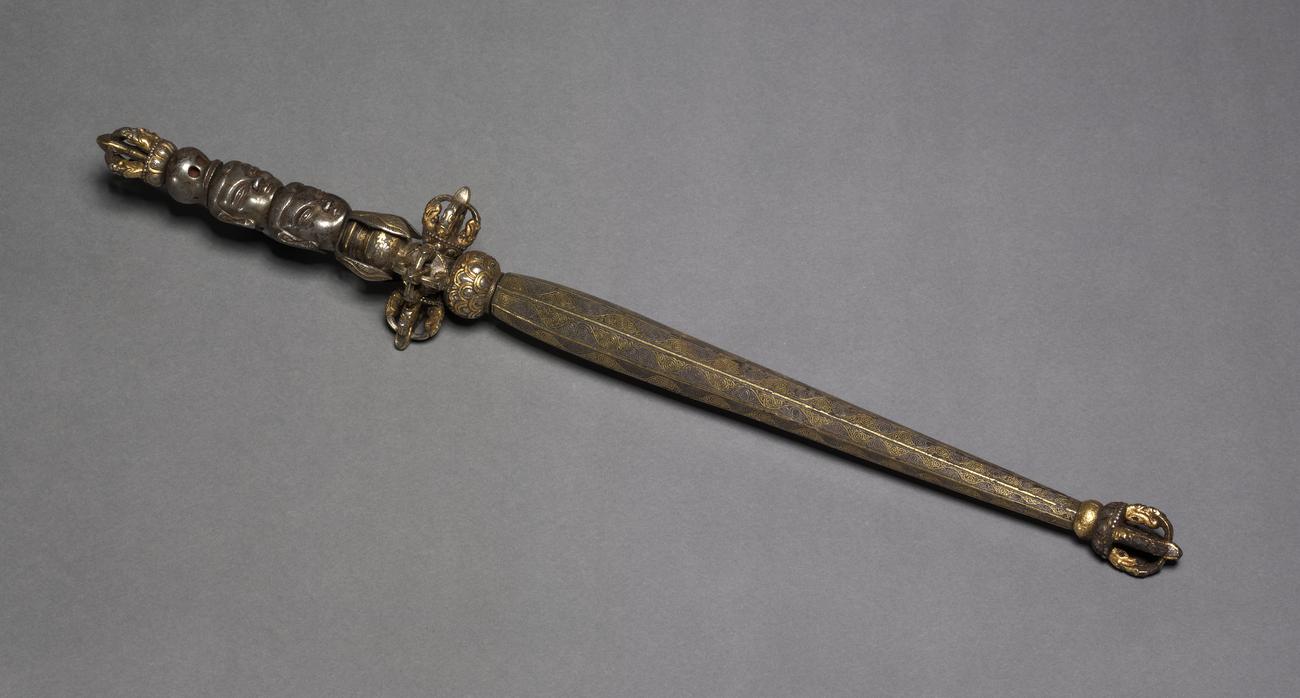
This is a Ming dynasty khatvanga, a ritual sceptre made of iron and inlaid in gold and silver. At its top, a vajra—symbolizing unbreakable wisdom—sits above a skull and two human heads. Below, four delicate leaves surround a vase, crossed vajras, and a lotus bud.
The shaft tapers to a vajra tip, its surface decorated with silver and gold inlaid flowers like lotus, peony, and chrysanthemum. Fine details include animal masks framing vajra prongs, all suspended over a lotus flower.
This trident-like sceptre may have been used in rituals of spiritual identification. Commissioned by the court during the Yongle emperor's reign, it bears a Chinese inscription marking its imperial origin. Crafted between 1403 and 1424, the piece showcases the finest inlay techniques of Ming China.
See it in person
Ming dynasty khatvanga is on display in Room 33 at the British Museum on Great Russell Street, Bloomsbury, London — free to enter. Choose British Museum on audioguide.london and take a photo of it to hear this free audio guide in six languages — no app download needed.
New, in beta. British Museum support has just launched and is still improving: over 1,000 objects so far, with more added all the time.