Little Hermit Sphinx
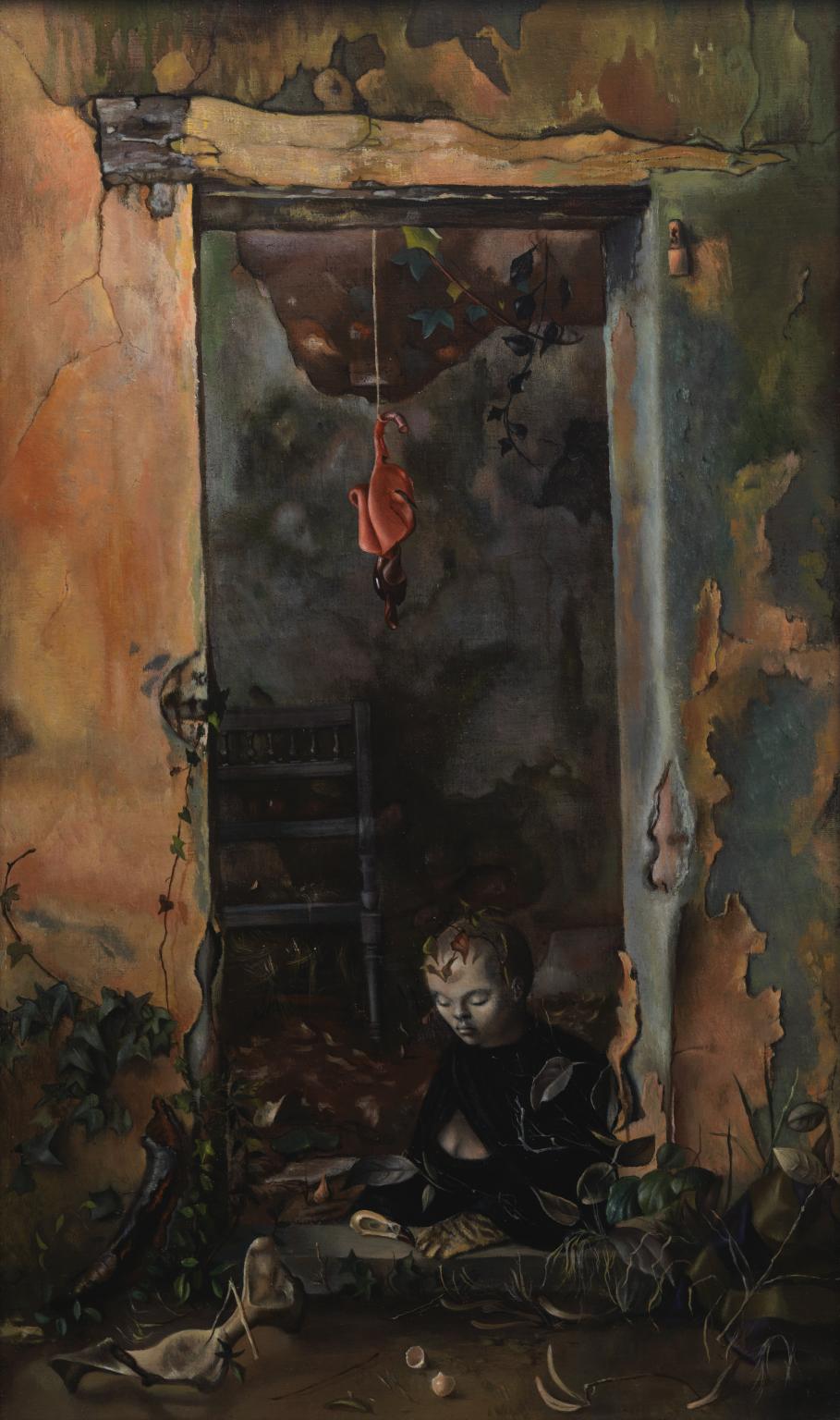
- Artist: Leonor Fini
- Date: 1948
- Medium: Oil paint on canvas
- Dimensions: support: 411 × 244 mm
- Museum: Tate Modern
- Collection record: Tate Modern website
Listen to the free audio guide
About this artwork
This is the “Little Hermit Sphinx” by Leonor Fini, painted in 1948. The canvas opens on a dilapidated doorway, a place that feels both familiar and uncanny. At the threshold sits a sphinx – part lion, part woman, wings outstretched – wearing a black cloak that part of it pulls back to reveal a cat‑like paw. Above the lintel, a human lung dangles, its pink flesh bleeding against the muted stone. Below the sphinx, a cracked egg shell lies on the floor, a stark symbol of loss.
Fini painted this after her 1947 hysterectomy, a trauma that left her grappling with infertility. The lung and egg capture that grief, while the sphinx assumes a genderless, powerful alter‑ego. It’s a striking example of how she used mythic imagery to explore the limits of femininity, making the surreal both unsettling and empowering.
See it in person
Little Hermit Sphinx is in the collection of Tate Modern on Bankside, London — free to enter. Point your phone at any artwork there and audioguide.london plays a free audio guide in six languages — no app download needed.