Library of King Ashurbanipal
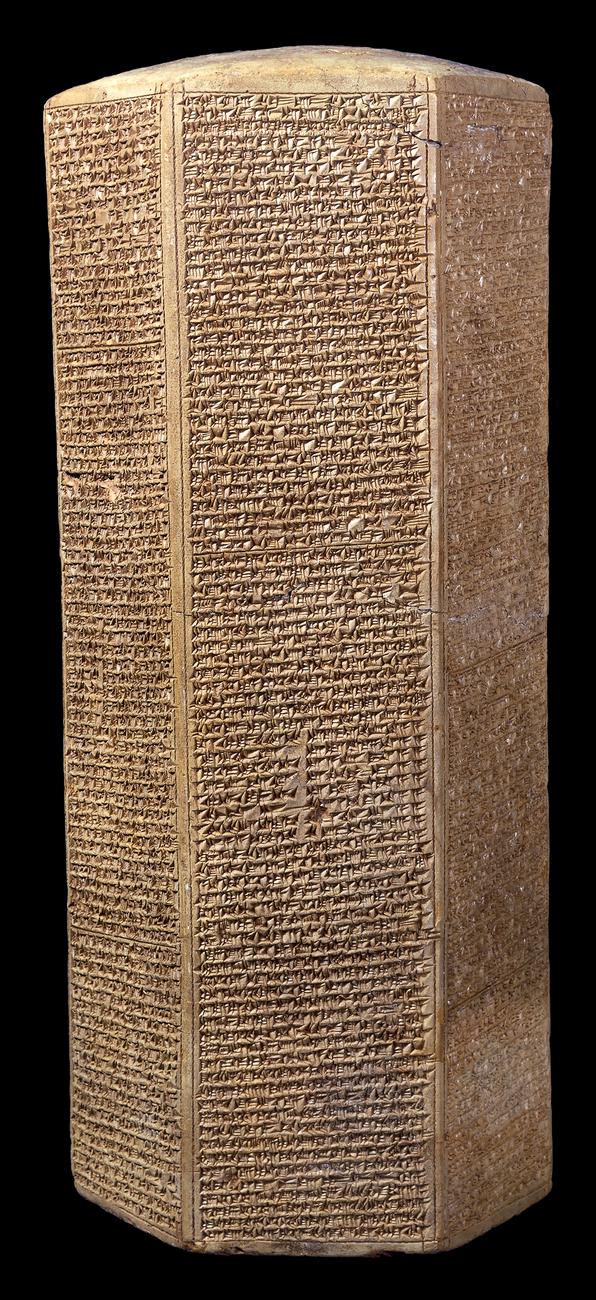
- Audio guide stop: 404
- Gallery: Room 55
- Audio guide: one commentary for a group of objects shown together
- Museum: The British Museum
- Image © The Trustees of the British Museum, shared under a CC BY-NC-SA 4.0 licence.
Listen to the free audio guide
About these objects
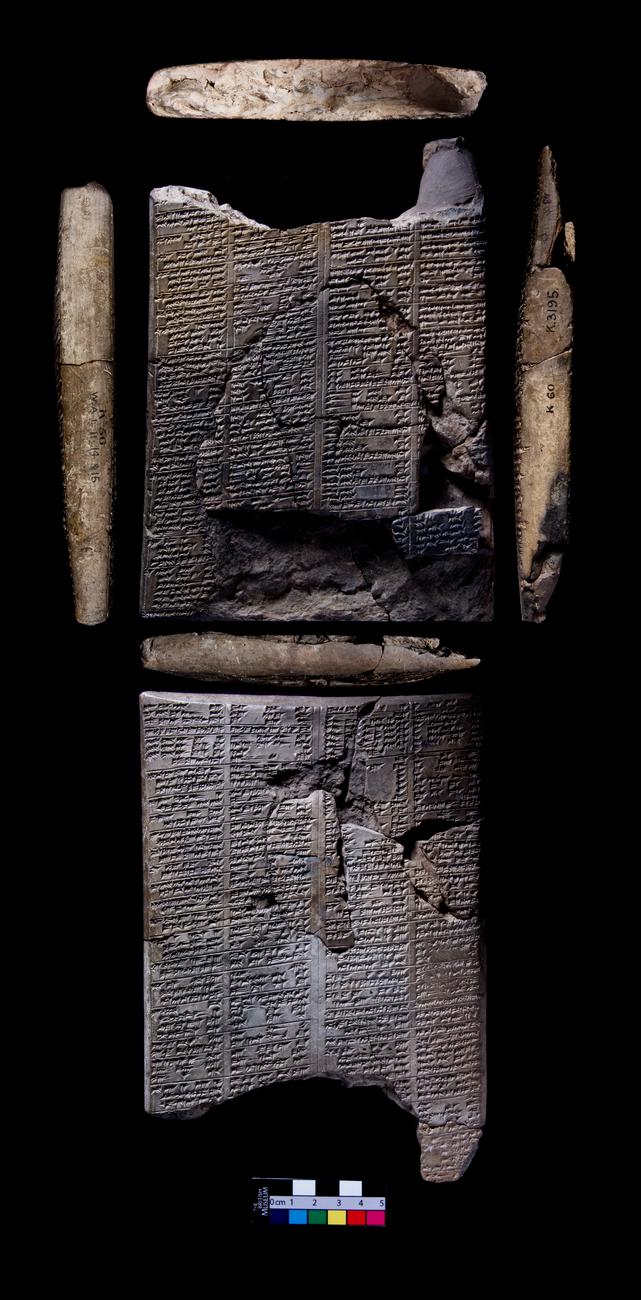
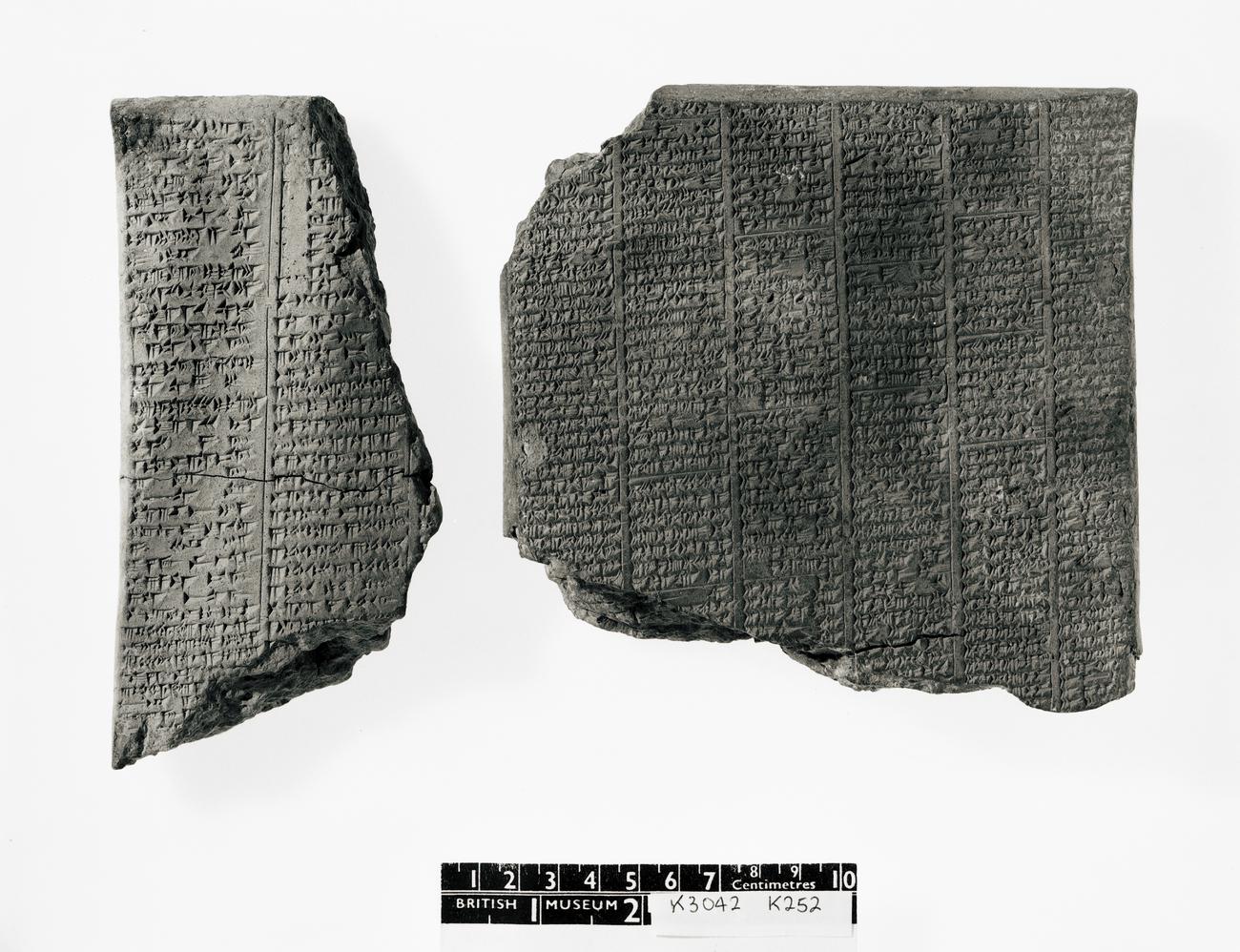
This is the Library of King Ashurbanipal, one of the most important collections of cuneiform literature from ancient Mesopotamia. These clay tablets and prisms, made in the 7th century BC in what is now Iraq, were part of the library the king built at Ashur. They contain a rich mix of texts: myths, prayers, omens, laws, and historical records. The inscriptions are in Akkadian and often include Sumerian, preserving ancient languages and stories.
Among the standouts is a fragment of a famous tablet from the Epic of Gilgamesh, known as the Flood Tablet. It tells of a great deluge and a hero named Utu-napishtim, and its discovery stunned scholars in the 19th century for its striking parallels to the story in the Bible. Another remarkable object is the Taylor Prism, a hexagonal clay prism recording the campaigns of Sennacherib, including an account of the tribute he received from Judah in 701 BC.
Also on display is a mythic story about Ishtar’s descent into the Underworld, a tale found in few places other than Mesopotamia. And look closely—there’s a bilingual tablet of laws that served as a language-learning tool for scribes. Together, these objects reveal how the Assyrians preserved their knowledge—and how we began to rediscover it.
See it in person
Library of King Ashurbanipal is on display in Room 55 at the British Museum on Great Russell Street, Bloomsbury, London — free to enter. Choose British Museum on audioguide.london and type its audio guide stop number, 404, from the gallery label, or take a photo of it, to hear this free audio guide in six languages — no app download needed.
New, in beta. British Museum support has just launched and is still improving: over 1,000 objects so far, with more added all the time.