Library of Ashurbanipal: tablet
- Gallery: Room 55
- Culture: Neo-Assyrian
- Object type: tablet
- Materials: clay
- Museum number: K.252
- Museum: The British Museum
- Collection record: British Museum website
- Image © The Trustees of the British Museum, shared under a CC BY-NC-SA 4.0 licence.
Listen to the free audio guide
About this object
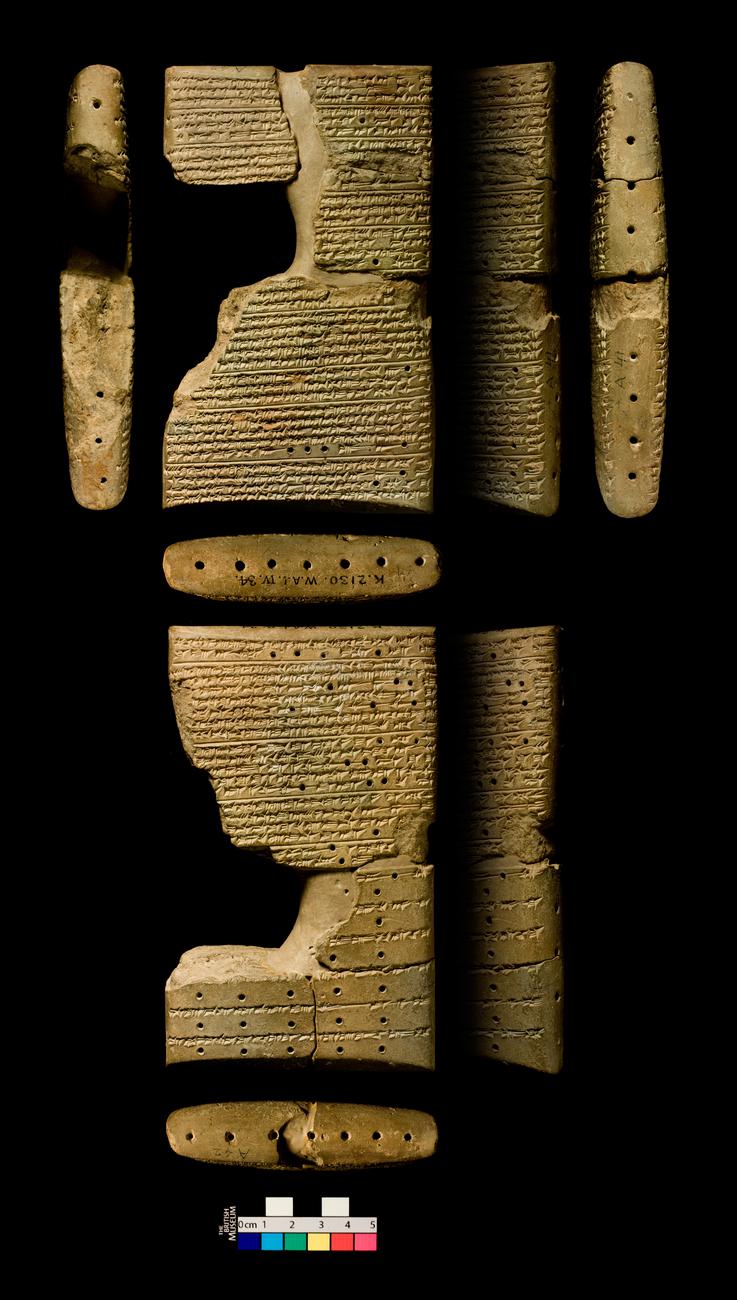
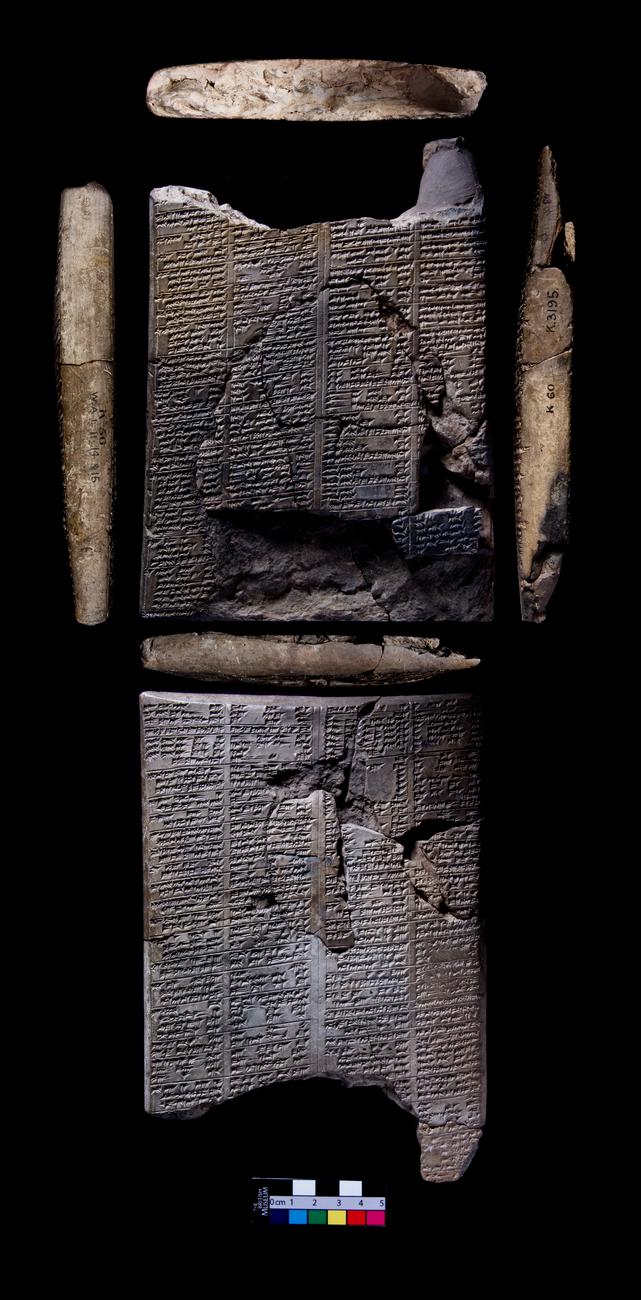
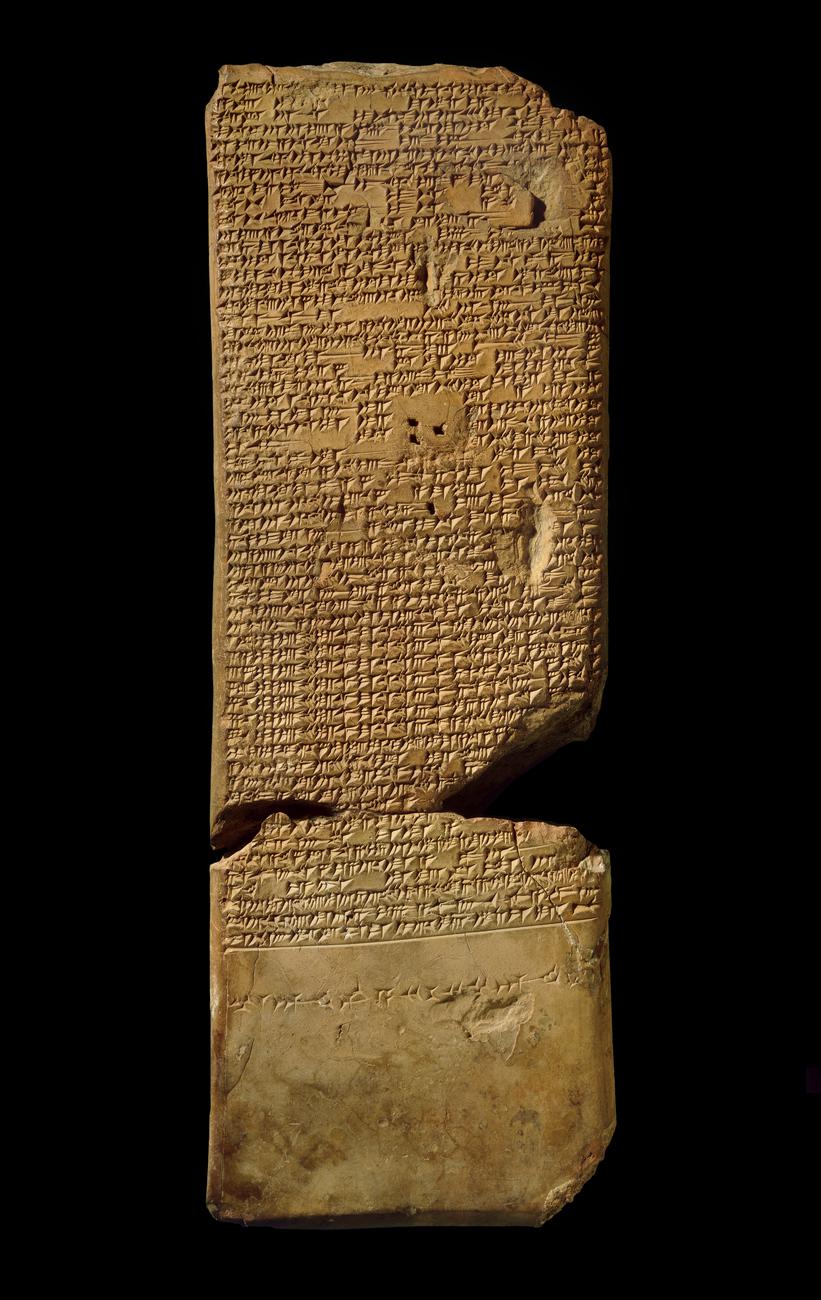
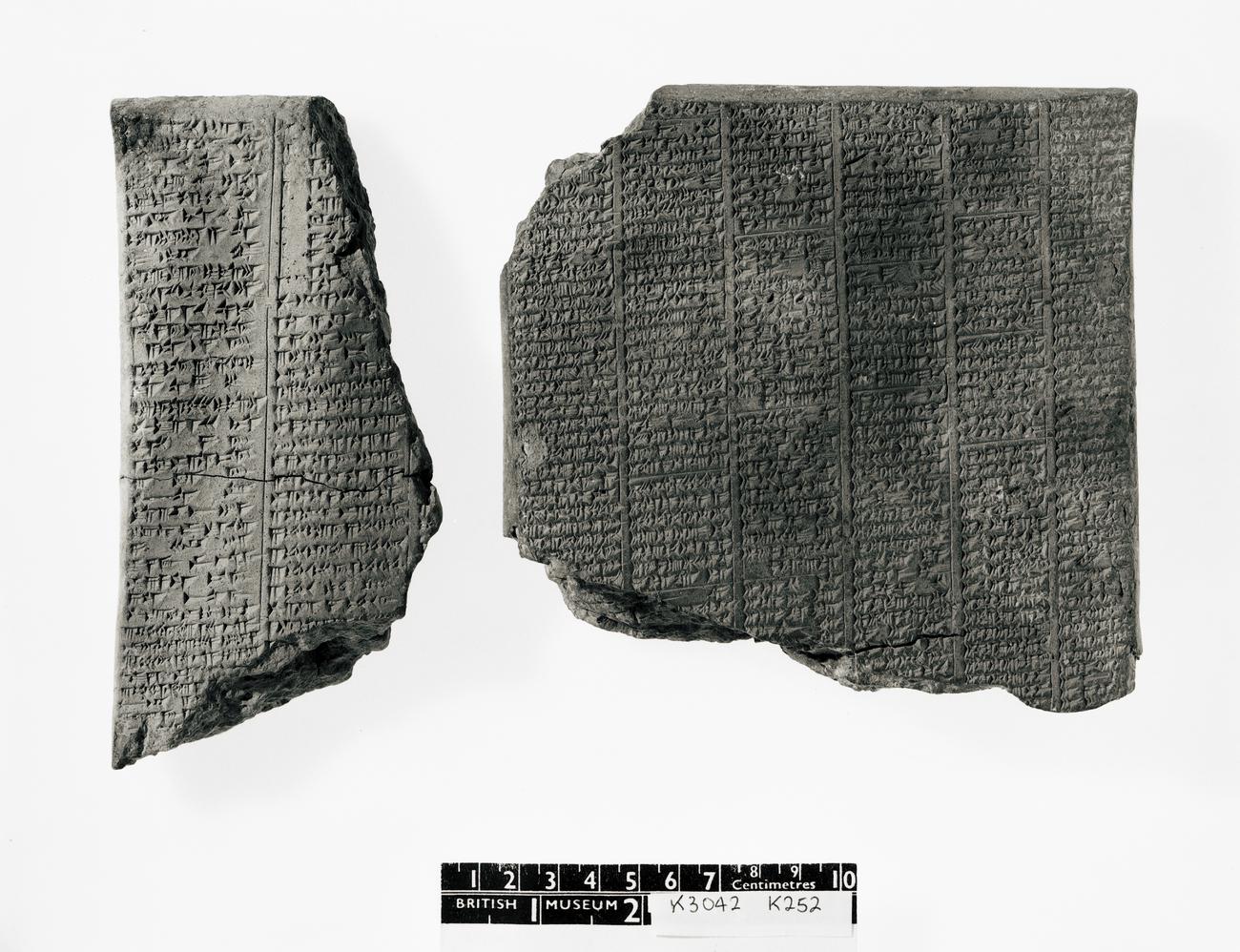
This is "Library of Ashurbanipal," a clay tablet from the Neo-Assyrian period. What you're seeing is the lower part of a cuneiform tablet, carved with a list of names and titles of gods. Carefully etched into the clay are twelve columns of text, with Column X containing a prayer.
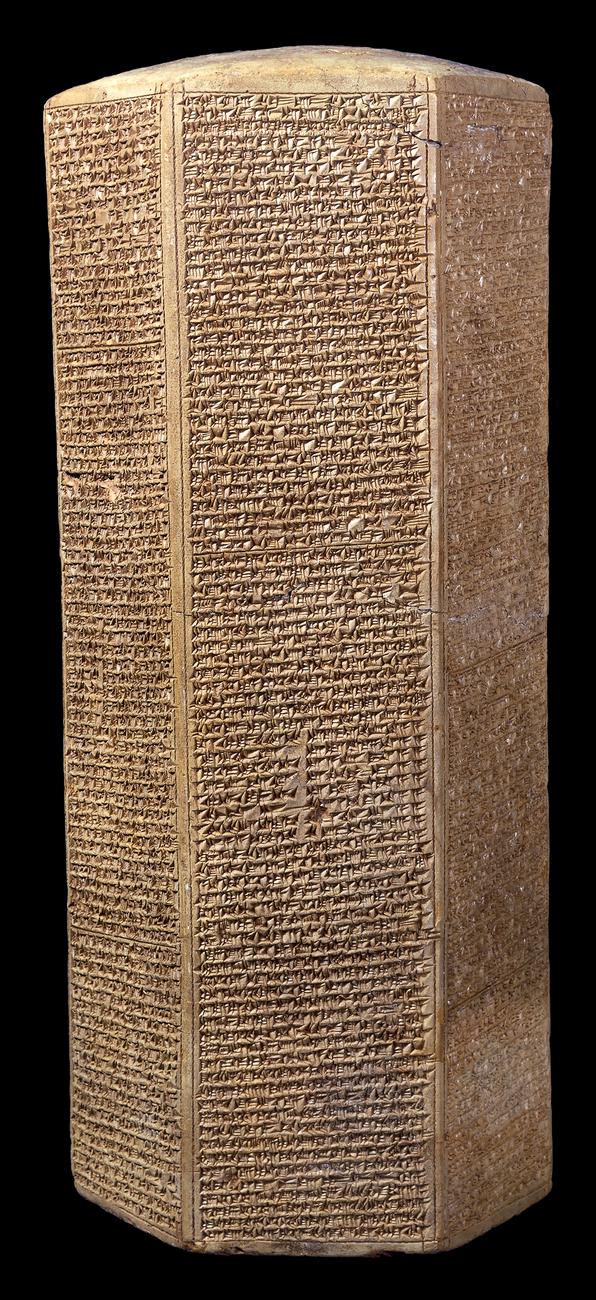
Though part of the tablet's beginning and end are missing, many lines remain clearly visible. The inscriptions, written in Assyrian, offer valuable insight into religious practices of the time. This artifact comes from the famed library of King Ashurbanipal, once housed in the palace at Nineveh—now excavated from the site of Kouyunjik.
The tablet reveals the sophistication of cuneiform writing, with some lines partially worn or damaged through time. Scholars like Rawlinson and Talbot have translated and studied this piece, making it essential in understanding ancient Mesopotamian beliefs. As you look closer, you can see how ancient scribes recorded their world in pressed symbols—truly a window into a lost civilization.
See it in person
Library of Ashurbanipal: tablet is on display in Room 55 at the British Museum on Great Russell Street, Bloomsbury, London — free to enter. Choose British Museum on audioguide.london and take a photo of it to hear this free audio guide in six languages — no app download needed.
New, in beta. British Museum support has just launched and is still improving: over 1,000 objects so far, with more added all the time.