Kali
- Artist: Sutapa Biswas
- Date: 1983–1985
- Medium: Video, colour and sound (dual mono)
- Dimensions: duration: 23min, 24sec
- Museum: Tate Britain
- Collection record: Tate Britain website
Listen to the free audio guide
About this artwork
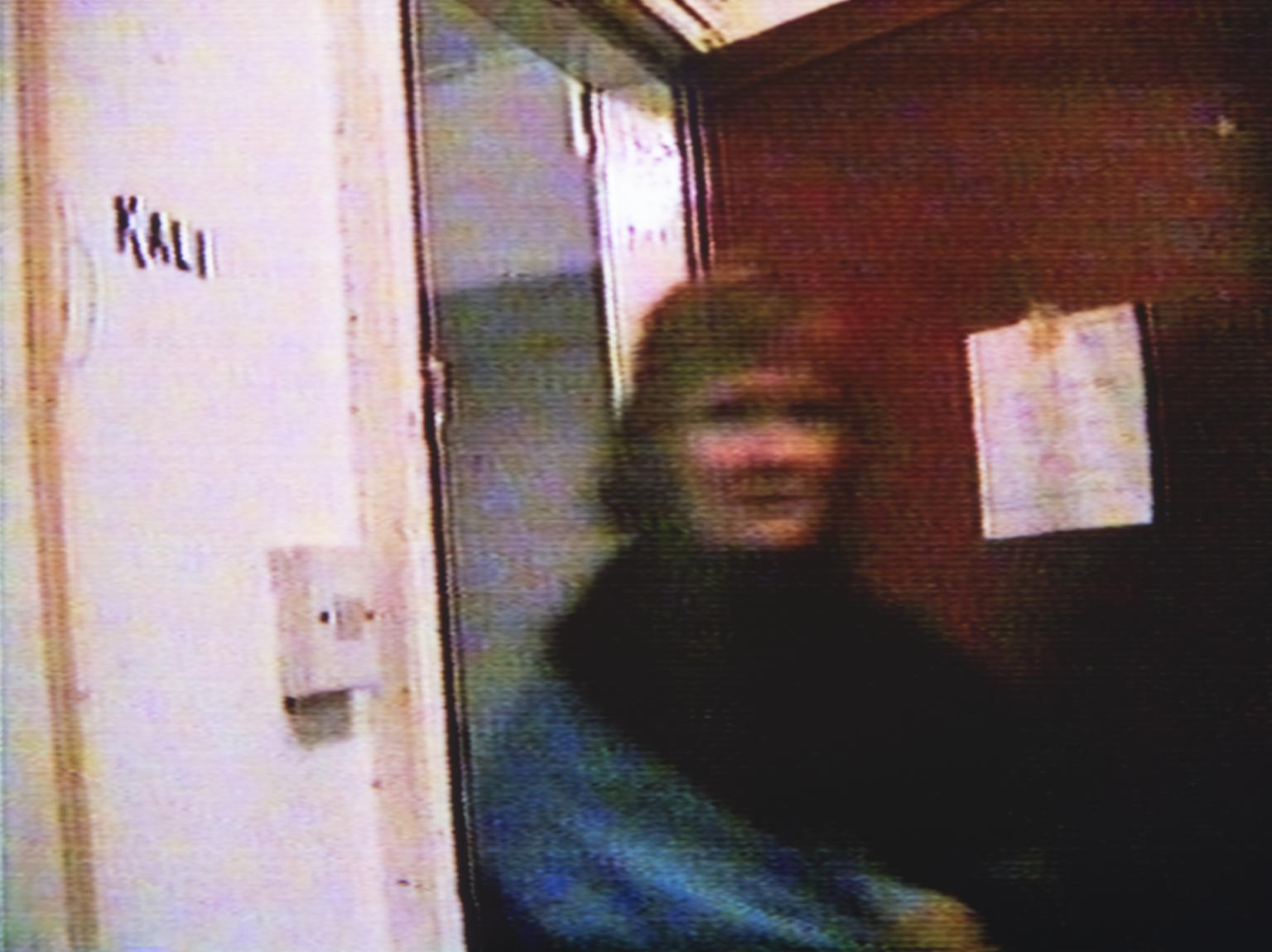
This is “Kali” by Sutapa Biswas, a 23‑minute video from 1983–1985 that documents a staged performance at Leeds University.
The piece opens with Biswas herself speaking to the camera, setting up a mythic battle between good and evil. She and her fellow student Isabelle Tracey play both themselves and the Hindu characters Kali and Ravan. As part of the scene, a puppet‑made representation of Kali—black‑face, paper crown, red splash on a white pillow—and a green Ravan puppet appear beside them.
During the performance the art historian Griselda Pollock is invited to sit hooded on a chair in a painted circle. Pollock’s participation signals Biswas’ challenge to her course, which led to a syllabus overhaul that year.
Throughout “Kali” Biswas mixes Bengali speech, the soundtrack of South‑African theatre, and sounds of trains and corporate coffee—each element underscoring imperialism versus the East.
The video is both an act and a commentary on performance itself: who performs, who watches, who controls. It’s a playful yet potent statement about race, colonialism, gender and class in early 80s Britain.
See it in person
Kali is in the collection of Tate Britain on Millbank, London — free to enter. Point your phone at any artwork there and audioguide.london plays a free audio guide in six languages — no app download needed.