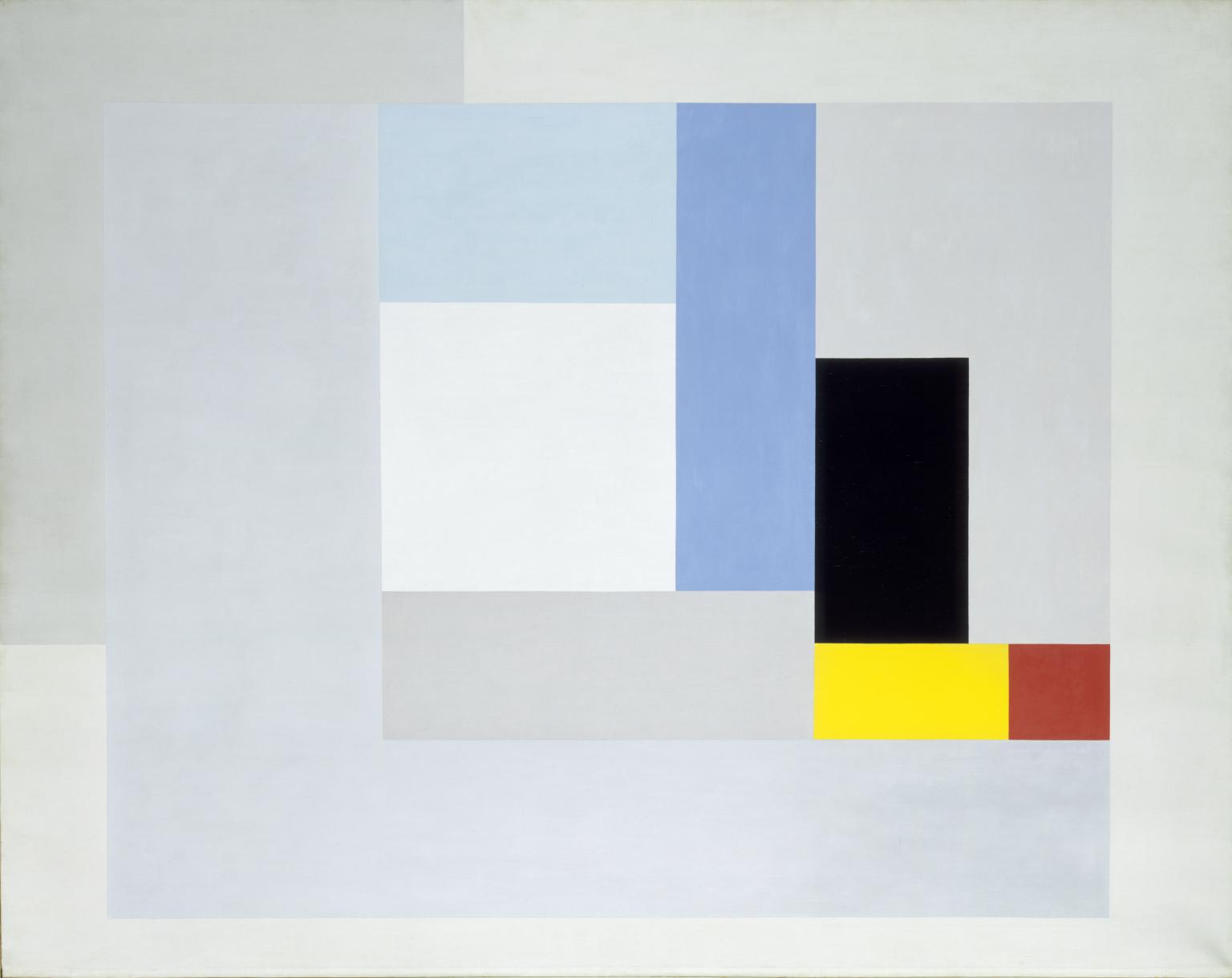
K VII
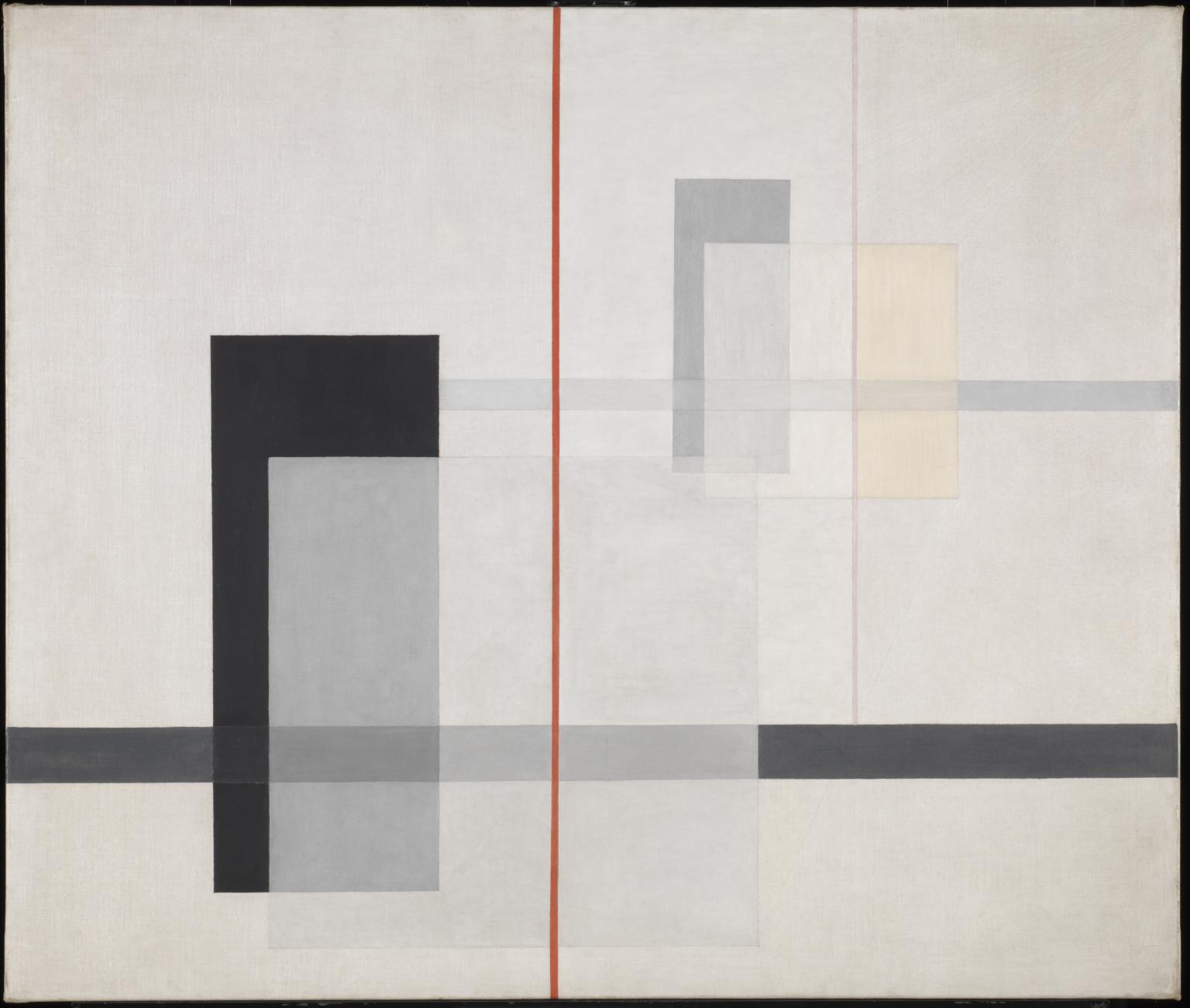
- Artist: László Moholy-Nagy
- Date: 1922
- Medium: Oil paint and graphite on canvas
- Dimensions: support: 1153 x 1359 mm
- Museum: Tate Britain
- Collection record: Tate Britain website
Listen to the free audio guide
About this artwork
This is “K VII” by László Moholy‑Nagy, painted in 1922. The work is an oil and graphite on canvas that showcases the early Bauhaus spirit of experimentation. Moholy‑Nagy was a key figure at the Bauhaus in Weimar, where he began turning his research in photography, typography and sculpture into abstract paintings. In this piece he moves away from perspective and instead layers luminous, geometric forms that play with space and colour.
“K VII” was first shown in Berlin during the winter of 1922 at Der Sturm, a pivotal moment that led to Moholy‑Nagy’s appointment as a professor at the Bauhaus. It was later included in the 1923 Bauhaus exhibition at Weimar and the 1924 Juryfreie Kunstschau in Berlin under the title “Konstruktion KVII.” The title itself reflects the artist’s system: “K” stands for *Konstruktion* (construction), and “VII” is a series number. In 1935 he joined the Artists Against Fascism and War exhibition in London, where he displayed two works from this series, one of them a companion piece called KVIII.
The painting entered the Tate collection in 1961 from the Marlborough New London Gallery. It remains a striking example of early 20th‑century abstraction, where geometry and colour become the medium of thought.
See it in person
K VII is in the collection of Tate Britain on Millbank, London — free to enter. Point your phone at any artwork there and audioguide.london plays a free audio guide in six languages — no app download needed.