Kensington Gravel Pits
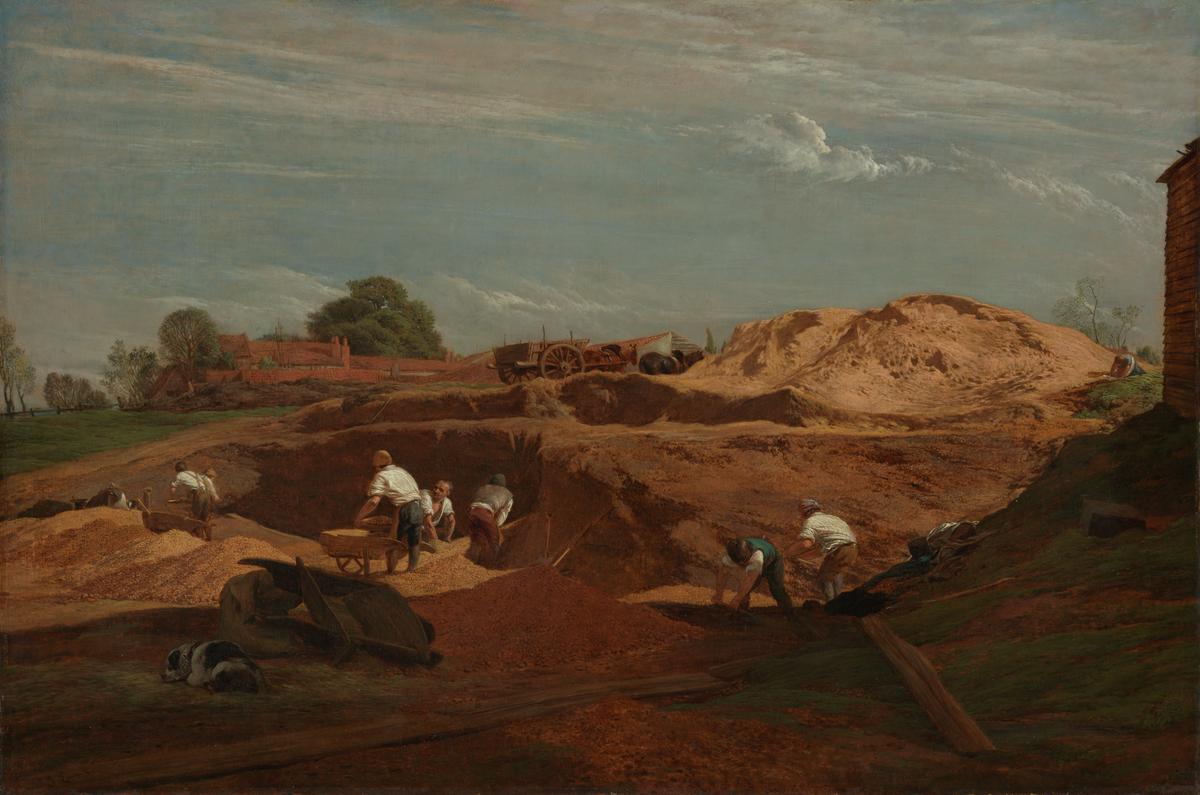
- Artist: John Linnell
- Date: 1811–2
- Medium: Oil paint on canvas
- Dimensions: support: 711 x 1067 mm
- Museum: Tate Britain
- Collection record: Tate Britain website
Listen to the free audio guide
About this artwork
This is the “Kensington Gravel Pits” by John Linnell, painted around 1811‑12. The scene is set in the eponymous gravel quarry on the edge of what was then a rural London hinterland, just south of Kensington. Linnell, who lived in the village with fellow artist William Mulready between 1809 and 1811, had spent time sketching the workmen and the landscape in watercolour before committing it to oil.
What’s striking here is how Linnell turns away from the idealised, picturesque landscape that dominated the era. Instead, he offers a raw, almost documentary view: men in rough clothes hunched over stone, wheelbarrows clattering across the dusty ground. The colour is bright but true to the site, and the figures are rendered with a precision that hints at Linnell’s interest in the high Renaissance masters and his life‑drawing practice at the Royal Academy.
The painting was exhibited in 1813 as “The Gravel Pits” at the British Institution, where it attracted mixed reviews before eventually selling for 45 guineas to Henry Hole. Linnell later returned to the same subject in 1857, but the original remains a powerful testament to everyday labour and a forward‑thinking approach to landscape in early nineteenth‑century Britain.
See it in person
Kensington Gravel Pits is in the collection of Tate Britain on Millbank, London — free to enter. Point your phone at any artwork there and audioguide.london plays a free audio guide in six languages — no app download needed.