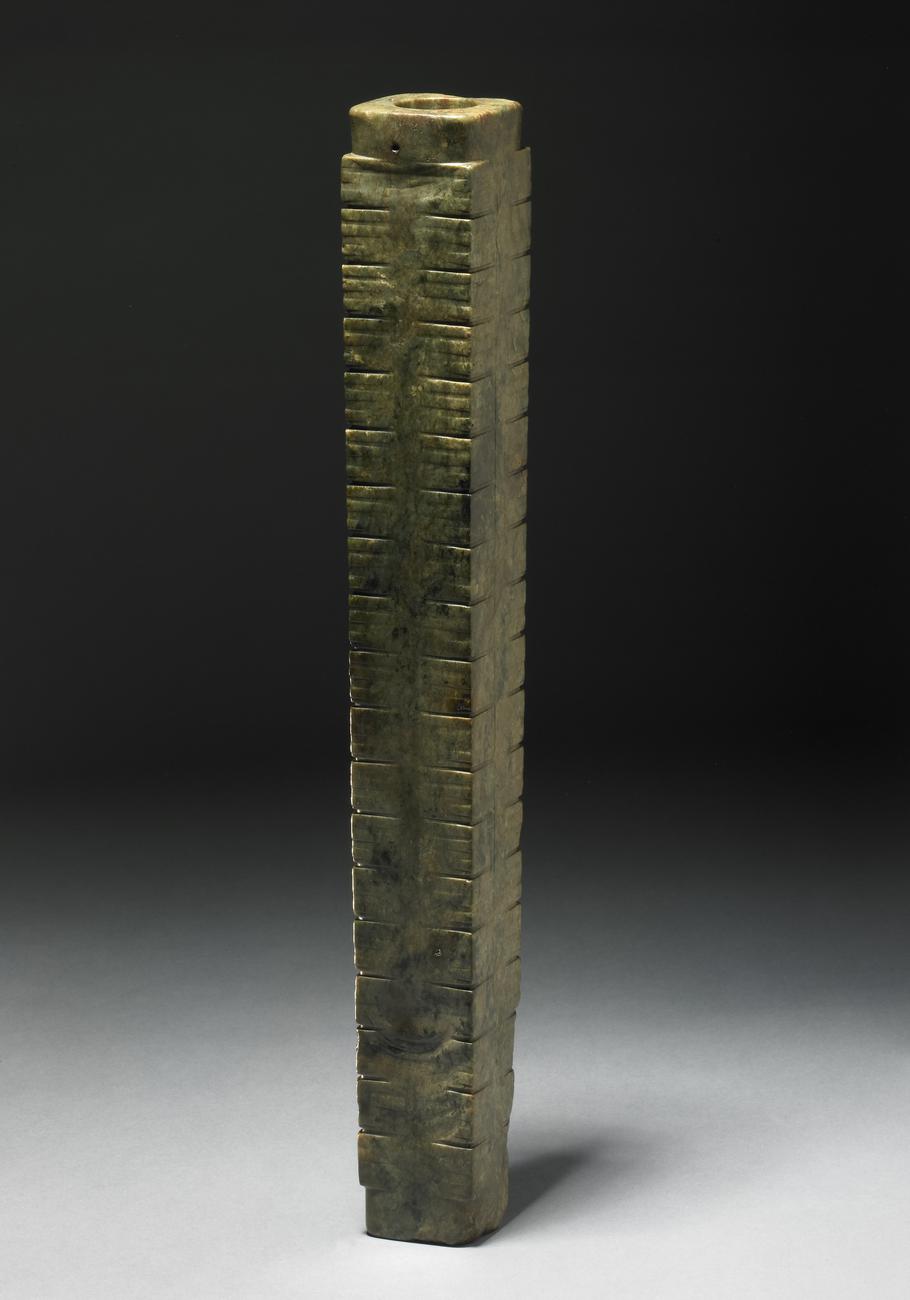
Jade cong
- Audio guide stop: 627
- Gallery: Room 33
- Culture: Liangzhu culture
- Date: 2500BC (circa)
- Object type: cong
- Materials: jade
- Museum number: 1937,0416.188
- Museum: The British Museum
- Collection record: British Museum website
- Image © The Trustees of the British Museum, shared under a CC BY-NC-SA 4.0 licence.
Listen to the free audio guide
About this object
This is a tall jade "cong" from the Liangzhu culture, dating to around 2500 B.C. Crafted from green jade and expertly ground and polished, it consists of 19 distinct sections and is one of the tallest surviving examples of this type. The piece is divided into an upper and lower collar, both square with rounded corners that taper smoothly down the form. Each section has a face carved at each of the four corners, subtly shaped with ridges that suggest headbands and a nose. The eyes, however, are more subdued and less visible.
Jade "cong" were significant artifacts, often placed in graves, but their specific purpose remains a mystery due to the lack of written records from the period. Creating these objects required patience and skill—jade could not be carved, only abraded, a process that might take months. This piece was purchased from the collection of George Eumorfopoulos in 1937 and offers a striking example of Neolithic craftsmanship and cultural expression.
See it in person
Jade cong is on display in Room 33 at the British Museum on Great Russell Street, Bloomsbury, London — free to enter. Choose British Museum on audioguide.london and type its audio guide stop number, 627, from the gallery label, or take a photo of it, to hear this free audio guide in six languages — no app download needed.
New, in beta. British Museum support has just launched and is still improving: over 1,000 objects so far, with more added all the time.