Indo-Scythian capital
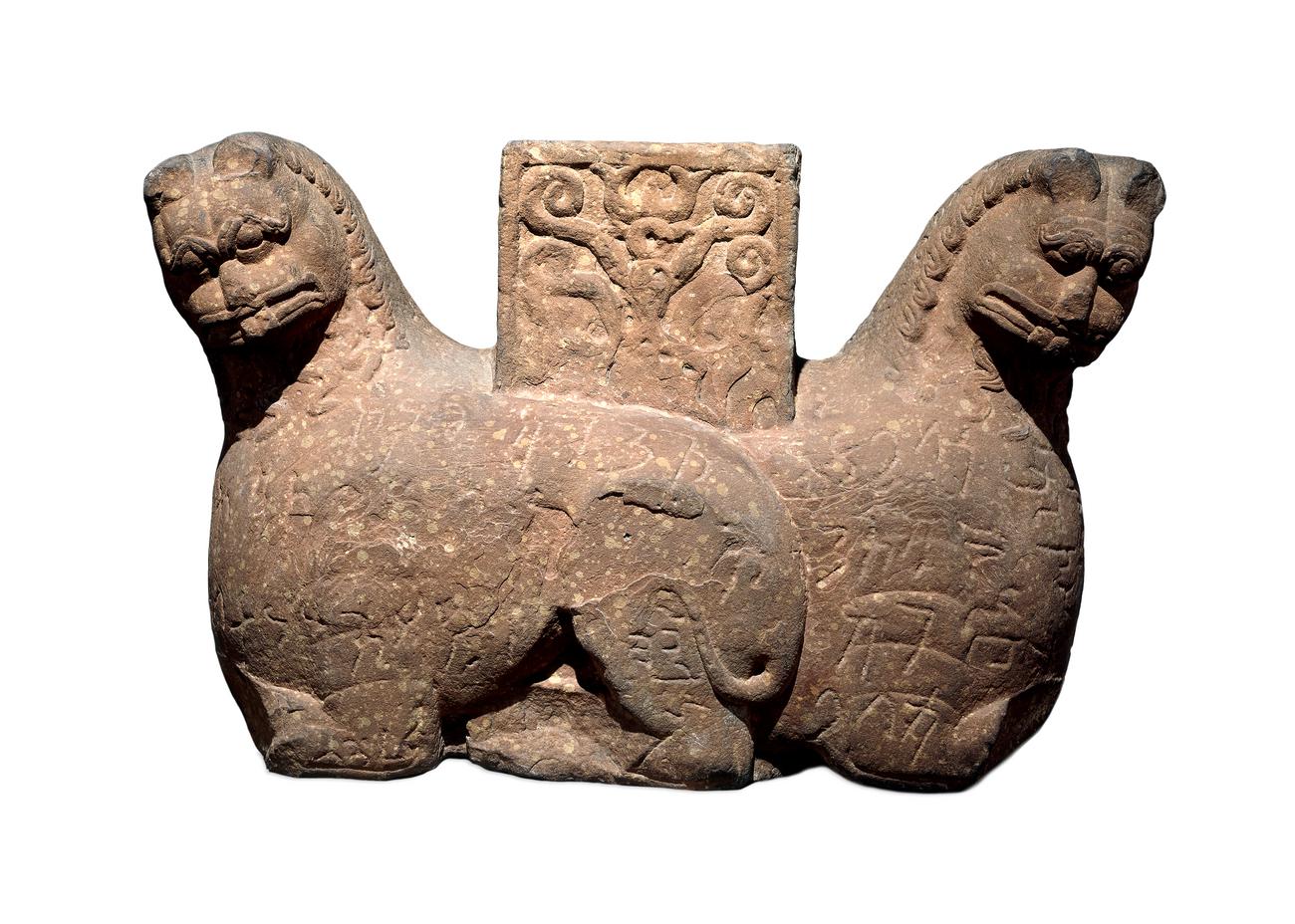
- Gallery: Room 33
- Culture: Indo-Scythian
- Made in: India (Mathura)
- Date: 1stC
- Object type: capital
- Materials: sandstone
- Museum number: 1889,0314.1
- Museum: The British Museum
- Collection record: British Museum website
- Image © The Trustees of the British Museum, shared under a CC BY-NC-SA 4.0 licence.
Listen to the free audio guide
About this object
Before you stands an Indo-Scythian capital, carved from mottled red sandstone. Dating to the 1st century, this intricate piece is an architectural wonder, featuring two stylized lions facing each other—adorsed lions—resting on their joined backs. Above them sits a rectangular abacus carved with curling tendrils, while the base has a deep hole used to secure the capital to a pillar.
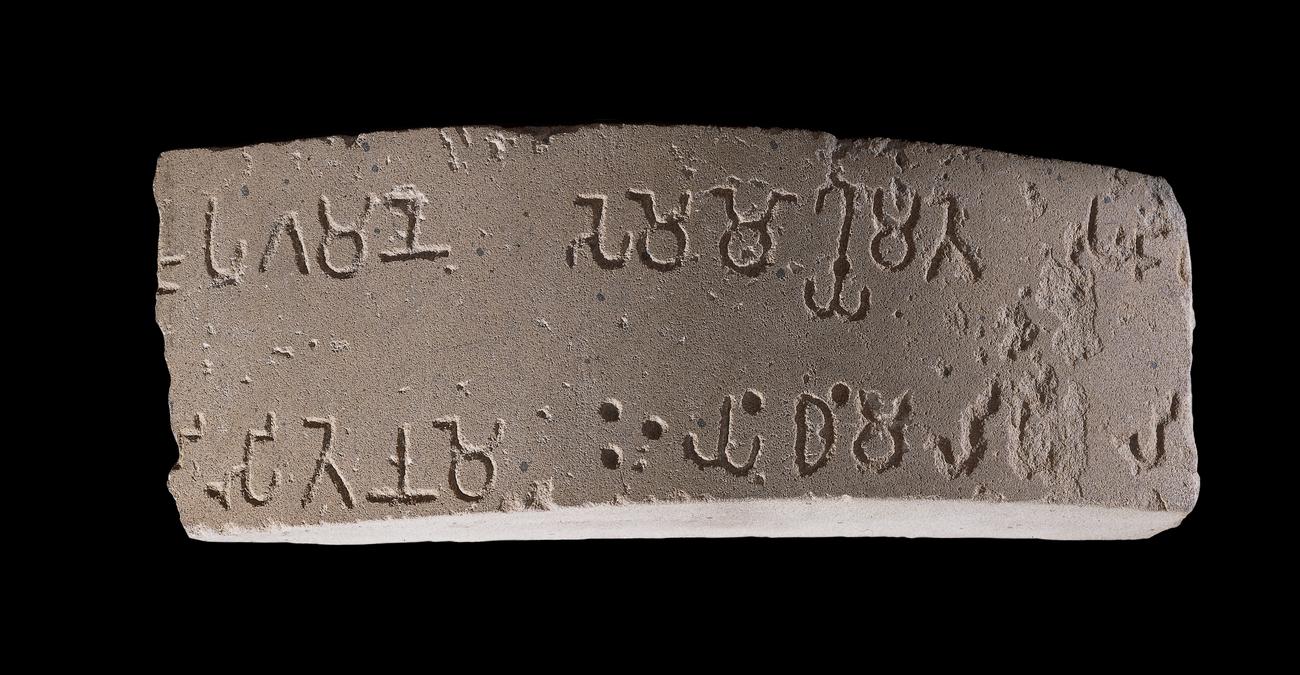
The entire object is richly inscribed in Prakrit using the Kharoshthi script, found on the lion bodies and the base block. It is believed to have been part of an altar in Mathura dedicated to Sitala, a goddess associated with smallpox.
Carved in a refined style, the piece reflects the cultural and artistic traditions of early India. It was bequeathed by Pandit Bhagvanlal Indraji, whose notes on the inscription offer valuable insight. This capital not only served a structural role but also carried spiritual and historical meaning.
See it in person
Indo-Scythian capital is on display in Room 33 at the British Museum on Great Russell Street, Bloomsbury, London — free to enter. Choose British Museum on audioguide.london and take a photo of it to hear this free audio guide in six languages — no app download needed.
New, in beta. British Museum support has just launched and is still improving: over 1,000 objects so far, with more added all the time.