Inca Paccha
- Audio guide stop: 169
- Gallery: Room 24
- Culture: Inca
- Made in: North Coast Peru
- Date: 1400-1532
- Object type: vessel, paccha
- Materials: pottery
- Museum number: Am1947,10.39
- Museum: The British Museum
- Collection record: British Museum website
- Image © The Trustees of the British Museum, shared under a CC BY-NC-SA 4.0 licence.
Listen to the free audio guide
About this object
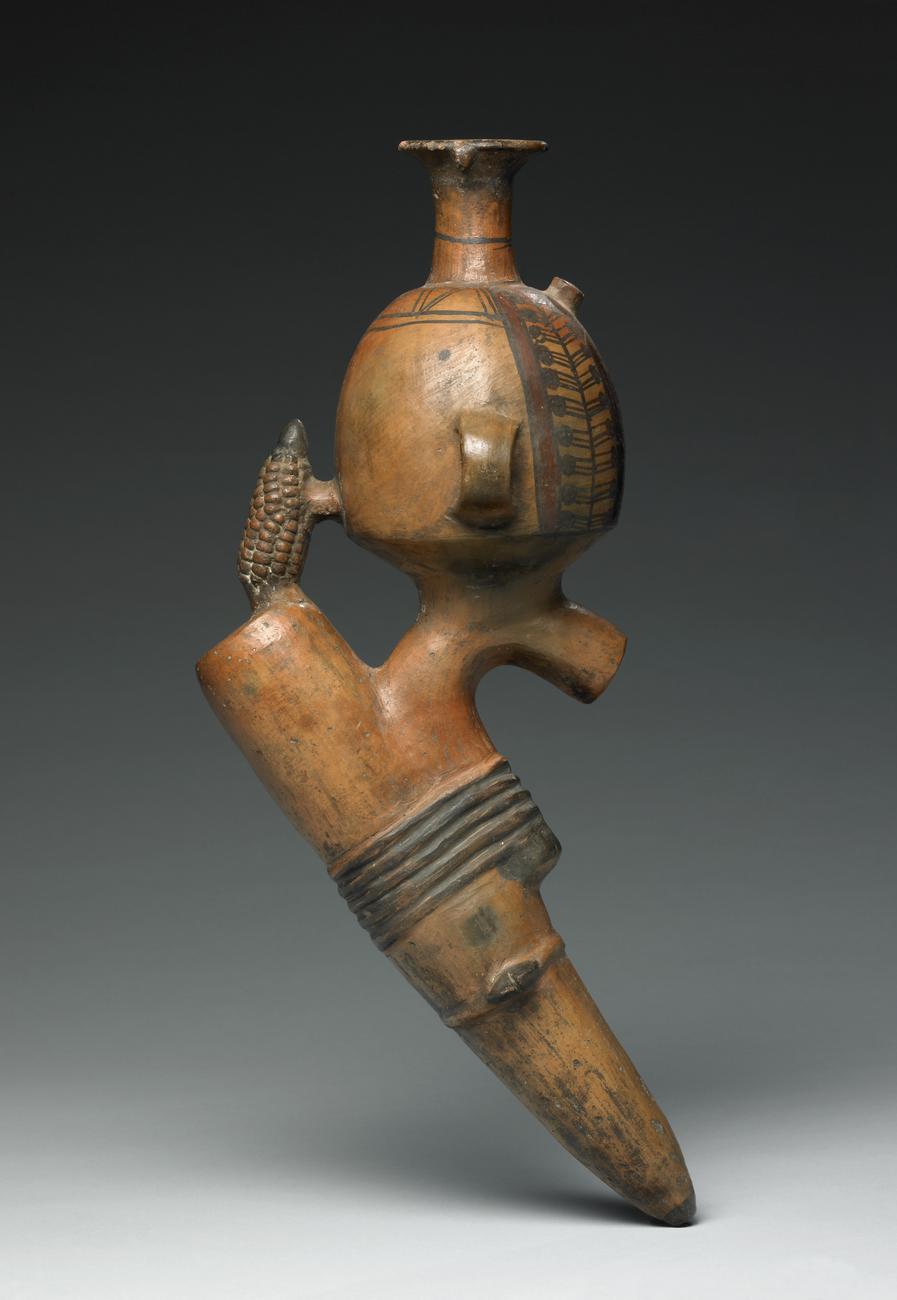
Before you stands a remarkable ceramic vessel known as a "paccha," a ceremonial object rooted in Inca tradition. Shaped like a foot plough called a "chaquitaqlla," it is crafted from richly painted pottery. The vessel features strap handles, a flaring flat-rimmed spout, and a delicately modeled maize cob. Its surface is adorned with intricate geometric patterns, including cross-and-bar motifs, fern designs, and a zigzag band near the spout.
Inca society placed great importance on agriculture, and objects like this played a role in rituals celebrating the start of each farming season. During ceremonies, leaders would perform symbolic plowing, accompanied by music and the pouring of corn beer called "chicha." This "paccha" captures that tradition: a miniature storage vessel at the top allows liquid to flow through hidden channels, symbolically "irrigating" the earth. Created around 1400–1532 in North Coast Peru, it is a rare and meaningful piece of ancient Andean culture.
See it in person
Inca Paccha is on display in Room 24 at the British Museum on Great Russell Street, Bloomsbury, London — free to enter. Choose British Museum on audioguide.london and type its audio guide stop number, 169, from the gallery label, or take a photo of it, to hear this free audio guide in six languages — no app download needed.
New, in beta. British Museum support has just launched and is still improving: over 1,000 objects so far, with more added all the time.