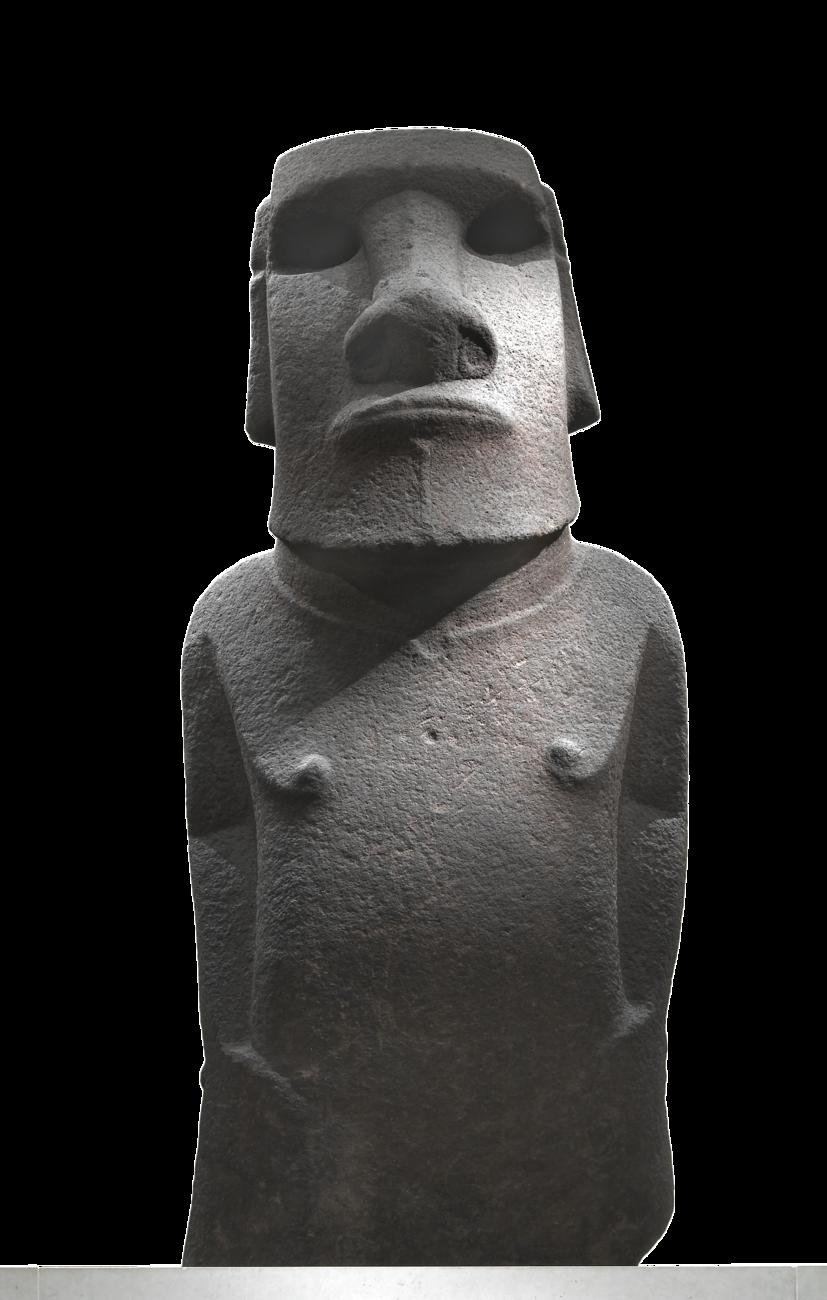
Hoa Hakananai'a
- Audio guide stop: 162
- Gallery: Room 24
- Culture: Rano Kao
- Made in: Rano Kao (likely)
- Date: 1000 -1200 (approx)
- Object type: figure
- Materials: basalt (ma'ea pupura); coral (missing (eyes sockets)); stone (missing (eyes sockets))
- Museum number: Oc1869,1005.1
- Museum: The British Museum
- Collection record: British Museum website
- Image © The Trustees of the British Museum, shared under a CC BY-NC-SA 4.0 licence.
Listen to the free audio guide
About this object
Before you stands the "Hoa Hakananai'a," a moai figure carved from basalt. Originating from Rano Kao on Rapa Nui, this rare sculpture is one of only fourteen moai made from this hard, volcanic rock. Most others were fashioned from softer tuff.
Notice the figure's strong posture and the detailed carvings on its back—these include stylised birds, figures, and patterns linked with the bird man (tangata manu) religion. The moai would once have stood at Orongo, on a raised platform, with others watching over the island from the shore.
Dating to around AD 1200, it was removed in 1869 during an expedition by the HMS Topaze and gifted to Queen Victoria before arriving here. The statue originally had coral-lined eyes and vibrant red and white paint, which were lost during transport.
The moai reflect a period of ancestral worship and island identity. As the island’s resources were depleted, the traditions evolved into a new birdman religion. Today, "Hoa Hakananai'a" offers a window into Rapa Nui’s changing past.
See it in person
Hoa Hakananai'a is on display in Room 24 at the British Museum on Great Russell Street, Bloomsbury, London — free to enter. Choose British Museum on audioguide.london and type its audio guide stop number, 162, from the gallery label, or take a photo of it, to hear this free audio guide in six languages — no app download needed.
New, in beta. British Museum support has just launched and is still improving: over 1,000 objects so far, with more added all the time.