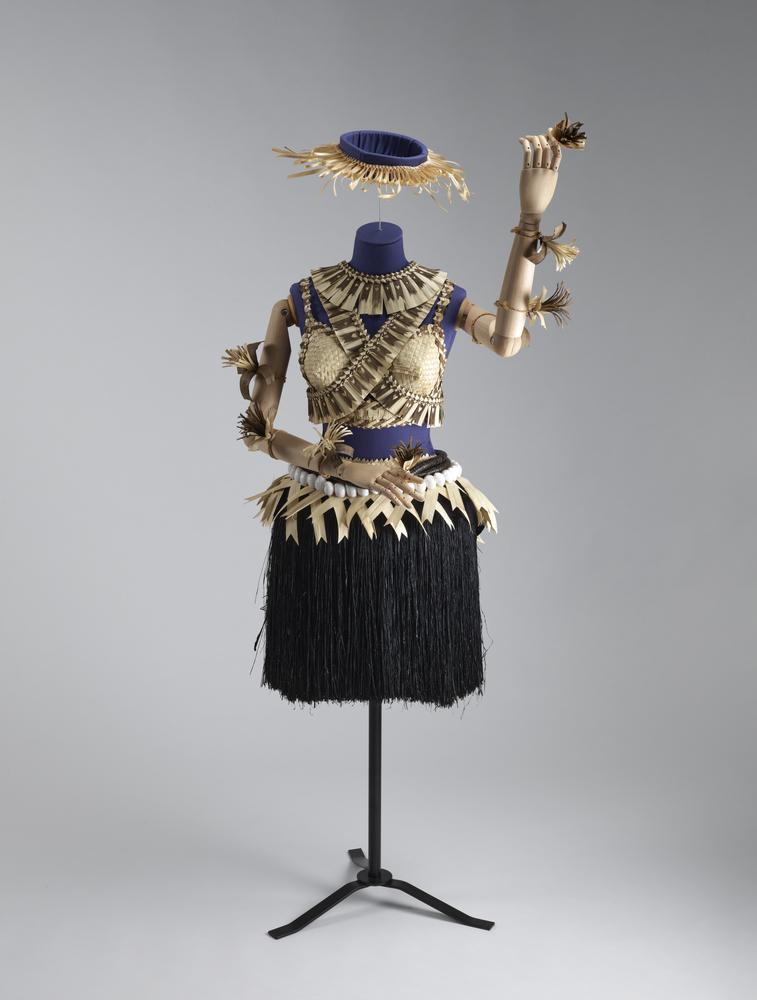
Kiribati dance costume
- Audio guide stop: 167
- Gallery: Room 24
- Audio guide: one commentary for a group of objects shown together
- Museum: The British Museum
- Image © The Trustees of the British Museum, shared under a CC BY-NC-SA 4.0 licence.
Listen to the free audio guide
About these objects
In front of you is a vibrant group of traditional Kiribati dance costume pieces. These items – including sashes, skirts, and ornaments – were created for ceremonial performances and tell stories of culture and craftsmanship.
The standout piece here is a dance belt ("Te tumara") made from white nautica shells and coconut fibre. It’s a unique garment believed to be from the 20th century, crafted on Abaiang Island. Another notable item is a brightly patterned sarong ("Te Be"), embroidered with daily life scenes like fishing and coconut husking. Nearby you’ll find a cross-body sash and a chest ornament, both plaited from dyed and plain pandanus leaf to create intricate heart shapes.
All of these items are worn together during dances and celebrations in Kiribati, and show the skill passed down through generations, especially in weaving using natural and synthetic materials. They reflect traditions that are still alive today, honoring both history and community.
See it in person
Kiribati dance costume is on display in Room 24 at the British Museum on Great Russell Street, Bloomsbury, London — free to enter. Choose British Museum on audioguide.london and type its audio guide stop number, 167, from the gallery label, or take a photo of it, to hear this free audio guide in six languages — no app download needed.
New, in beta. British Museum support has just launched and is still improving: over 1,000 objects so far, with more added all the time.