Head of a Man, probably Ira Frederick Aldridge
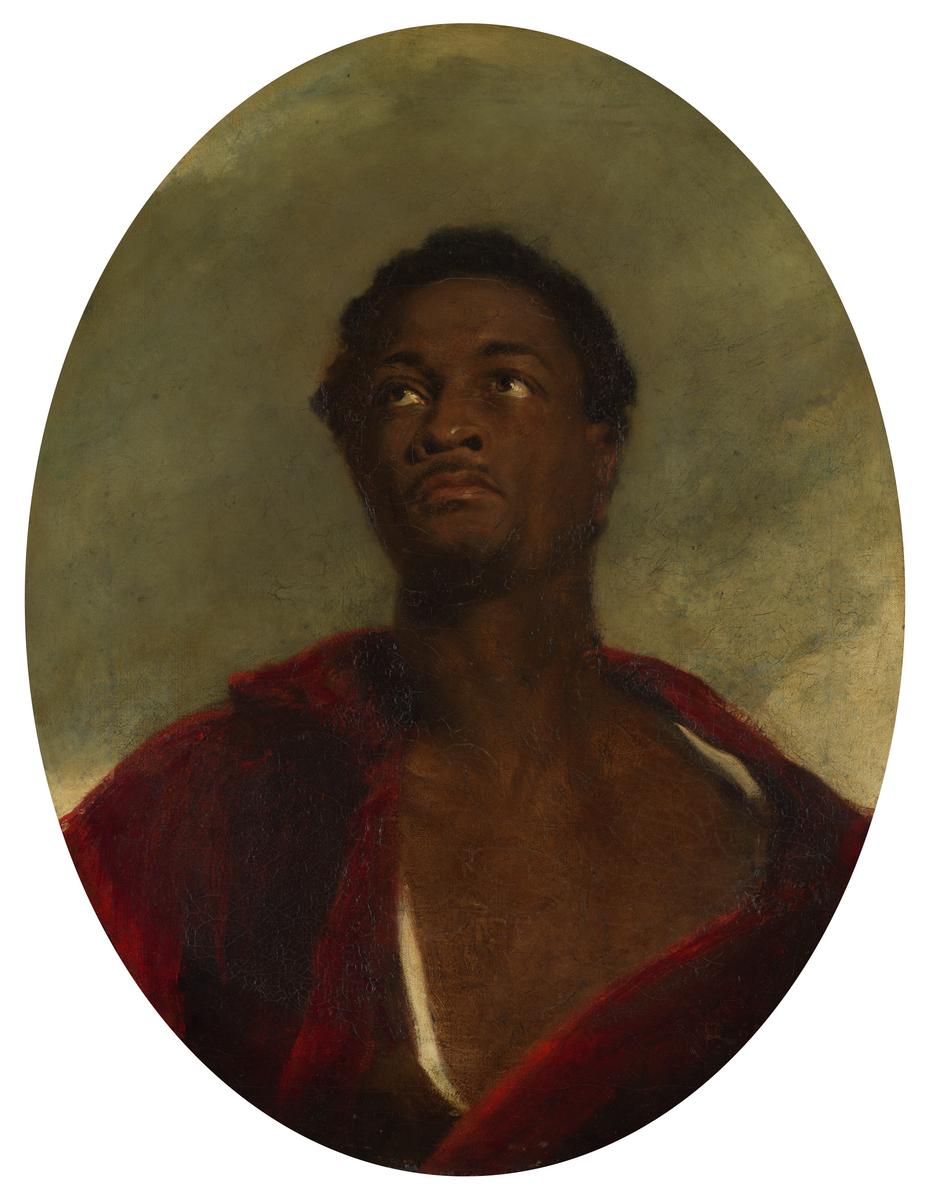
- Artist: John Simpson
- Date: exhibited 1827
- Medium: Oil paint on canvas
- Dimensions: support: 733 x 562 x 18 mm
- Museum: Tate Britain
- Collection record: Tate Britain website
Listen to the free audio guide
About this artwork
This is the *Head of a Man, probably Ira Frederick Aldridge* by John Simpson. Painted in oil on canvas in 1827, the work is a life‑size study of a head and shoulders, capturing a striking gaze lifted upward as if inspired by a dramatic moment. The sitter is believed to be the African‑American actor Ira Aldridge, who arrived in Britain in 1824 and debuted on the London stage the next year. By 1827 he was rising to fame as the first Black Shakespearean actor in Britain, and he used his platform to challenge racial prejudice and speak out against slavery.
Simpson, a portraitist trained at the Royal Academy and assistant to Sir Thomas Lawrence, painted this study during the same period he produced his larger, more famous work *The Captive Slave*. In that painting the same sitter is shown manacled, a stark visual commentary on slavery that accompanied the 1827 exhibition. The head study, with its heavy red cloak and exposed chest, echoes the heroic and divine imagery of antiquity while simultaneously humanising a Black subject in an era when such representations were rare.
Originally exhibited at the British Institution under the title “Head of a Black” and later referred to as “Head of a Negro,” the work now carries a neutral title that reflects contemporary sensitivity. The painting was presented to the nation by Robert Vernon in 1847, and its historical importance has grown as scholars continue to reassess Aldridge’s life and the broader context of race and abolition in early 19th‑century Britain.
See it in person
Head of a Man, probably Ira Frederick Aldridge is in the collection of Tate Britain on Millbank, London — free to enter. Point your phone at any artwork there and audioguide.london plays a free audio guide in six languages — no app download needed.