Head of Eve
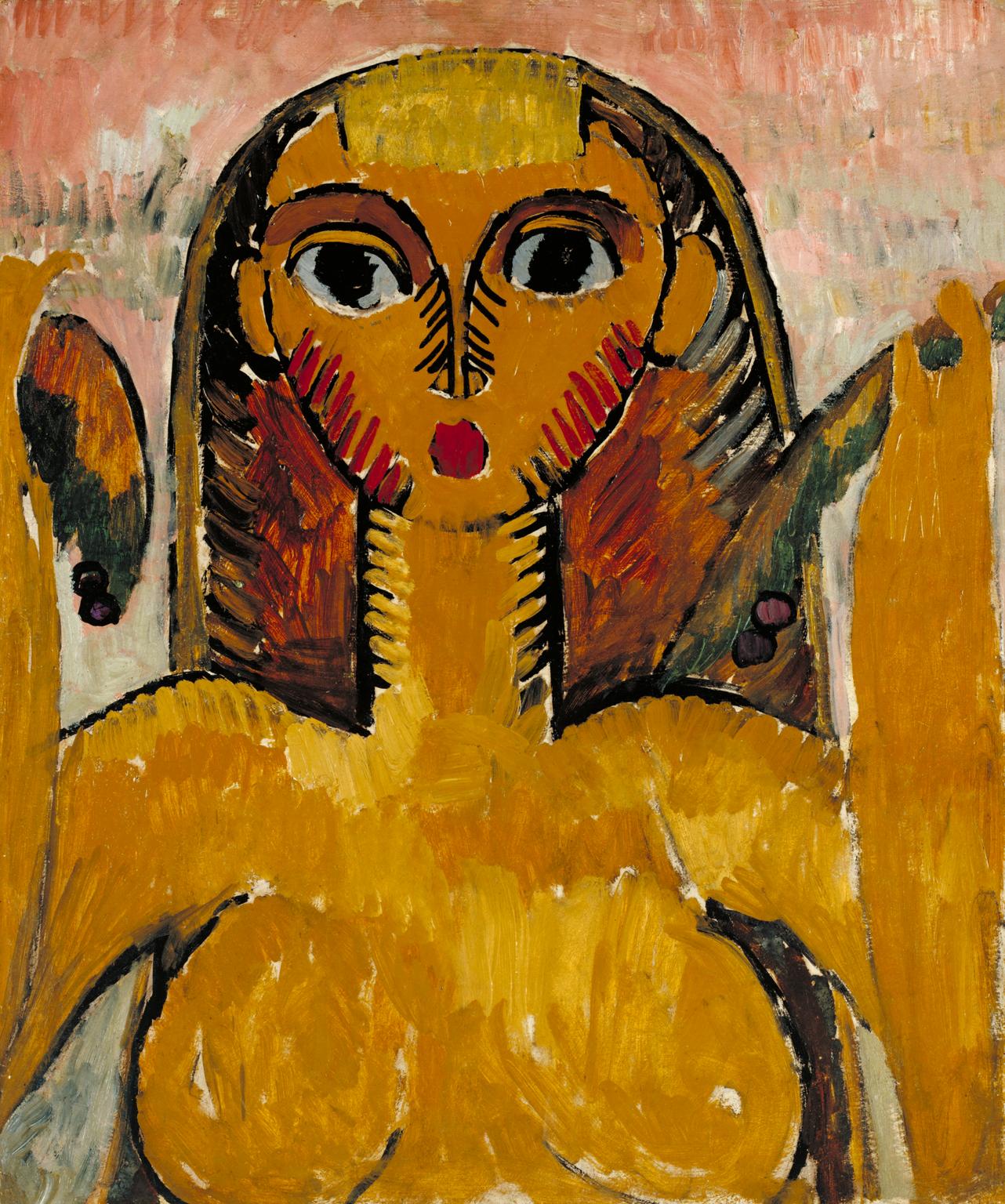
- Artist: Duncan Grant
- Date: 1913
- Medium: Oil paint on board
- Dimensions: support: 756 x 635 mm
- Museum: Tate Britain
- Collection record: Tate Britain website
Listen to the free audio guide
About this artwork
This is the “Head of Eve” by Duncan Grant, painted in 1913. The canvas is a tight, oil‑on‑board study that zooms in on a face that feels almost carved from stone – think Byzantine mosaics mixed with the wooden masks of the African Fang tribe. Grant gives Eve a mask‑like, serene expression, and the symmetrical pose with both forearms raised makes the figure feel almost like a modern altar. The raised arms hold two branches, each tipped with a small red fruit, a playful nod to the lushness of Eden. The veil or long hair frames her head, adding a touch of intimacy to the formal, almost ceremonial stance.
Grant was known for blending diverse influences, and here you can see that in the bold, simplified forms and the vivid color palette that echo Picasso’s early Cubist experiments. It’s widely believed this work was a preparatory study for his larger “Adam and Eve” painting, which shared many of the same gestures and motifs. The piece was purchased in 1984 and showcases Grant’s ability to fuse modernist energy with a timeless, mythic atmosphere.
See it in person
Head of Eve is in the collection of Tate Britain on Millbank, London — free to enter. Point your phone at any artwork there and audioguide.london plays a free audio guide in six languages — no app download needed.