Gold ear-stud
- Audio guide stop: 552
- Gallery: Room 71
- Culture: Etruscan
- Made in: Italy
- Date: 530BC-480BC
- Object type: ear-stud
- Materials: gold; glass
- Museum number: 1881,0528.2
- Museum: The British Museum
- Collection record: British Museum website
- Image © The Trustees of the British Museum, shared under a CC BY-NC-SA 4.0 licence.
Listen to the free audio guide
About this object
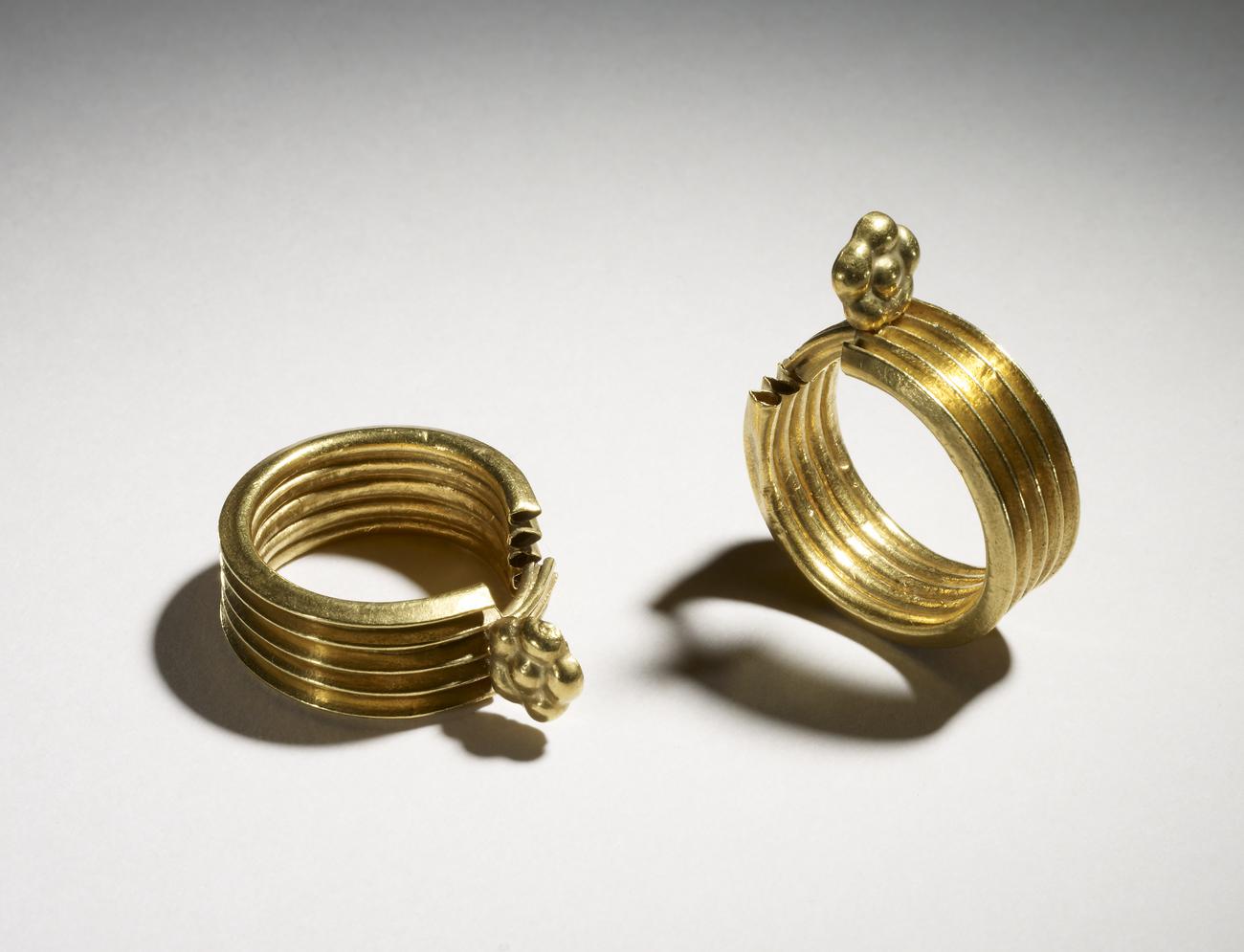
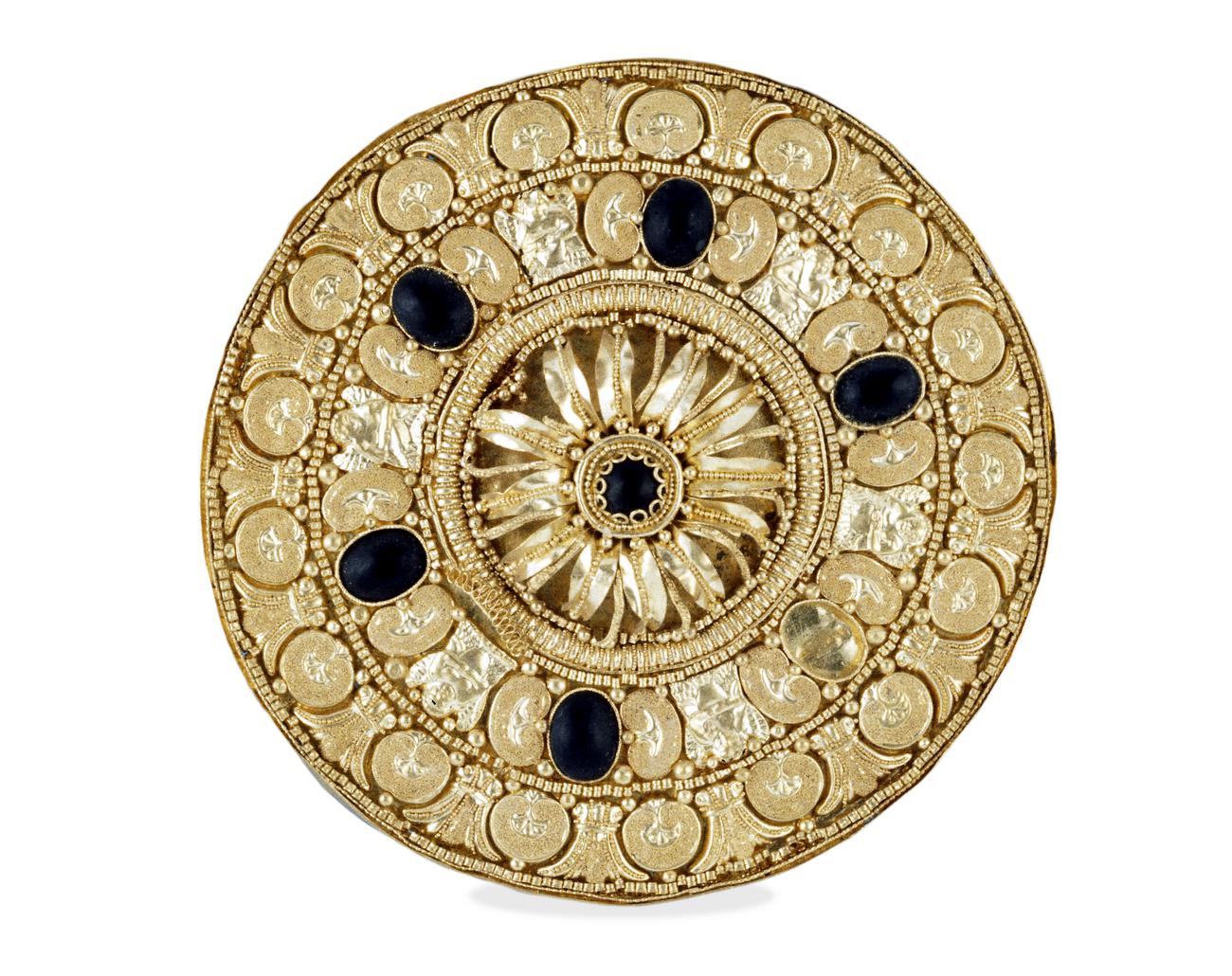
Before you is a beautiful Etruscan gold ear-stud, dating from around 530 to 480 BCE. This small but intricate piece features a circular gold disc decorated with a rosette, sirens, and lotus flowers. Tiny inlays of dark blue vitreous glass add a striking contrast to the gilded background.
Made in Italy, this jewelry is a fine example of Etruscan craftsmanship. The gold was worked using delicate techniques such as filigree, granulation, and inlay, showcasing a high level of artistry. Sirens appear as a repeated motif, linking the piece to ancient myth and tradition.
Weighing 318 grams and measuring nearly 7 centimeters across, this ear-stud was discovered in Etruria, the historic name for central Italy. It entered the museum's collection after being purchased from Charles Sackville Bale at a Christie’s sale.
See it in person
Gold ear-stud is on display in Room 71 at the British Museum on Great Russell Street, Bloomsbury, London — free to enter. Choose British Museum on audioguide.london and type its audio guide stop number, 552, from the gallery label, or take a photo of it, to hear this free audio guide in six languages — no app download needed.
New, in beta. British Museum support has just launched and is still improving: over 1,000 objects so far, with more added all the time.