Etruscan sarcophagus
- Audio guide stop: 551
- Gallery: Room 71
- Culture: Etruscan
- Made in: Italy
- Date: 250BC-150BC (circa)
- Object type: sarcophagus
- Materials: terracotta
- Museum number: 1887,0402.1
- Museum: The British Museum
- Collection record: British Museum website
- Image © The Trustees of the British Museum, shared under a CC BY-NC-SA 4.0 licence.
Listen to the free audio guide
About this object
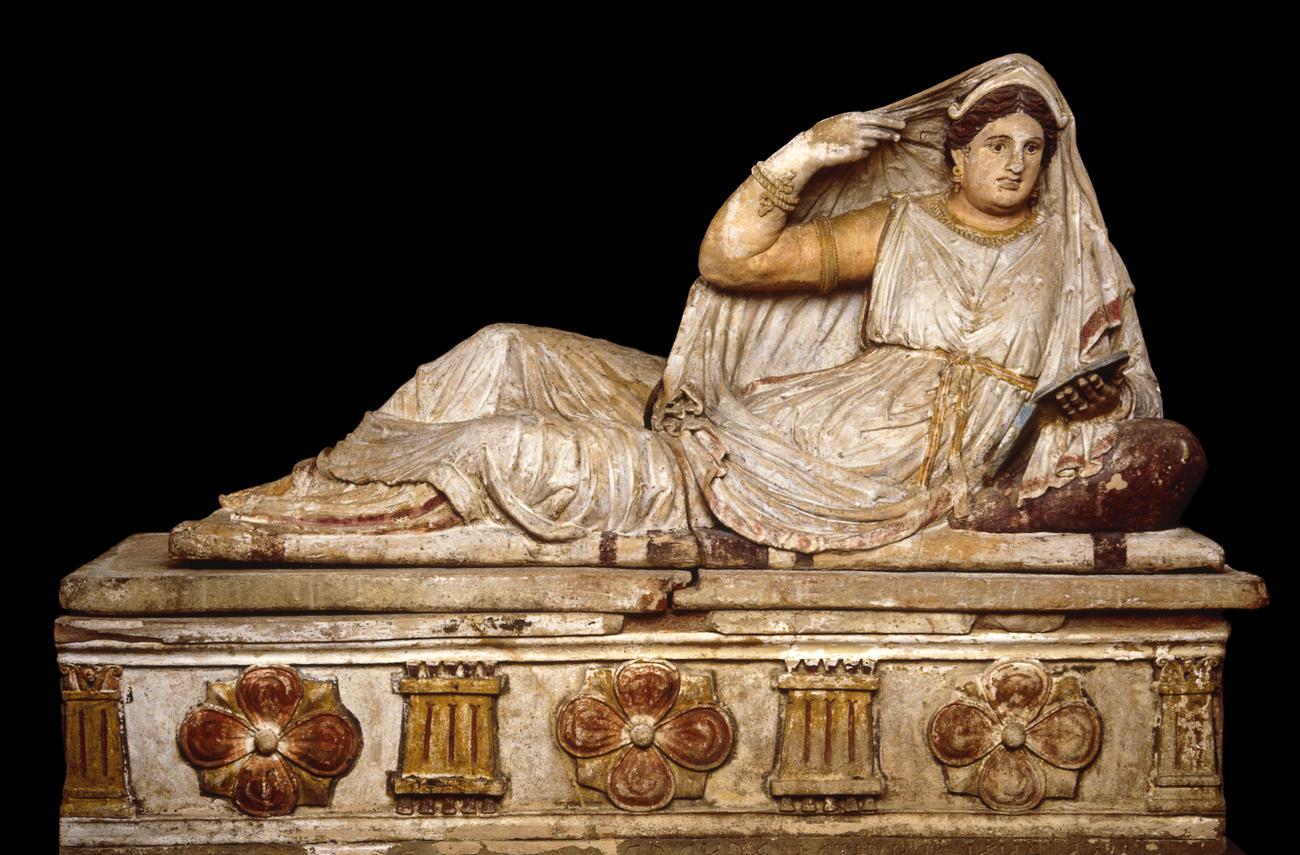
Before you is an Etruscan sarcophagus decorated with the figure of a woman named Seianti Hanunia Tlesnasa. This painted terracotta burial chest gives us a glimpse into daily life and status in ancient Etruria. Seianti reclines on a mattress and pillow, one hand adjusting her cloak and the other holding a small mirror. She is elegantly dressed and adorned with jewelry — a diadem, earrings, a necklace, and rings.
The figure’s name is inscribed on the sarcophagus lid, showing the importance of identity in Etruscan burial customs. The work was made in Italy around 250 to 150 BCE and later excavated in Poggio Cantarello. The piece was purchased in 1887 from Professor Wolfgang Helbig, a noted expert in Etruscan antiquities. Its expressive detail, vibrant color, and lifelike posture reflect the artistry of the Etruscan tradition.
See it in person
Etruscan sarcophagus is on display in Room 71 at the British Museum on Great Russell Street, Bloomsbury, London — free to enter. Choose British Museum on audioguide.london and type its audio guide stop number, 551, from the gallery label, or take a photo of it, to hear this free audio guide in six languages — no app download needed.
New, in beta. British Museum support has just launched and is still improving: over 1,000 objects so far, with more added all the time.