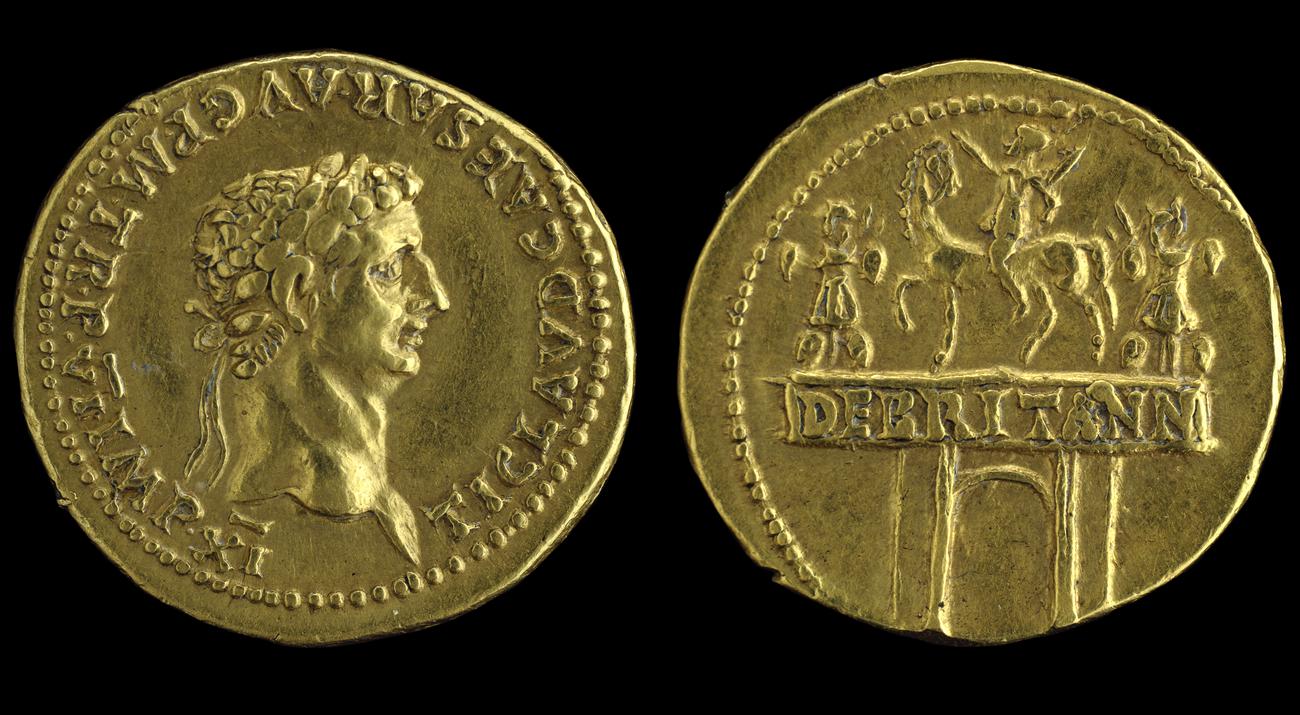
Gold aureus (coin) of Claudius celebrating the conquest of Britain
- Audio guide stop: 458
- Gallery: Room 49
- Culture: Roman Imperial
- Made in: Rome (city); Roman Empire
- Date: 46-47
- Object type: coin
- Materials: gold
- Museum number: 1863,0501.1
- Museum: The British Museum
- Collection record: British Museum website
- Image © The Trustees of the British Museum, shared under a CC BY-NC-SA 4.0 licence.
Listen to the free audio guide
About this object
This is a gold coin from the Roman Empire, minted in Rome around 46–47 AD. On the front, you see the head of Emperor Claudius, wearing a laurel crown and facing to the right. Turn it over and notice the detailed scene of a triumphal arch, which is inscribed and crowned by an equestrian statue. The statue’s right arm is stretched out, and it holds a spear in the left hand, positioned between two victory trophies.
This coin is special because it was the first Roman coinage to celebrate the conquest of Britain—eventually successful in AD 43. The Latin inscription around the emperor’s head reads “TI.CLAVD.CAESAR.AVG.P.M.TR.P.VI.IMP.XI,” identifying Claudius and his titles. On the reverse, the words “DE BRITANN” appear above the arch, marking Britain’s significance in this victory.
Minted in gold, this coin is just 19 millimeters across, yet rich in detail and historical meaning.
See it in person
Gold aureus (coin) of Claudius celebrating the conquest of Britain is on display in Room 49 at the British Museum on Great Russell Street, Bloomsbury, London — free to enter. Choose British Museum on audioguide.london and type its audio guide stop number, 458, from the gallery label, or take a photo of it, to hear this free audio guide in six languages — no app download needed.
New, in beta. British Museum support has just launched and is still improving: over 1,000 objects so far, with more added all the time.