Mildenhall treasure
- Audio guide stop: 454
- Gallery: Room 49
- Audio guide: one commentary for a group of objects shown together
- Museum: The British Museum
- Image © The Trustees of the British Museum, shared under a CC BY-NC-SA 4.0 licence.
Listen to the free audio guide
About these objects
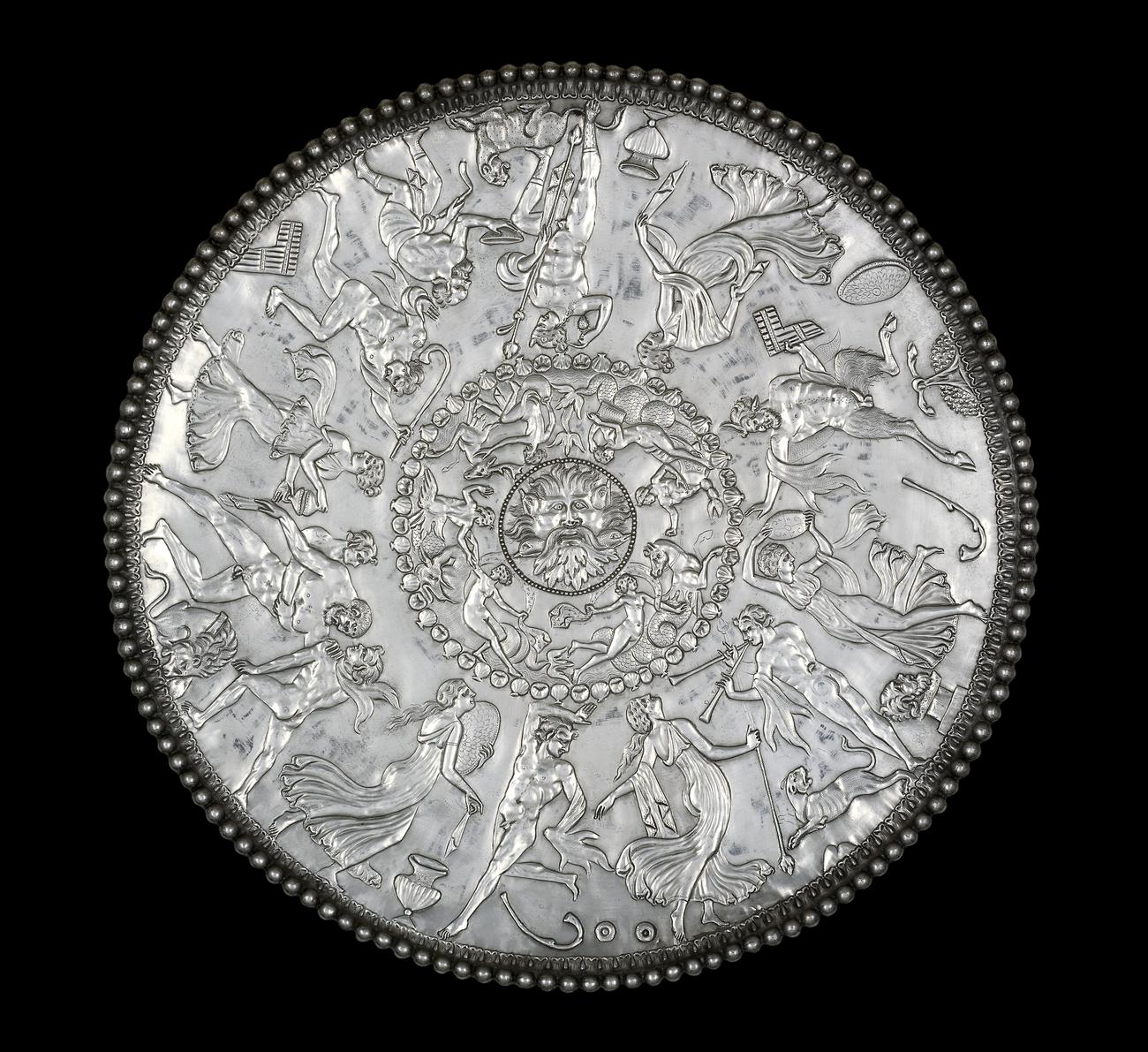
This is the Mildenhall treasure — an extraordinary collection of late-Roman silver tableware, found in a field in Norfolk in 1942. These objects were once used to serve and feast, part of a wealthy household during the fourth century AD. Silver was a luxury material, and the artistry and detail on these pieces are nothing short of remarkable.
Among the standout objects is "The Mildenhall Great Dish", a large concave silver platter with a beaded rim. Its surface is richly decorated with scenes relating to the gods of wine and the sea — notably Oceanus in the center, surrounded by dolphins. This central figure, framed by 91 circular pellets, suggests a blend of myth and symbolism.
Also notable is a silver plate known as "The Mildenhall Bacchic Plate." It features figures associated with the god Bacchus, including a dancing satyr and a maenad grasping a tambourine. One of the most intriguing details is a Greek inscription scratched into the inside of the plate — "Eutheriou" — possibly indicating its former owner.
These remarkable objects tell the story of Roman Britain’s final days, as wealthy families may have buried their treasures to protect them from uncertain times.
See it in person
Mildenhall treasure is on display in Room 49 at the British Museum on Great Russell Street, Bloomsbury, London — free to enter. Choose British Museum on audioguide.london and type its audio guide stop number, 454, from the gallery label, or take a photo of it, to hear this free audio guide in six languages — no app download needed.
New, in beta. British Museum support has just launched and is still improving: over 1,000 objects so far, with more added all the time.