George Bernard Shaw
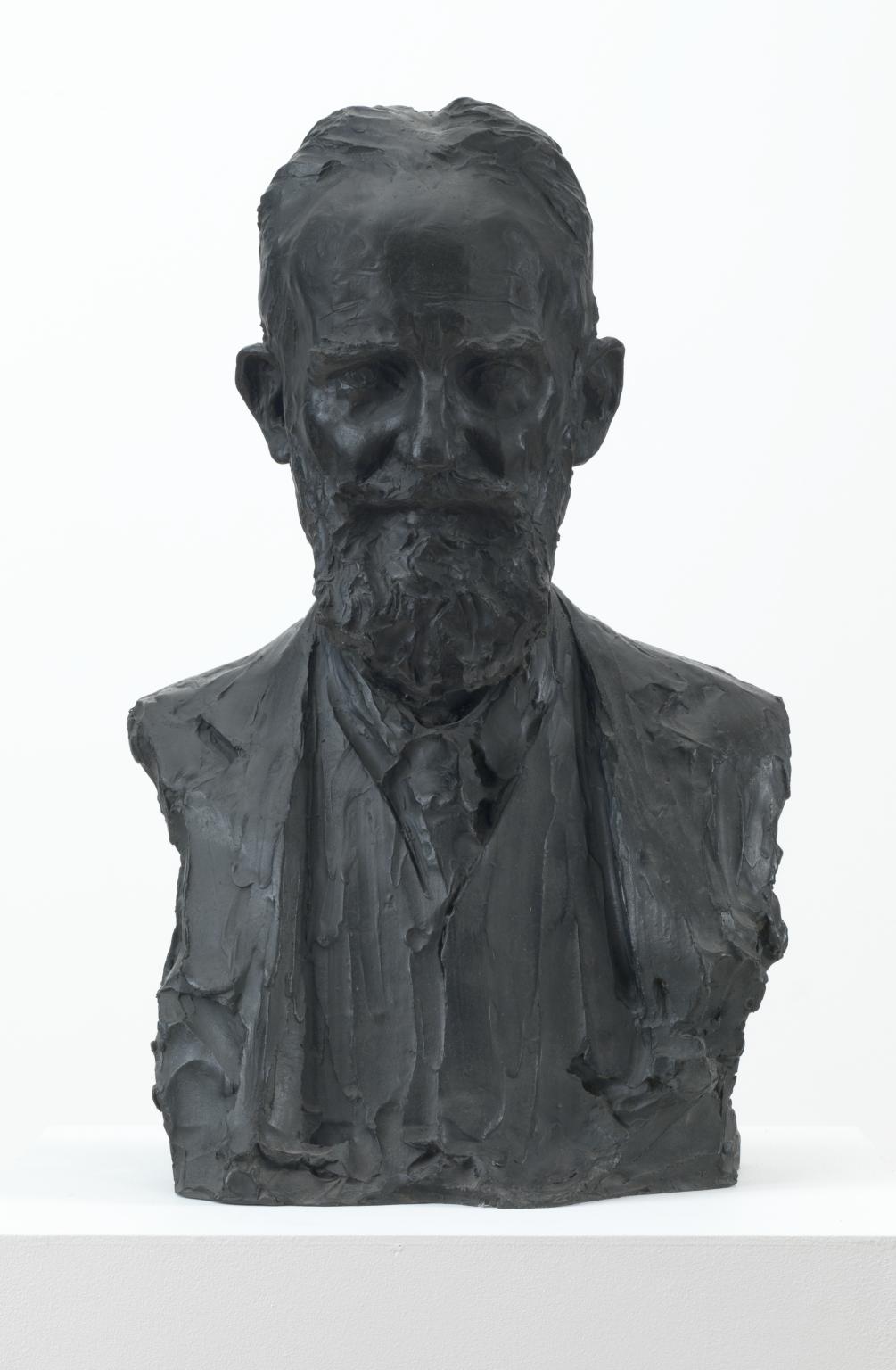
- Artist: Paul Troubetzkoy
- Date: 1926
- Medium: Bronze
- Dimensions: object: 594 x 365 x 267 mm
- Museum: Tate Britain
- Collection record: Tate Britain website
Listen to the free audio guide
About this artwork
This is the bronze sculpture “George Bernard Shaw” by Paul Troubetzkoy. The work dates from 1926 and shows Shaw, the playwright who lived from 1856 to 1950, seated in a relaxed pose, his head slightly turned as if listening to an unseen speaker. The figure is full‑scale, about 60 mm tall with a width of roughly 36 mm – a modest bronze cast that still conveys a sense of solidity and life.
Troubetzkoy was born in Italy but came from a Russian noble family; he trained as both painter and sculptor. He specialised in portrait busts of well‑known men such as Tolstoy and Anatole France, so the commission for Shaw fits his usual subject matter. Troubetzkoy and Shaw were friends – they shared a devotion to vegetarianism – and Shaw sat for him three times: first for a bust in 1908 that was finished in only three hours in Sargent’s London studio; then in 1926, at his own studio on Lago Maggiore, he posed again for a life‑size statue; and finally the present bronze cast.
The casting is noted in the label as “1926 | Paul Troubetzkoy”. The piece was presented to the collection by Mrs George Bernard Shaw in 1927. It sits here surrounded by other bronze portraits, showing the continuity of the sculptural tradition at the turn of the twentieth century.
See it in person
George Bernard Shaw is in the collection of Tate Britain on Millbank, London — free to enter. Point your phone at any artwork there and audioguide.london plays a free audio guide in six languages — no app download needed.