Gillingham Bridge, Dorset
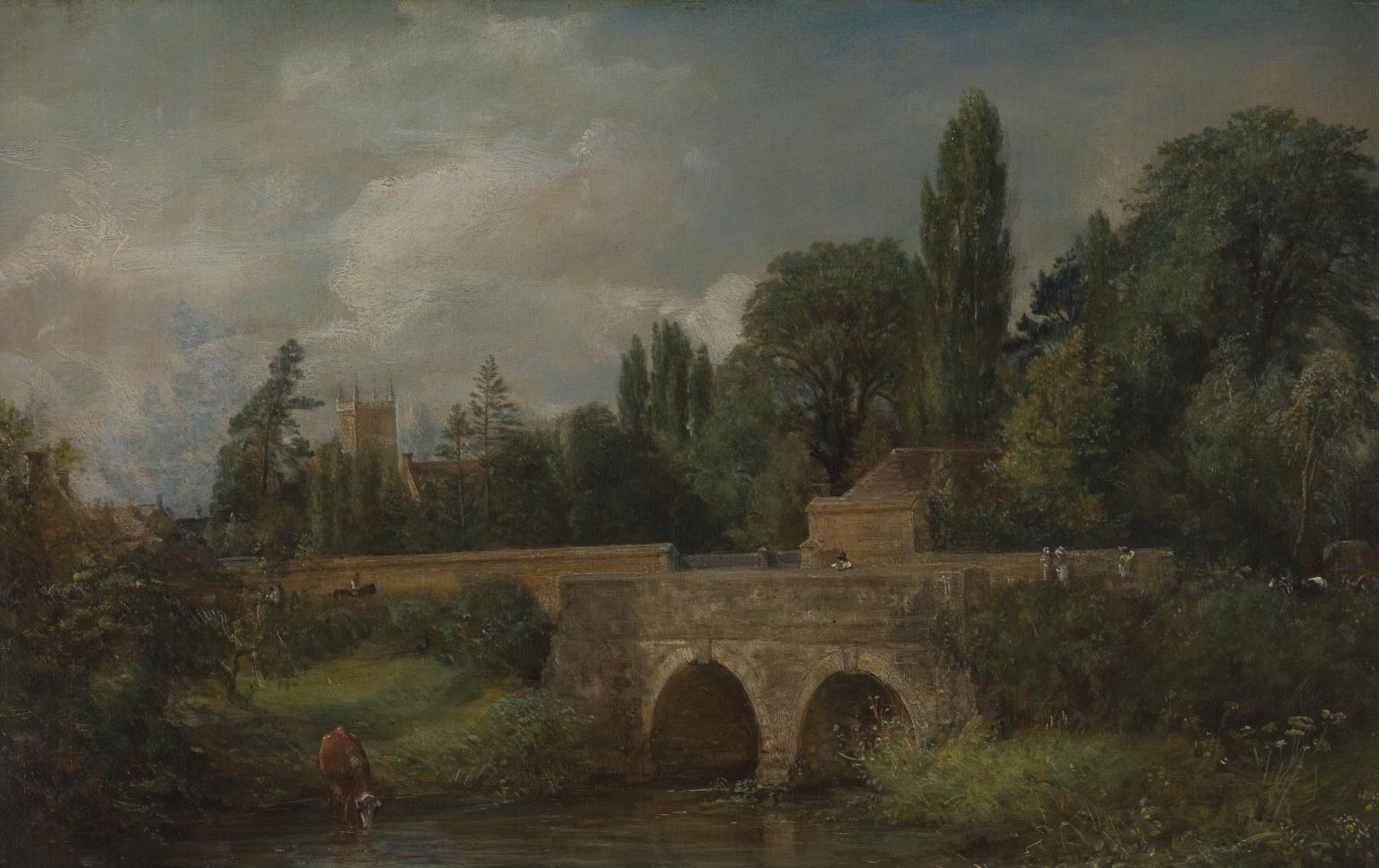
- Artist: John Constable
- Date: 1823
- Medium: Oil paint on canvas
- Dimensions: support: 321 x 514 mm
- Museum: Tate Britain
- Collection record: Tate Britain website
Listen to the free audio guide
About this artwork
This is the painting “Gillingham Bridge, Dorset” by John Constable. It dates to 1823 and is an oil on canvas that captures a quiet moment in the English countryside. The scene shows a modest stone bridge spanning a gentle river, with the spireless village church perched beyond the water. The landscape is rendered in Constable’s characteristic loose brushwork, a hallmark of his early style.
The work came into the collection thanks to Miss Isabel Constable in 1888. It’s a testament to the strong friendship between the artist and Dr John Fisher, who introduced Fisher’s nephew, also named John Fisher, to Constable in 1811. The younger Fisher became Constable’s confidant, providing both moral and financial support. In 1819 he was appointed vicar of Gillingham, and Constable visited the village twice, in 1820 and again in 1823. During that second visit he painted this bridge, a moment he later recalled as being spent “sitting with his easel in the meadow at the right hand corner.”
The painting reflects more than a mere topographical study; it captures the atmosphere of a rural English village, the quiet dignity of its structures, and the artist’s own relationship with the people who inspired him.
See it in person
Gillingham Bridge, Dorset is in the collection of Tate Britain on Millbank, London — free to enter. Point your phone at any artwork there and audioguide.london plays a free audio guide in six languages — no app download needed.