Garden
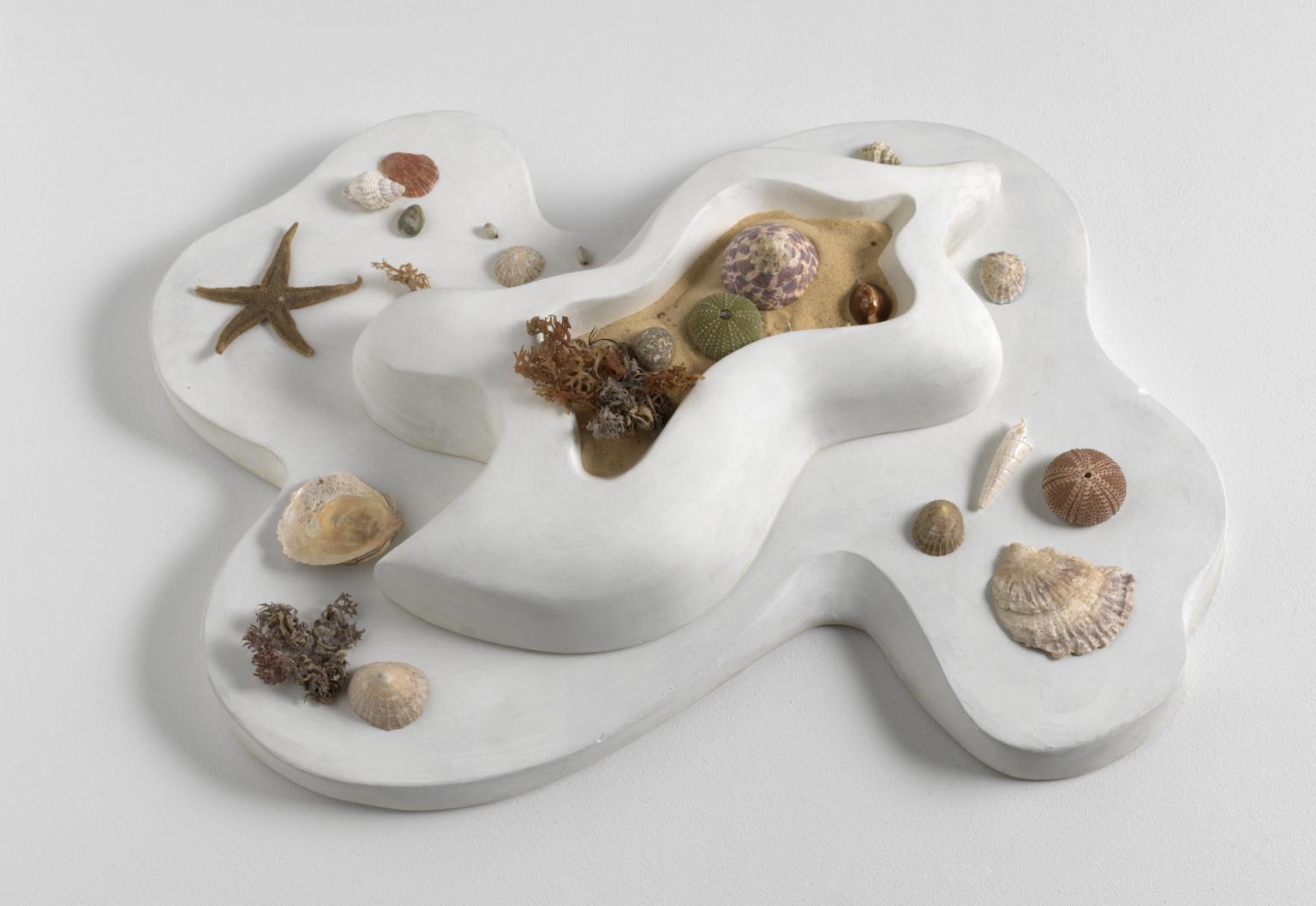
- Artist: Paule Vézelay
- Date: 1935
- Medium: Plaster, paint, sand and shells
- Dimensions: unconfirmed: 75 x 595 x 420 mm
- Museum: Tate Britain
- Collection record: Tate Britain website
Listen to the free audio guide
About this artwork
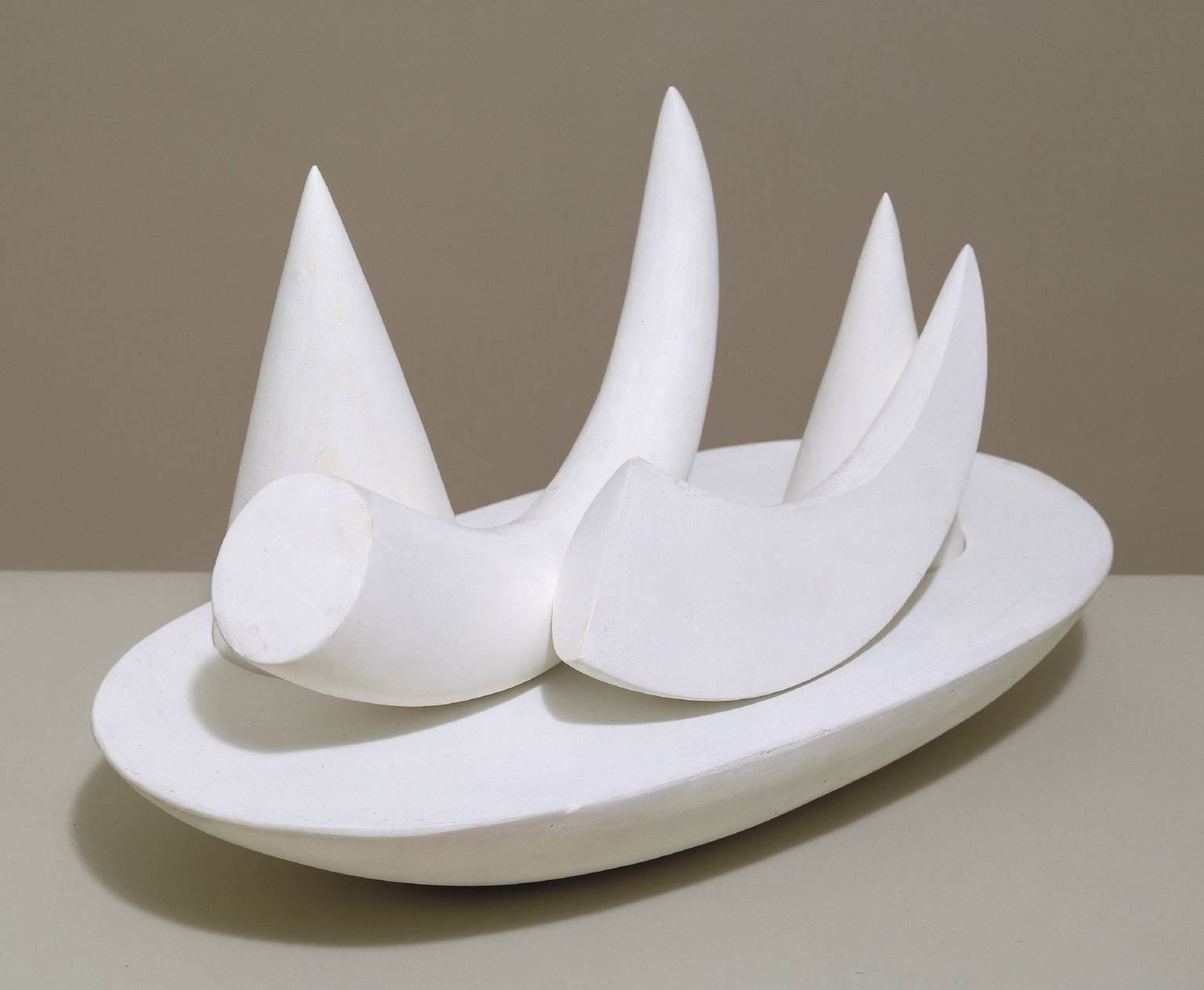
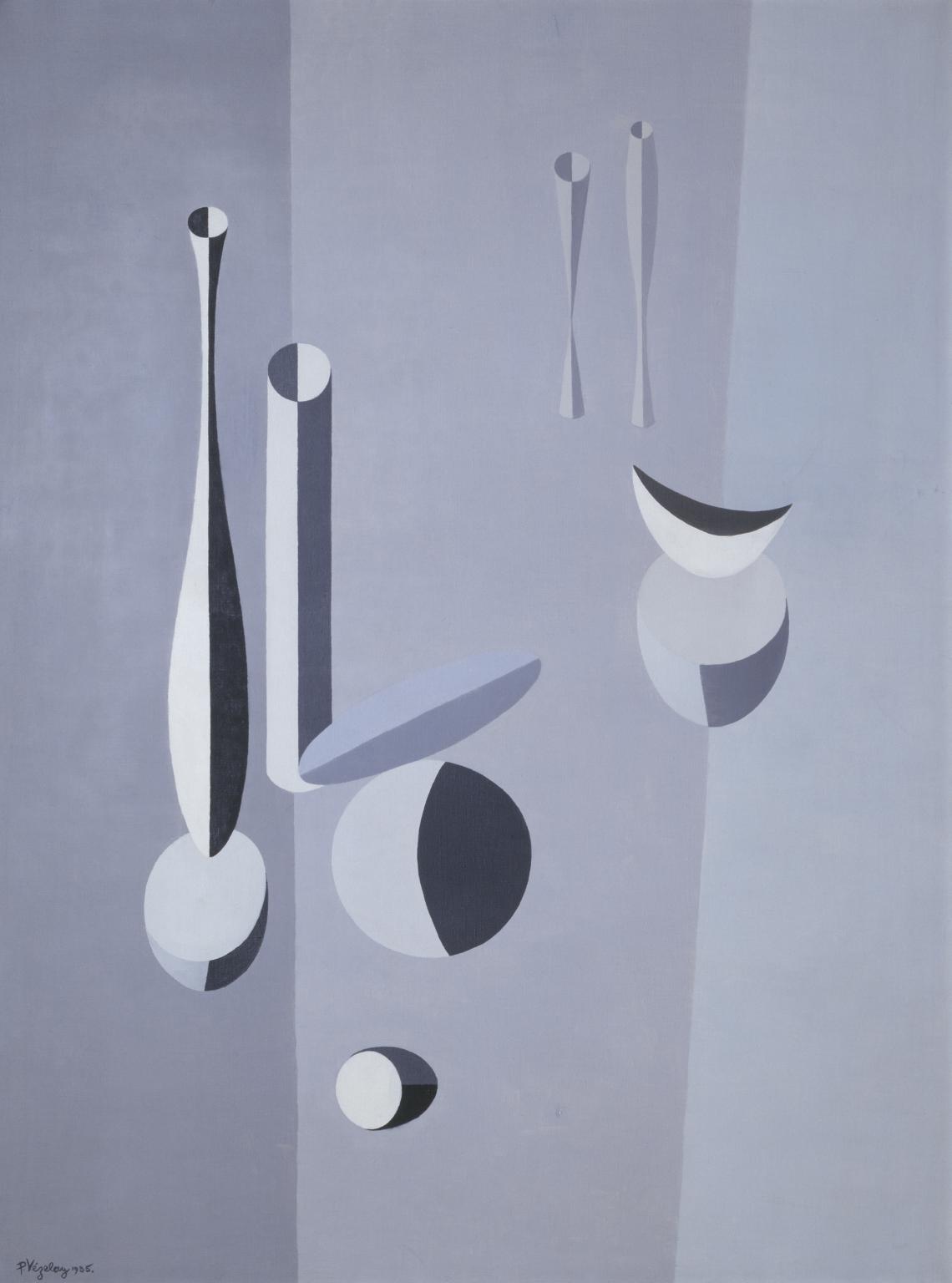
This is the “Garden” by Paule Vézelay, created in 1935. It’s a small plaster sculpture made of white biomorphic forms that sit on top of each other. The lower shape echoes the central form from Vézelay’s earlier painting *White Shapes in Movement* (1930), while the upper one is hollowed out. Inside the cavity you can find sand, plants or seashells; outside the lower body may carry shells, starfish and pebbles arranged on its surface—an intentional play of found objects.
The piece was first exhibited under the title *Jardinière* in 1937 at Galerie Jeanne Bucher, a term for an ornamental container that would hold plants. In Vézelay’s own catalogue she described it as “Table ‘garden’ with sand,” hinting at its domestic informality.
“Garden” sits within a small group of her 1935 plaster works that extend her exploration of form into three dimensions. It has shown in several exhibitions: the 2017 Tate Britain show *Paule Vézelay*, and later at Tate Liverpool (2022–2023). Its use of natural objects makes it reminiscent of surrealist sculpture, echoing Eileen Agar’s *Marine Object*.
The work is made from plaster, paint, sand and shells, and measures about 75 × 595 × 420 mm. It reminds us that abstract forms can also invite tactile interaction through the natural materials they contain.
See it in person
Garden is in the collection of Tate Britain on Millbank, London — free to enter. Point your phone at any artwork there and audioguide.london plays a free audio guide in six languages — no app download needed.