Five Forms
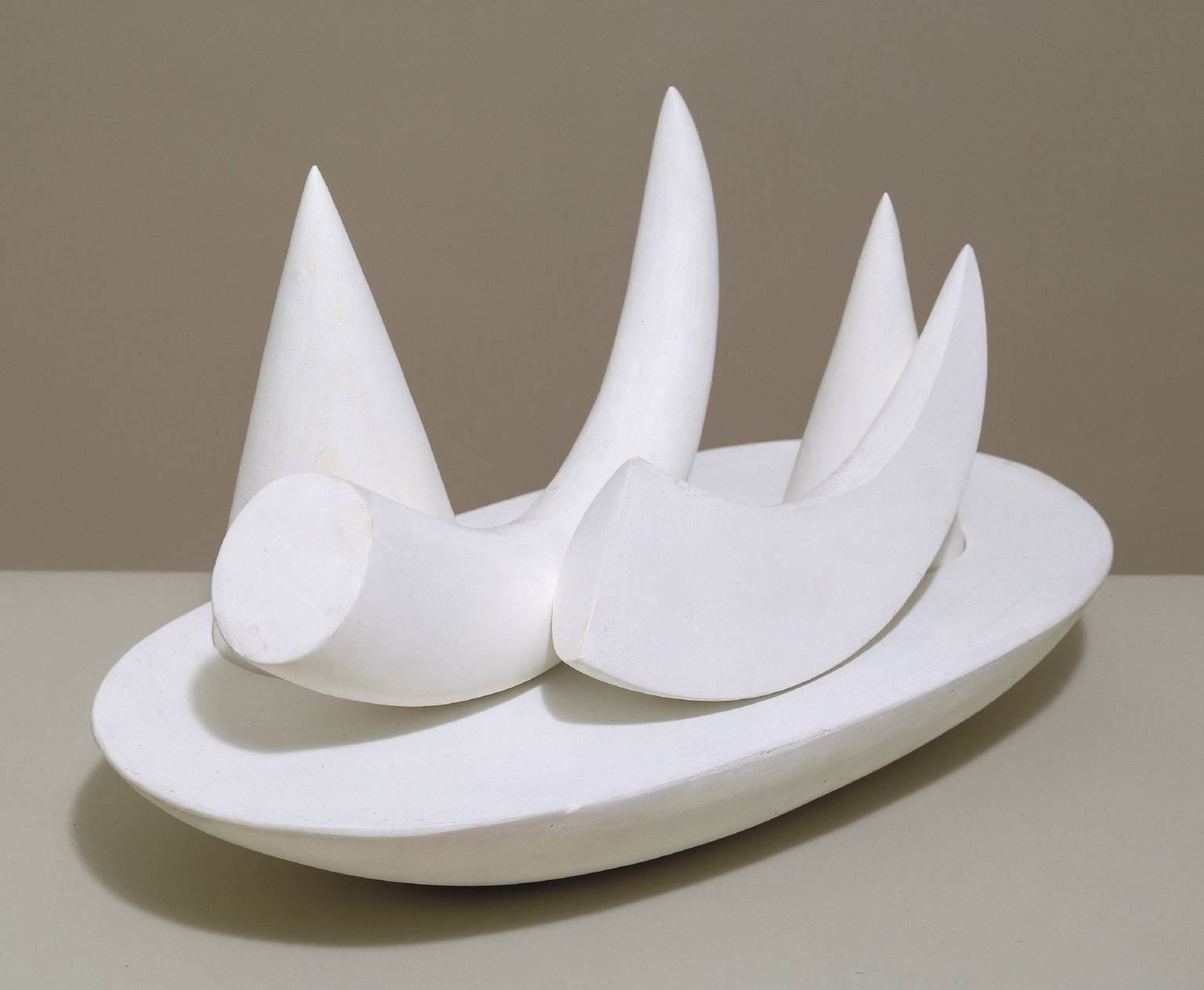
- Artist: Paule Vézelay
- Date: 1935
- Medium: Plaster
- Dimensions: object: 290 x 480 x 260 mm, 9.1 kg
- Museum: Tate Britain
- Collection record: Tate Britain website
Listen to the free audio guide
About this artwork
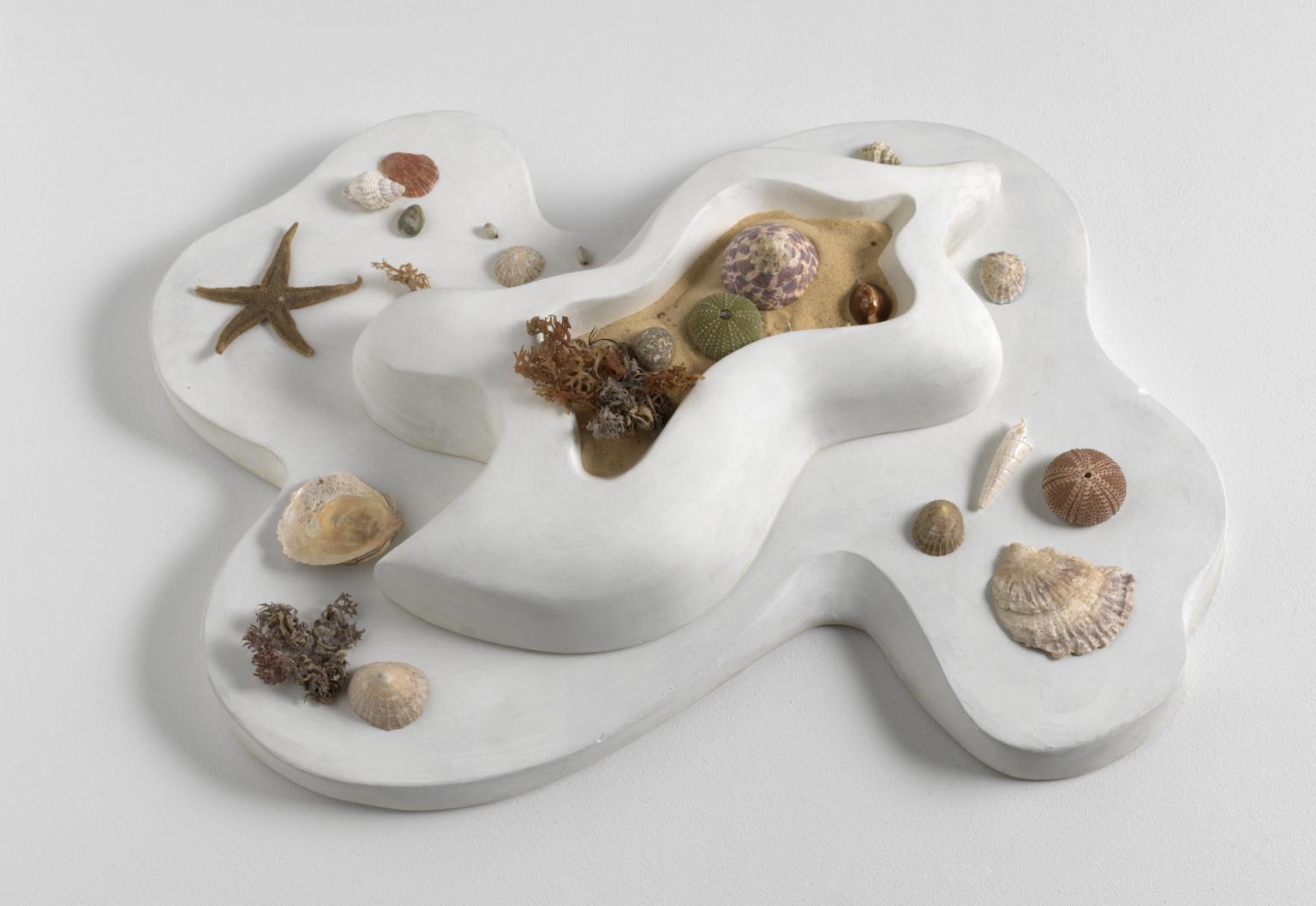
This is the *Five Forms* by Paule Vézelay. Paule Vézelay—born Marjorie Watson‑Williams in Bristol and later based in Paris—used her adopted name while living there between 1926 and 1939. In 1935 she produced this group of white plaster sculptures that mark a turning point from painting to three‑dimensional form. The work consists of four irregular shapes: two cones of different sizes, a tusk‑shaped curved cone, and a third shape cut in half lengthwise, all resting on an oval base.
The plaster material is light yet solid, giving the pieces a crisp whiteness that Vézelay associated with purity and clarity. She was part of Abstraction‑Création, meeting artists such as Arp, Hélion and Calder, and she sought to convey “new forms of political and spiritual understanding” through abstract shapes. The simple biomorphic forms here suggest truth, beauty, harmony, and clarity, echoing her belief that the white form itself was a symbol of an optimistic future.
The piece shows Vézelay’s early experiment with sculpture after realizing how limited painting was for representing three‑dimensional form. *Five Forms* is one of a small group of similar plasters she made in 1935, and it remains a striking example of early British abstraction.
See it in person
Five Forms is in the collection of Tate Britain on Millbank, London — free to enter. Point your phone at any artwork there and audioguide.london plays a free audio guide in six languages — no app download needed.