Farm at Watendlath
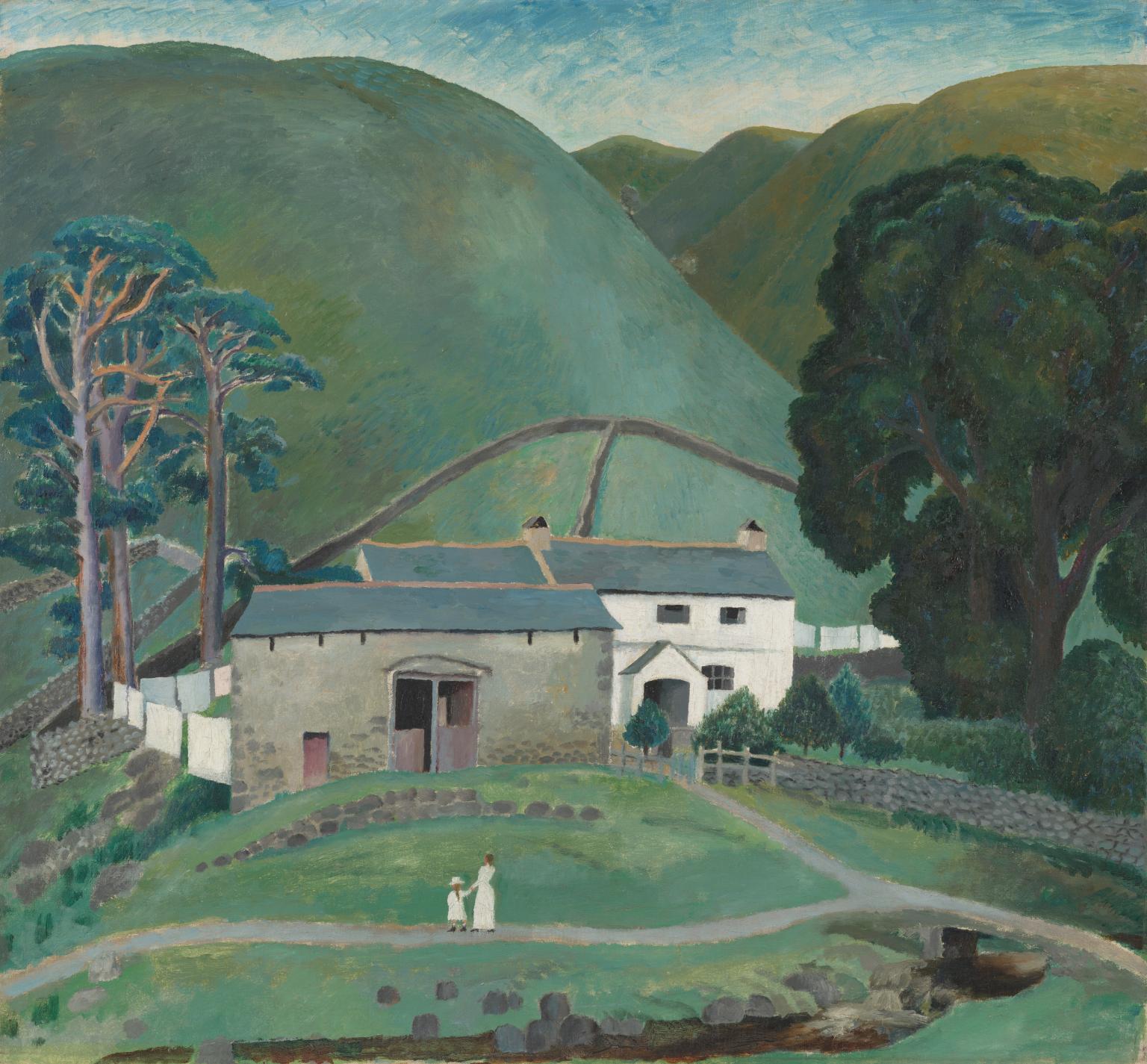
- Artist: Dora Carrington
- Date: 1921
- Medium: Oil paint on canvas
- Dimensions: support: 611 x 669 mm
- Museum: Tate Britain
- Collection record: Tate Britain website
Listen to the free audio guide
About this artwork
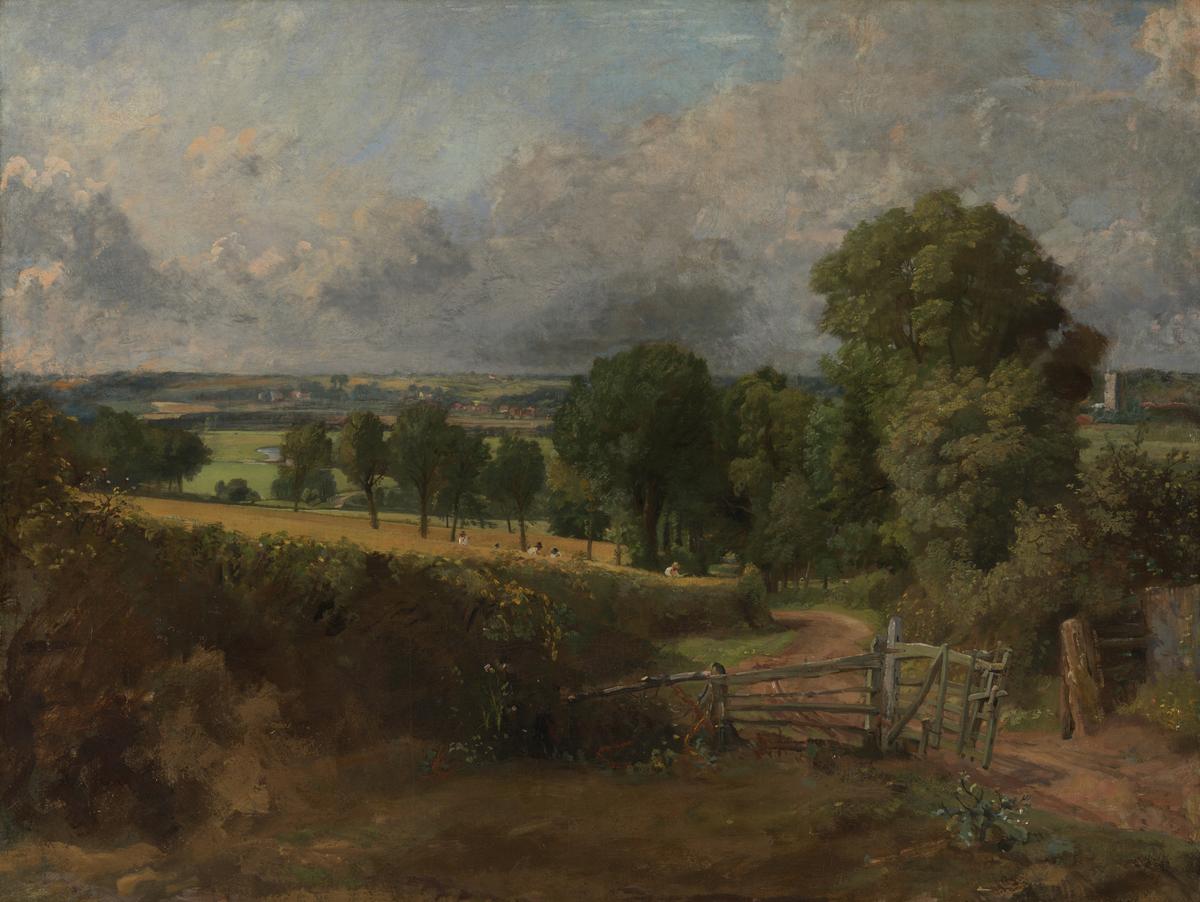
This is the *Farm at Watendlath* by Dora Carrington. Painted in 1921 with oil on canvas, it captures a quiet day at a farmhouse five miles south of Keswick in the Lake District. The whitewashed house sits beside a barn, with a small stream at the bottom and a mix of Scots pines and sycamores framing the scene. Carrington, who was part of the Bloomsbury Group and moved between London and the countryside, spent the summer of 1921 at this very farm with her husband Ralph Partridge and friends like Lytton Strachey and Gerald Brenan.
What makes the painting stand out is the subtle distortion of the landscape. Critics say she stretched the hills and curved the ridge to echo the soft curves of a female body, turning the pastoral view into a quiet meditation on femininity. In the foreground two small figures—likely imaginary—stand in front of the barn, gazing at the rolling hills, perhaps reflecting on their own womanhood. Carrington was reluctant to exhibit her work in life; this piece was presented to the public only after it was bequeathed by her brother Noel in 1987.
The work is a quiet blend of landscape and personal reflection, capturing a fleeting summer moment while hinting at the broader themes Carrington explored in her brief but vibrant career.
See it in person
Farm at Watendlath is in the collection of Tate Britain on Millbank, London — free to enter. Point your phone at any artwork there and audioguide.london plays a free audio guide in six languages — no app download needed.