Fen Lane, East Bergholt
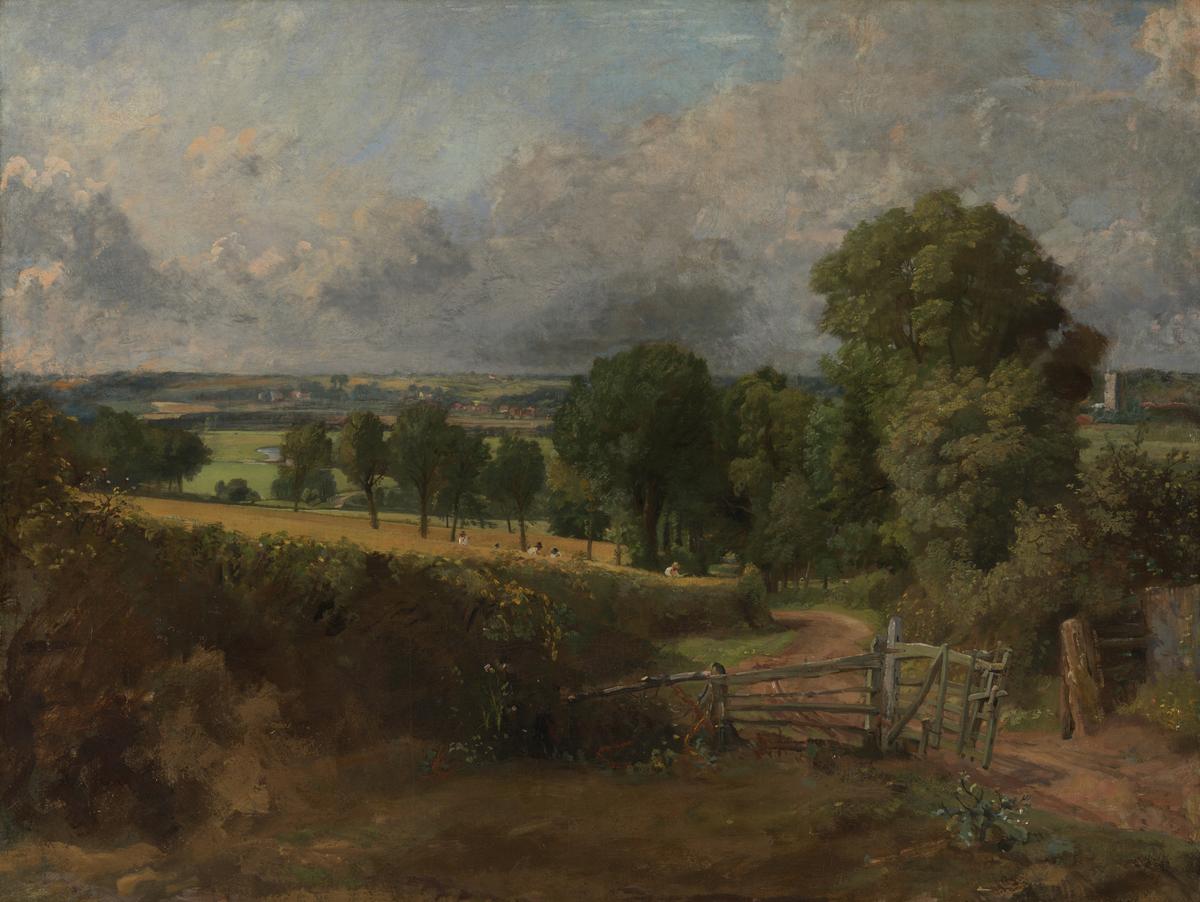
- Artist: John Constable
- Date: ?1817
- Medium: Oil paint on canvas
- Dimensions: support: 692 x 925 mm
- Museum: Tate Britain
- Collection record: Tate Britain website
Listen to the free audio guide
About this artwork
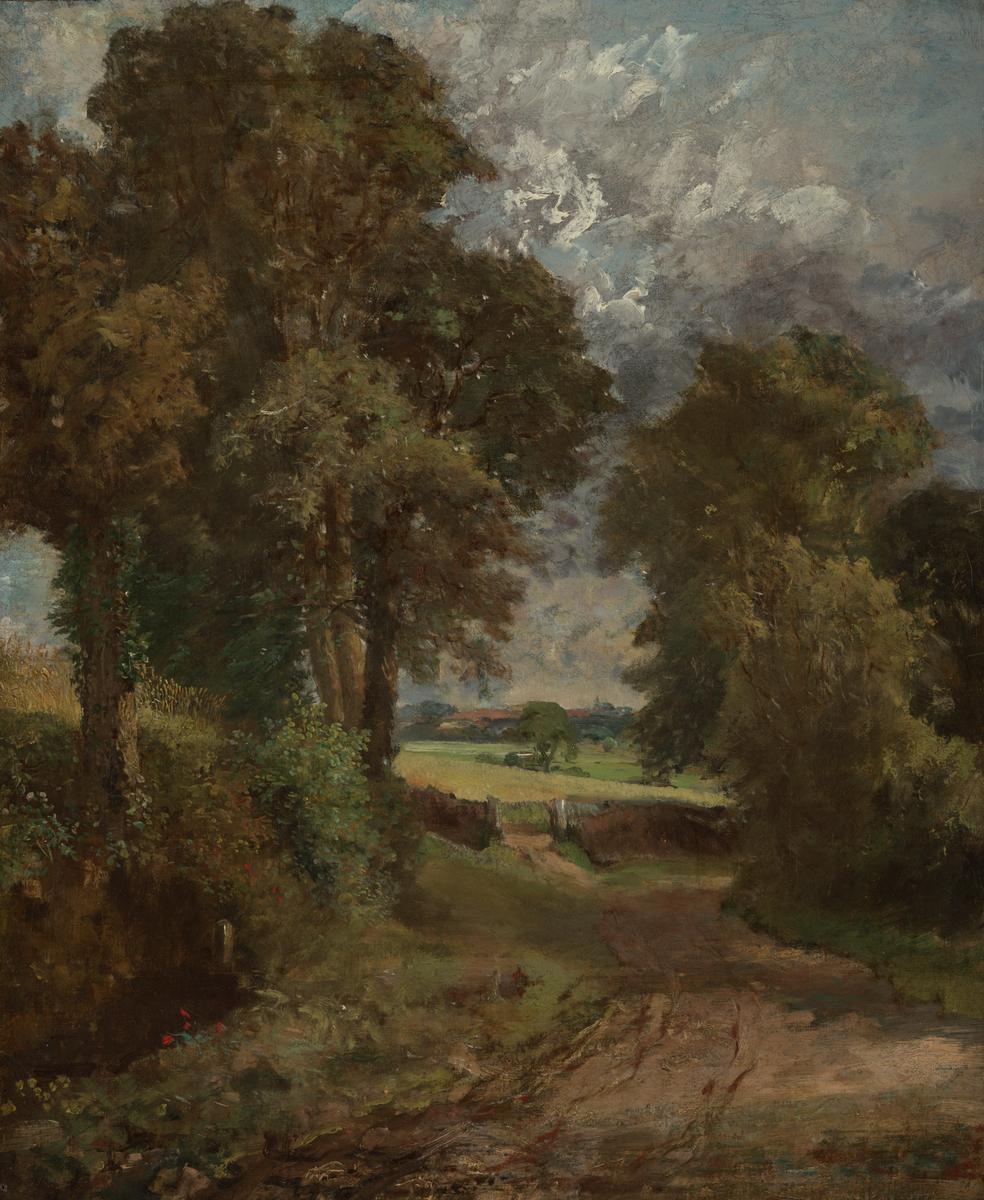
This is the “Fen Lane, East Bergholt” by John Constable. Painted in 1817, it captures a slice of the Suffolk countryside where Constable and his wife Maria spent a long holiday. It’s the last time he worked directly in oils in the area, and the canvas shows the artist’s restless habit of beginning scenes outdoors and leaving parts unfinished.
You’ll notice that some areas—like the distant tree line and the sky—have a finished, almost lyrical quality, while other parts—such as the farmer’s horse and the low‑lying field—are rendered in loose, sketchy strokes. That mix gives the piece a sense of immediacy, as if the painter was racing to lock in fresh light and colour before the weather changed.
The composition frames a small, arched gate opening onto a muddy lane, a farm labourer in the foreground, and a gentle river curling in the distance. The rural landscape, complete with patchwork fields and a cluster of trees, feels both intimate and expansive.
Constable’s technique here foreshadows his later, more mature landscape style, where he balances meticulous detail with the vitality of nature. This work is a compelling snapshot of a moment in his artistic journey, a testament to his dedication to capturing the fleeting moods of the English countryside.
See it in person
Fen Lane, East Bergholt is in the collection of Tate Britain on Millbank, London — free to enter. Point your phone at any artwork there and audioguide.london plays a free audio guide in six languages — no app download needed.